We have had multiple large-loss fires over the years that have impacted, and continue to impact, code development.
Unfortunately, the list is long in the United States and includes:
- Dec. 30, 1903: Iroquois Theater—A fire in Chicago caused 602 deaths, remaining the deadliest single-building fire in U.S. history.
- March 4, 1908: Lakeview Grammar School—A tragic school fire in Collinwood, Ohio, took 175 lives.
- Nov. 28, 1942: Cocoanut Grove Nightclub—A devastating fire in Boston, killed 492 people.
- Dec. 7, 1946: Winecoff Hotel in Atlanta, killed 119
- Dec. 1, 1958: Our Lady of Angels Catholic Elementary School, Chicago, killed 95
- May 28, 1977: Beverly Hills Supper Club in Southgate, Ky., killed 165
- Feb. 20, 2003: The Station Nightclub in West Warwick, R.I., killed 100
Each of these fires caused code changes, and often multiple codes were changed. One important takeaway from this short list is that in every large-loss fire, two issues most relevant are delayed notification to the occupants and delayed notification to the fire department.
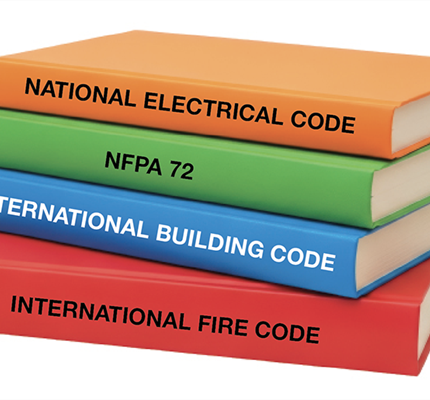
The International Building Code (IBC) requires K–12 schools (Group E occupancies) to install a manual fire alarm system with an emergency voice/alarm communication system (EVACS). These systems must actuate a general alarm and include dedicated speakers to broadcast live or prerecorded instructions across the campus.
Specifically, Section 907.2.3 (Group E) states that, “A manual fire alarm system that initiates the occupant notification signal utilizing an emergency voice/alarm communication system meeting the requirements of Section 907.5.2.2 (Dictates voice alarm standards, audio levels, and distinctive alert tones) and installed in accordance with Section 907.6 (Governs installation standards, wiring, zone layout, and power supplies) shall be installed in Group E occupancies. Where automatic sprinkler systems or smoke detectors are installed, such systems or detectors shall be connected to the building fire alarm system.”
It is important to have emergency voice communication system (ECS) so administrators can issue directed instructions (e.g., lockdown or evacuation) rather than just a continuous horn. As with any ECS, the loudspeakers must be divided into specific paging zones (e.g., floors, stairwells and areas of refuge) so alerts can target specific areas. The code requires that the fire alarm systems must be connected to an approved supervising station to automatically transmit signals to the fire department or emergency dispatch.
When designing these systems, the manual pull stations are required at all main exits, though they may be omitted in buildings equipped throughout with an approved automatic fire sprinkler system if manual activation is available from a normally occupied, constantly attended location, such as the main office.
And of course, all fire alarm, detection and communication systems must be designed and installed in strict compliance with NFPA 72, National Fire Alarm and Signaling Code.
While mass notification systems (MNS) are not strictly mandated by the IBC for all schools, the EVACS systems installed in schools are often integrated with campus-wide communication networks or MNS and emergency lockdown systems. It is important to remember that there are many threats facing schools today, and although not specifically required, designing an MNS for a school is prudent. Additionally, NFPA 72 provides guidance on messaging for the MNS, and I recommend all messages be prerecorded to avoid any panic creeping into it.
We must consider the fact that the people using educational spaces have limited responsibility for their own safety and are relying on the owners, managers, employees and insurers of the space to provide an adequate level of safety. There is an expectation that spaces where large populations of children are gathered will be afforded a high level of protection to avoid catastrophic losses, and the building may also serve other purposes in the event of an emergency (i.e., shelter). Because these buildings house children, and schools play a vital role in a community, it is important to remember to not just follow the minimum requirements of the codes, and rather do what is right and add detection and communication systems to better protect those inside.
Using addressable systems to better inform the responding fire department is one way to reduce the response time to the exact location of the fire. Some systems can transmit this information directly to the fire department rather than have them respond to an annunciator to discover the fire location. Remember, a quick response to the fire location will reduce life loss.
Many systems today now use message boards to provide instruction to the occupants, again to avoid panic. If the building is not protected by an automatic sprinkler system, designers should consider adding heat and smoke detection in key areas such as utility rooms, labs, locker rooms and kitchens. So, although the codes have improved because of learning from past fires, don’t let your building become a future example. Keep current with all applicable codes and industry practice.
About The Author

MOORE, PE, is a licensed professional fire protection engineer, and located in Jamestown, R.I. He is the editor of five editions of the National Fire Alarm Code Handbook. He authored, “Designing Mass Notification Systems – A Pathway to Effective Communications.” He is a principal member of the NFPA 72 Correlating Committee and former chair, now principal member, of the Emergency Communications System Technical Committee. He can be reached at [email protected].