For utilities, data centers and other large commercial and industrial enterprises seeking an alternative to lithium-ion batteries, sodium-ion batteries are a newer, less-risky technology to consider.
Sodium-ion batteries work on the same principle as lithium-ion, where ions move back and forth between the anode and cathode through an electrolyte (sodium or lithium).
However, unlike lithium-ion batteries, a sodium-ion system carries a much lower risk of fire from thermal runaway. Moreover, these battery systems require no complex HVAC or liquid cooling systems, reducing operational complexity, maintenance requirements and total cost of ownership.
Sodium-ion batteries differ from a much older technology, molten salt batteries—more correctly called sodium metal chloride batteries—which consist of a metal-based cathode and a molten sodium anode.
One company pioneering this technology for larger-scale energy needs is ESS Tech Inc. in Wilsonville, Ore., launched the ESS Bridge, a modular sodium-ion battery energy storage system (BESS).
“Bridge is how we meet the demand we’re already seeing,” said Drew Buckley, CEO of ESS, in a July 2026 press release. “A.I. workloads are reshaping what data centers need from energy storage, and sodium-ion handles those power needs more effectively than conventional technologies. Bridge is built to deliver that, which is why we’ve generated nearly a billion dollars in early-stage opportunity since entering sodium-ion.”
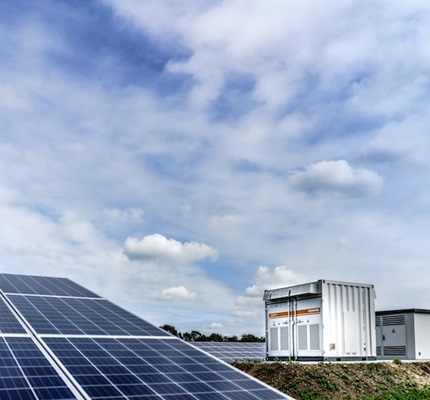
Bridge is a 1.2-megawatt-hour (MWh) AC battery system with a “building-block” design, complete with battery cells, modules, racking, power conversion, cabling and battery management system hardware and software, all within a 10-foot container.
ESS also offers energy management system software for facility managers to optimize energy use across their operations.
The stackable blocks can provide up to 4.8 MWh of storage capacity in the same footprint as a traditional 20-foot battery container, maximizing site use. The BESS can provide up to 26 hours of continuous discharge.
Bridge can operate across a wide range of temperatures, from –40°F to 122°F. The BESS has a design life of up to 20 years, prolonging “costly battery replacement and risky augmentation cycles.”
Since sodium is inexpensive and widely available in North America, utilities and data centers will not have to rely on foreign supply chain risks, according to the company.
“Today’s battery asset owners are looking for solutions that improve upon the conventional model,” said Randall Selesky, ESS’ chief commercial officer. “They want systems that improve safety, simplify operations, provide flexibility and support long-term energy security objectives. Bridge is designed to deliver those benefits in a single platform.”
ESS joins other manufacturers now offering sodium-ion batteries to utilities, including Peak Energy in Broomfield, Colo., according to Utility Dive. Other manufacturers offer this technology on smaller scales, such as Chino, Calif.-based Bluetti’s Pioneer Na portable power station.
About The Author

KUEHNER-HEBERT is a freelance writer based in Running Springs, Calif. She has more than three decades of journalism experience. Reach her at [email protected].