U.S. residential solar companies are having a tough year. With the loss of federal tax credits for homeowners along with a pivot away from subsidizing new panel installations among utilities and regulators, solar revenues are tanking. Battery systems are proving a bright spot for these businesses, with the Solar Energy Industries Association (SEIA) claiming three out of four new solar customers opt to attach energy storage equipment.
Now, companies are looking at ways they can use this trend to also break into the booming data center market, bringing edge computing into individual homes. The nation’s biggest solar company now has two initiatives underway to help new and existing customers monetize their solar and battery investments by helping to power artificial intelligence (A.I.) operations.
A startup smart panel maker also is getting into the act, partnering with a leading homebuilder to give homebuyers access to free backup power and A.I. developers access to megawatts of computing power that might otherwise take years to build.
Solar diving as demand climbs
In their U.S. Solar Market Insight Q2 2026 report, SEIA and analyst Wood Mackenzie predicted the residential market to shrink by 21% this year, with tax-credit benefits now dried up. This puts manufacturers and installers in an economic bind, after building up capacity under the Biden administration’s push to expand renewable energy’s presence in the nation’s power portfolio.
The downturn also comes as electricity demand is poised to skyrocket, driven largely by the rapid expansion in A.I. data center construction. Estimates vary widely—in May, investment bank Goldman Sachs suggested data centers could account for 8.5% of peak summer power demand by 2027, which is double 2025’s figures. But others suggest such projections are overly bullish. In August, for example, Wood Mackenzie estimated only 28% of demand now in interconnection queues would actually ever come online. However, this would still represent a significant uptick in electricity use at a time when utilities and transmission owners are struggling to manage interconnection requests.
Tapping homeowner capacity
Now, with the mismatch between falling solar demand and rising A.I. power needs, solar companies see opportunity in using their customers’ distributed capacity to help support data center operations. After a decade of helping utilities integrate individual panel arrays into systemwide virtual power plants, they’re now looking to aid the tech leaders driving demand growth.
Sunrun, San Francisco, the top U.S. residential solar and battery installer, is pursuing two paths toward capitalizing on growing data center needs. The first is a partnership with Tesla, Austin, Texas, manufacturer of Powerwall home batteries, and Renew Home, Oakland, Calif., which manages utility demand-response programs through more than 6 million networked home thermostats. Sunrun says it already manages 7.8 gigawatts (GW) of demand through its established relationship with Tesla and Renew Home claims it has about 9 GW of HVAC capacity in 1-hour peak-load shift potential.
Under a new agreement, the trio has proposed a virtual power plant framework called “capacity as a service” that utilities could tap into, in lieu of building new power plants. By shifting residential loads onto home battery systems during peak periods, the grid could better support A.I. operations with existing generation.
Separately, Sunrun has a pilot underway installing packaged computer systems called “nodes” at existing customers’ homes. The devices are networked to perform A.I. inference tasks, the work required to answer individual user queries based on data that’s already been acquired during A.I. companies’ training efforts.
Building new networks
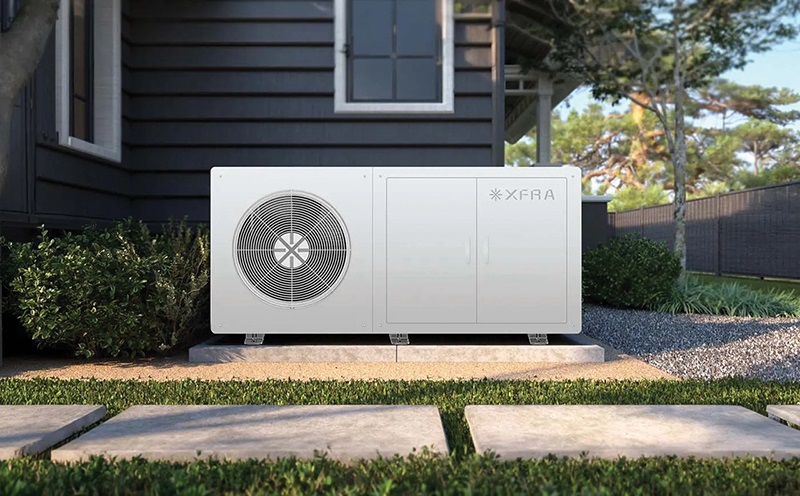
Smart panel maker Span, San Francisco, has a similar approach with its new XFRA computer nodes. Though distributed, these nodes are designed to work together, “like a coherent cloud,” according to the company’s website.
Under its plan, panel customers could opt to have the company install one of its proprietary nodes along with a battery-storage system. Span’s PowerUp software would monitor and control home energy use to ensure nearly 24/7 operation of the XFRA equipment, taking advantage of unused capacity. An attached 16-kilowatt-hour battery would be called on to support node operations during peak home-use periods. In extreme cases, the software could reduce flexible loads, such as vehicle chargers, based on customer-established priorities.
In a utility outage, node operations would shut down so the battery can support homeowners’ needs.
In return, Span would take over the homeowners’ monthly electricity and internet bills, charging them a flat fee the company says could range from nothing up to $150. And homeowners would get free use of the battery’s capacity during power outages.
Span has teamed up with Atlanta-based PulteGroup, the third largest U.S. homebuilder, to test this approach. In May, they noted they’d already begun installing the equipment at no extra charge to buyers in a small number of PulteGroup communities. The company told the website Realtor.com that it plans to launch a 100-home proof-of-concept with PulteGroup and other builders by the end of 2026.
Span.IO
About The Author

ROSS has covered building and energy technologies and electric-utility business issues for more than 25 years. Contact him at [email protected].