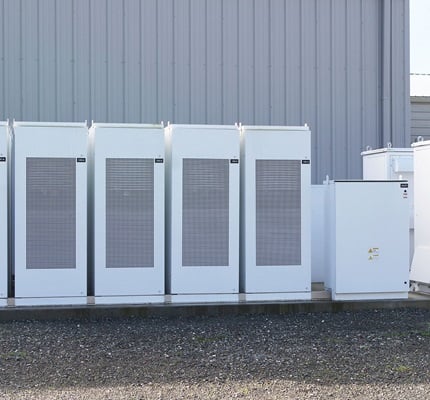
Solar and storage have long been intertwined. The intermittent nature of solar makes storage essential to capture and retain excess electricity for distribution later when the sun sets or is hidden by clouds.
The relationship has evolved. It is not enough to simply have access to storage. Now, more new installations include solar photovoltaics and storage capacity installed on the same site.
According to the U.S. Energy Information Administration, over 16% of new utility-scale solar capacity added in 2026 is "co-located" with operable battery storage. This statistic measures projects developed as of September 2026, and it reflects a steady increase over the past nine years. The same metric stood at only 2% in 2017.
The EIA shared the data in a "Today in Energy" analysis published on Oct. 30, called "The share of solar generation with co-located battery storage is increasing."
Other data shared by the EIA help define the trend. For example, the annual capacity of solar generating capacity has been increasing at a torrid pace, also since 2017. In that year, utilities added 5,000 megawatts (MW) of solar capacity. They continued to add the same amount of capacity for the next few years. In 2020, the trend ticked upward and the number doubled to just over 10,000 MW. The increases continued to grow. The amount of capacity added is expected to reach 40,000 MW by the end of 2026.
At the same time, the percentage of new capacity added that was co-located with new battery storage also increased. The percentage is expected to reach about 19% by the end of 2026, based on planned developments. It is expected to almost double, surpassing 30% in 2027 and 2028.
The EIA explains that co-location of battery storage with solar gives utilities many advantages. Specifically, it gives them greater control over how solar generated electricity can be distributed, and it enables them to respond more effectively to price fluctuations. The EIA notes that in markets with large amounts of solar capacity, prices tend to fall when there is more solar output and climb when there is less output. Co-location of solar and battery storage can help utilities moderate those fluctuations in price.
The EIA also notes that Southwest states with their abundant sunshine have higher-than-average solar capacity relative to their overall generating capacity. They also have higher levels of co-located solar and battery storage. According to the EIA's data, as of September, solar photovoltaic represents 13% of the country's total utility-scale generating capacity. Of that capacity, 18% is co-located with battery storage. However, the share of co-location in California, Arizona, New Mexico and Nevada is more than double the national average.
About The Author

LAEZMAN is a Los Angeles-based freelance writer who has been covering renewable power for more than 10 years. He may be reached at [email protected].