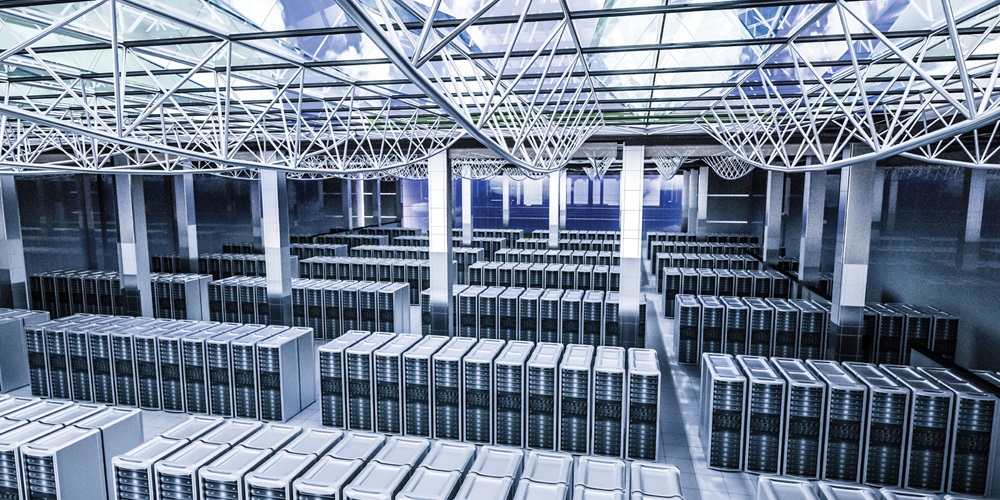
Power demand from data centers could triple by 2028, according to a 2024 report from the U.S. Department of Energy (DOE).
In 2023, U.S. data centers used roughly 176 terawatt-hours (TWh), about 4.4% of the nation’s electricity, according to a Congressional Research Service report. With the rapid growth of artificial intelligence (A.I.) and other tech advances prompting a boom of data centers around the country (and world), this share is only expected to increase. By 2028, data centers in the United States are projected to use 325–580 TWh, or 6.7%–12% of total U.S. electricity, according to an article in the Independent Alliance of the Electrical Industry (IAEI) Magazine.
This will challenge the country’s aging electric grid and climate goals, especially if the centers continue to rely on fossil fuels. More than half (56%) of all electricity consumed by data centers from September 2023 to August 2024 came from fossil fuel power plants, while 22% came from renewable energy and 21% from nuclear energy, according to an article from the Environmental and Energy Study Institute (EESI).
There are many ways data centers can maximize their energy efficiency. The DOE offers an extensive list of clean energy resources to support the electricity needs of data centers, including direct support; grants, loans, financing programs, notices of intent and other financial assistance; reports and tool kits such as the “Data Center Accelerator Toolkit”; technical assistance programs for state and local officials, energy professionals, communities and large energy users; tools like Reconductoring Economic & Financial Analysis (REFA); and training and credentialing.
EESI outlined three paths for data center developers: 1) Build in places with an abundance of renewable energy, 2) Generate renewable energy on-site or 3) Make facilities more energy efficient to reduce the need to draw power from the grid.
Using clean energy can help reduce data centers’ exposure to grid failures. If the electric grid goes down for any period of time—whether a result of natural disasters, hot weather or other reasons—battery storage devices can provide near-seamless backup power to data centers, the DOE explained. Microgrids can also maximize control and uptime, according to a blog on Pacifico Energy’s website focused on the return on investment of employing renewable energy in data center operations.
Solar and storage-powered data centers will also reduce carbon emissions and reliance on backup carbon-intensive diesel generators, according to EESI. Data centers that rely on clean energy are more insulated from fossil fuel price volatility, according to an article from the World Economic Forum (WEF), especially relevant with rising oil prices due to ongoing conflict in the Middle East.
Data centers “need an electricity source that is reliable, consistent, easy to build, quick to market and low-cost,” according to an article from the Solar Energy Industries Association (SEIA).
Renewable energy—specifically solar and battery storage systems—is a clear solution, SEIA said. Solar energy is the fastest growing and most affordable source of electricity in the country, according to the DOE.It can be scaled, distributed and use microgrids, which bolsters grid reliability. Solar projects are also quicker to build than other renewable energy programs, according to SEIA.
“Cost and speed to market are the two most important factors in the A.I. race,” the SEIA article explained. “No other generation source can match solar + storage on these criteria.”
Seven of the top 10 corporate solar buyers are tech and data companies, SEIA said. Amazon, Google, Meta, Microsoft and OpenAI are all making massive investments in A.I. These tech giants have multiple multibillion dollar solar and storage projects in the pipeline to address growing energy demand and build the data center capacity they need.
Data centers can also explore long-term power purchase agreements (PPA) to help fix energy costs and rely less on price volatility associated with fossil fuels, according to WEF. Renewable energy sources such as solar and wind provide long-term cost stability compared to the fluctuating costs of natural gas and coal. In 2021, Amazon and Microsoft were the two largest corporate buyers of renewable energy through PPA, buying power from large-scale off-site solar or wind farms, according to an article in Forbes.
By incorporating solar panels and battery storage, data centers can use stored or generated energy at night or during peak demand. This method, called peak shaving, helps limit peak demand and reduce energy costs. Some facilities have reported savings of 15%–30%, according to Pacifico Energy.
Another form of clean energy that data centers can employ is capturing the waste heat released from IT equipment and servers and repurposing it for district heating grids or other industrial processes, according to “Best Practices Guide for Energy-Efficient Data Center Design,” a 2024 report from the DOE’s Federal Energy Management Program. With life cycles of 30–50 years, data centers can reuse this excess thermal energy, which would lower greenhouse gas emissions in communities by decreasing the use of fossil fuels for heating, according to WEF.
About The Author

Chertock is a poet and renewable energy and science journalist in the Washington, D.C., area. Contact her at [email protected].