The National Electrical Code addresses mechanical execution of work but never describes it or tells the user what constitutes good workmanship. What does this general requirement mean, and how can one determine good from bad? It is usually left to the eye of the beholder, but it is often identifiable when present, and even easier to see when it is not.
There are minimum standards that can be applied to electrical installations to help code users meet the requirements in Section 110.12. NECA has developed a series of useful ANSI-accredited workmanship standards that provide significant guidance in achieving minimum industry standards relative to the quality and performance of the installation expected.
Electrical workmanship
The concept of mechanical execution of work that is neat and workmanlike dates back to the 1897 edition of the code, which was then titled “National Electrical Code rules and requirements of the National Board of Fire Underwriters.” The concept of “mechanical execution of the work” was included in the general provisions of that edition.
That legacy requirement has evolved to address electrical workmanship by the revised requirements in Section 110.12, which now call for electrical work to be installed in a “professional and skillful manner,” in contrast to the former “neat and workmanlike” manner. This section, as revised, describes the characteristics of the worker or installer, rather than the mechanical characteristics of the work or the installation itself. It appears the rule was revised to conform with the NEC Style Manual relative to use of vague and unenforceable terms and to address a perceived gender bias with the word “workmanlike.”
As revised, it is still ambiguous and vague and less clarity is achieved, in my opinion. This is a work in progress and seems in continued need of refinement. As the code continues to evolve, some historical rules are probably better left alone, as their intended meaning and implications have developed over time. This seems like one of those cases. The previous rule is generally well understood in the field. The workmanship issue has significant history and meaning and is directly related to knowledge, qualifications, training and field experience.
‘Qualified person’
The term “qualified person” has also evolved since that early edition of the code and continues to be a vital term used in many NEC requirements. This term is still in need of adjustment as well and should include required “experience and training,” which are vital characteristics essential for one to be considered “qualified” by definition.
It should be clearly understood that the NEC does not indicate who does the work, but in so many rules, qualified people are required and necessary. The NEC appears to be evolving to call for qualified people as a general requirement for all installations covered by the code. This is already an expectation, but not a global NEC requirement—at least not yet.
The National Fire Protection Association (NFPA) has been the sponsor of the code since 1911. The process of developing and maintaining the code is daunting but adds exponentially to its integrity and worth in the electrical industry. The process is open to everyone and allows for proposed revisions based on substantiation. Participation in the development process of the NEC has its benefits, but it should always align with the objective of developing a code that is practical, easy to understand and enforceable.
The concept of mechanical execution of work in electrical construction involves so many aspects beyond the aesthetic appearance of the installation. It applies to performance aspects such as electrical connections, support and securement of wiring methods, applying properly rated protective devices, developing quality electrical engineering and designs, and so forth.
Success in the electrical industry requires one to understand and effectively apply the code to installations and systems, be it as electrical contractors, estimators, project managers, foremen or inspectors. To know the code well and to understand its inner workings is a valuable trait of qualified people who aim to achieve good workmanship.
The code evolves more quickly than many in the field can keep current with. Ongoing training in this industry is essential and requires continued diligence by those that have made it their career. The revision cycle is every three years, which sometimes can be too slow in relation to how fast technologies are changing and evolving. W. Edwards Deming said it best: “It is not necessary to change. Survival is not mandatory.”
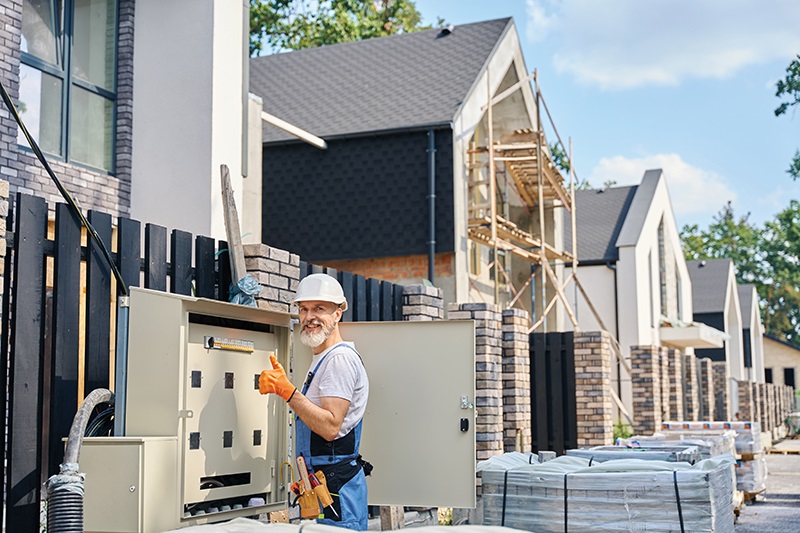
stock.adobe.com/Viacheslav Yakobchuk
About The Author

Michael Johnston
NECA Executive Director of Codes and Standards (retired)JOHNSTON, who retired as NECA’s executive director of codes and standards in 2023, is a former member and chair of NEC CMP-5 and immediate past chair of the NEC Correlating Committee. Johnston continues to serve on the NFPA Standards Council and the UL Electrical Council. Reach him at [email protected].