CQD Spotlight features questions and answers from NECA and ELECTRICAL CONTRACTOR’s Code Question of the Day program.
Whether you’re a seasoned contractor, an apprentice or simply a National Electrical Code enthusiast, you’ll gain knowledge with a nod to the legacy of Charles M. “Charlie” Trout, a true NEC legend.
From the archives—April 22, 2021
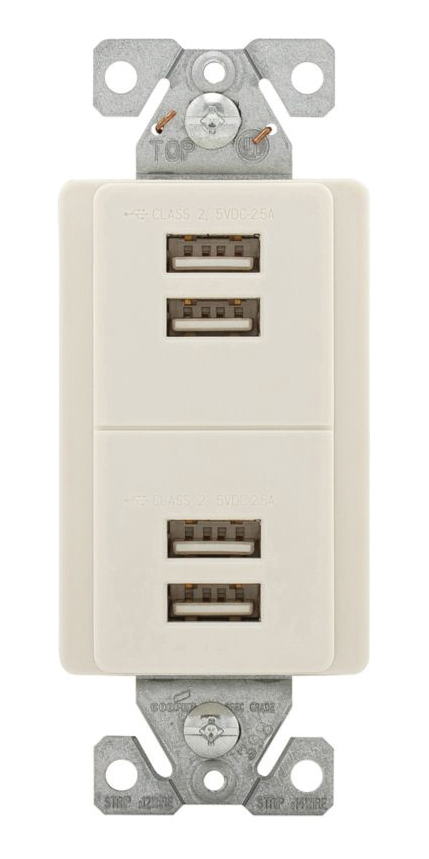
Does a USB outlet in a residential kitchen need to be GFCI protected? It is not a receptacle/USB combo, just USB.
Good question. The simple answer is no. The GFCI requirements in Section 210.8(A) for dwelling unit kitchens apply to 125V through 250V receptacles in the locations specified in 210.8(A)(1) through (11) that are supplied by single-phase branch circuits rated 150V or less to ground. This requirement currently does not apply to USB devices (without electrical receptacles).
eaton
From the archives—April 25, 2023
In your answer regarding island and peninsula receptacles in a previous CQD, you stated, “The installation of a receptacle is no longer permitted in the side of the cabinet for islands and peninsulas.” I do not see where such receptacles are prohibited, just not required.
The newly revised Section 210.52(C)(2) states, “Receptacle outlets, if installed to serve an island or peninsula countertop or work surface, shall be installed in accordance with 210.52(C)(3).”
Section 210.52(C)(3) provides only three (3) location options for these receptacles:
- On or above, but not more than 500 mm (20 inches) above, a countertop or work surface
- In a countertop or work surface using receptacle outlet assemblies listed for use in countertops
- In a work surface using receptacle outlet assemblies listed for use in work surfaces or listed for use in countertops
None of the options provided in Section 210.52(C)(3) are below the countertop in the side of the cabinet. Remember, installing a receptacle in the side of a cabinet was only permitted as an exception to the rule in 210.52(C).
That exception has been removed, which then eliminates the option to install a receptacle in the side of a cabinet.
Get more out of this discussion through the CQD Spotlight podcast.
Post sponsored by Eaton Corp.
As USB charging becomes an expectation in residential spaces, questions continue to arise about how these devices fit within the National Electrical Code—particularly in kitchens, where countertop and GFCI rules are often misunderstood.
A common point of confusion is whether a USB-only device is considered a receptacle. The short answer is no—and that distinction matters. NEC Article 100 defines a receptacle as a contact device installed at the outlet for the connection of an attachment plug. USB-only devices do not accept an attachment plug supplying utilization voltage. Instead, they convert branch-circuit power to low-voltage DC output for charging electronics. From a code perspective, these products function as power supplies, not as receptacles, and are listed as such.
This distinction is reflected in NEC 210.8(A), which requires GFCI protection for 125V through 250V receptacles in specified dwelling unit locations, including kitchens. Because USB-only devices do not provide 125V receptacle outlets, they fall outside the scope of 210.8(A). As a result, a USB-only device installed in a kitchen is not required to be GFCI protected under current NEC language.
More important, USB-only devices are not restricted by the countertop receptacle spacing and location rules in 210.52(C). Those requirements apply specifically to receptacles intended to serve countertop surfaces. Since USB-only devices are not receptacles and do not supply utilization voltage, they are not considered part of the required countertop receptacle system. This opens the door for designers and installers to place USB-only charging stations below the countertop, such as in backsplashes, islands or cabinet faces—providing convenient charging access without encroaching on required countertop receptacle locations.
From a practical standpoint, these devices offer an additional benefit: they reduce reliance on small plug-in “brick” chargers. Many of those chargers are unlisted, counterfeit or not evaluated for long-term installation environments. A listed, permanently installed USB multiport charging station provides a cleaner, safer and more professional solution. While USB charging outlets are not required by the code, they can significantly enhance a kitchen’s functionality. They demonstrate attention to modern living needs, improve customer satisfaction and support safer charging practices—all without conflicting with NEC requirements.
In short, USB-only devices are a smart addition to today’s kitchens: compliant, convenient and code-savvy.