![Picture 1[300.4C]](https://www.ecmag.com/images/default-source/articles/july-2026/picture-1-300-4c.tmb-art-detail.jpg?Culture=en&sfvrsn=53a63355_1)
The 2026 edition of NFPA 70, the National Electrical Code, brings a range of updates to Chapter 3 governing wiring methods and materials. These changes will influence how installations are designed, specified and approved. Here is a look at significant revisions spanning articles 300–393 and what they mean for the industry.
Protect what’s already in the wall
One of the more consequential additions to Article 300 is new language in Section 300.4(C) requiring conductors and wiring methods no longer “suitable for use” be replaced rather than left in place. The revision specifically calls out damage from overheating, fire, corrosive influences and water exposure, and references NEMA GD1-2019 and GD2-2021 for guidance on evaluating water- and fire-damaged equipment.
This change matters in the field. Following a flood or partial structure fire, there has historically been ambiguity about what had to come out versus what could remain. The 2026 NEC closes that gap with a clear directive: if it’s damaged, it goes.
Roof decking protection goes broader
Section 300.6(E) has been expanded beyond metal-corrugated roof decks to cover all roof decking types. Previously, the minimum spacing requirements protecting wiring methods from roof fasteners only applied specifically to metal-corrugated decking. The new language replaces that specific reference with broader coverage of any roof deck, and the phrase “cables, raceways, and boxes” has been updated to “wiring methods and equipment” to reflect the wider scope.
A new exception provides relief where wiring methods are encased in at least 2 inches of concrete in concealed locations—a practical accommodation for projects where concrete encasement is the preferred approach.
Raceway drainage gets attention
Section 300.11(B) now requires raceways in indoor wet locations to provide drainage. This closes a notable gap: similar drainage rules already applied outdoors, but no comparable requirement addressed indoor wet areas such as wash-down spaces in food processing or healthcare facilities. As the industry adapts, this change may raise questions during plan review and inspection.
Cable ties now need to be listed
Section 300.13(E) introduces listing requirements for cable ties and cable tie fixing devices used for securing and supporting wiring. New definitions for “cable tie” and “cable tie fixing device” have been added to Article 100. The informational note that accompanies this section identifies specific type designations—types 2S and 21S are evaluated for securing and supporting cables, flexible conduits and flexible tubing, while other types are appropriate only for cable management.
This is a change with broad practical reach. Unlisted zip ties have been a job-site staple for years. Inspectors and contractors will now need to verify that cable ties used for support are listed and properly identified for the application.
The 360-degree bend rule
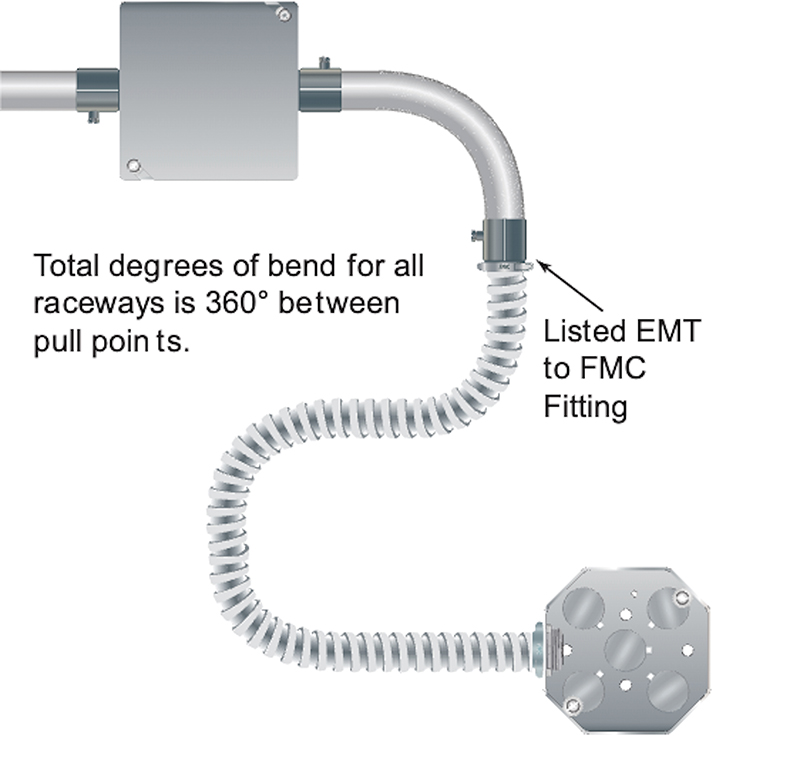
The limitation on bends between pull points has been established within each individual wiring method article; however, there was not a general rule for when an installation transitions from one wiring method to another. New Section 300.24 does not establish a new rule, but a clarification: the 360-degree bend limitation applies even when transitioning between different types of raceways. Placing this requirement in the general provisions of Article 300 ensures it is universally understood regardless of which raceway type is used.
Reconditioned equipment restrictions expand
Two articles, 312 (Cabinets, Cutout Boxes, and Meter Socket Enclosures) and 315 (Medium Voltage Conductors and Cables), now explicitly prohibit the installation of reconditioned equipment. Section 312.3 notes that established reconditioning programs for this category of equipment simply do not exist. The prohibition in Article 315 aligns with NEMA CS 100-2020 guidance on reconditioned medium-voltage cable. These additions are consistent with a broader code trend toward tightening rules around reconditioned electrical equipment.
Hardware for cable support
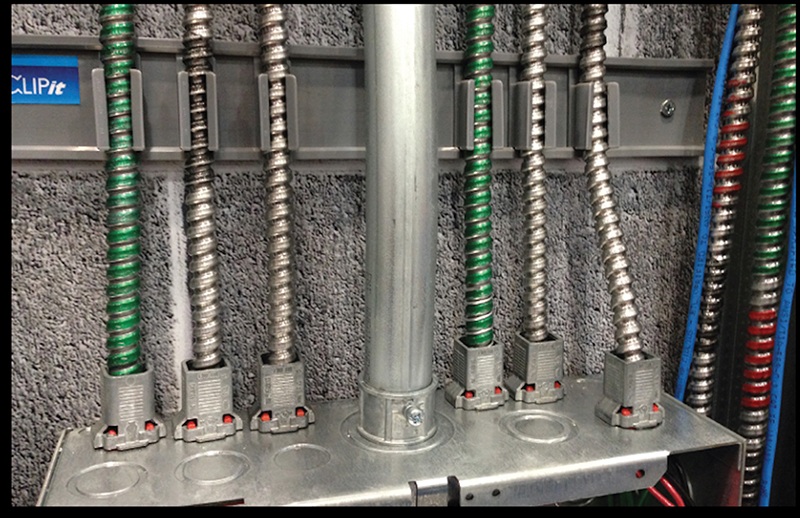
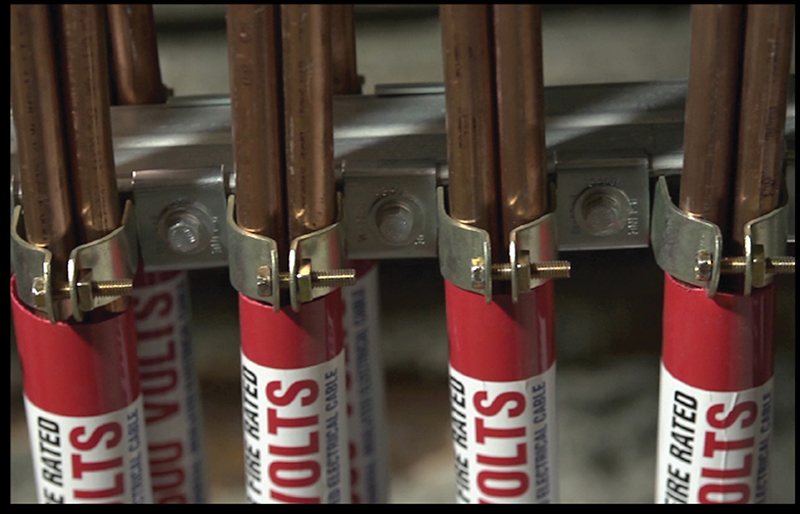
A sweeping set of parallel revisions across articles 320, 330, 332, 334, 336 and 340 adds explicit listing requirements for support and securement hardware, including cable ties, staples, straps and hangers used with armored cable (Type AC), metal-clad cable (Type MC), mineral-insulated cable (Type MI), nonmetallic-sheathed cable (types NM and NMC), power and control tray cable (Type TC) and underground feeder cable (Type UF). The standard referenced across these revisions is UL 2239, which has existed for nearly two decades but was not previously cited in the securement requirements.
The addition of “listed staples” to this framework is particularly noteworthy. Staples are among the most commonly used fasteners on residential and light commercial jobs. Going forward, AHJs will be looking for evidence that staples are listed for support of the applicable wiring method.
 |  |
Intermediate metal conduit
Section 342.29 introduces a new requirement for paired locknuts, one inside, one outside the enclosure to maintain electrical and mechanical continuity when landing intermediate metal conduit. The same requirement appears in Section 344.29 for rigid metal conduit. This change aims to improve the reliability of the ground-fault current path, an ongoing code priority.
Section 342.14 adds bimetallic couplings as an identified means to prevent galvanic corrosion when transitioning between dissimilar metals—particularly relevant in environments where stainless-steel conduit interfaces with other metallic systems.
Cable tray gains a clearance requirement
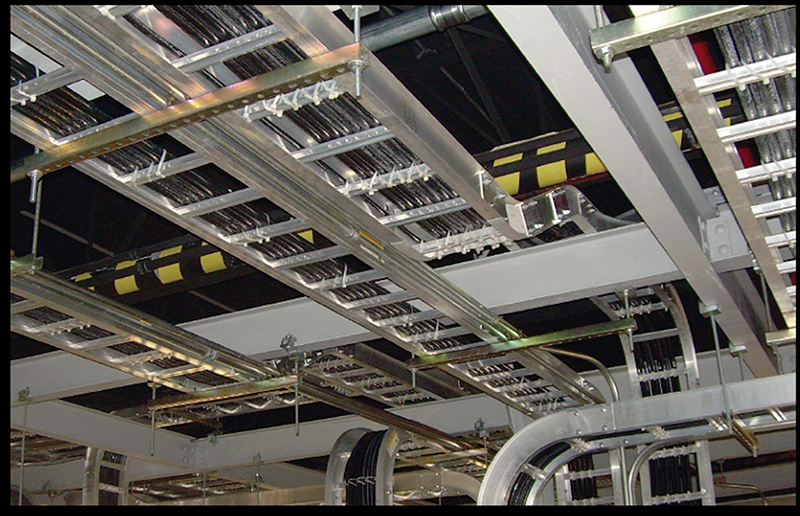
New language in Section 392.18(F) establishes a minimum 12-inch access space above cable tray installations. There are four exceptions addressing certain circumstances, allowing an AHJ to grant special permission for information technology installations and industrial locations with qualified personnel. This is a welcome addition for maintenance accessibility in facilities where cable trays are densely populated and overhead access has historically been an afterthought.
Taken together, the 2026 NEC Chapter 3 changes reflect a consistent push toward greater specificity in listing requirements, broader application of existing safety principles and clearer language for inspectors and installers navigating field conditions. Electrical contractors who begin familiarizing themselves with these changes now will be better positioned to adapt their practices, train their crews and avoid costly rework when the 2026 code is adopted in their jurisdiction.
Electrical training alliance / iaei
About The Author

Kyle Krueger
Executive Director of Codes and StandardsKRUEGER is NECA’s executive director of codes and standards. He has worked in the electrical industry for over 25 years as an inside wireman, authority having jurisdiction and educator. Kyle currently represents NECA on the NEC Correlating Committee, Code-Making Panel 3, NFPA 72 Correlating Committee, NFPA’s Electrical Section Executive Board and the UL Electrical Council. Reach him at kkrueger@ necanet.org.