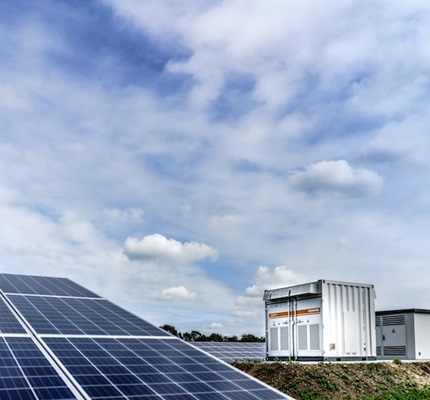
The U.S. energy storage market set a new record for growth in the first quarter of 2025 by adding more than 2 gigawatts (GW) across all segments, according to the most recent U.S. Energy Storage Monitor report from Wood Mackenzie and the American Clean Power Association (ACP). The utility-scale energy storage segment led with more than 1.5 GW of new capacity, marking a 57% increase compared with Q1 2024.
John Hensley, ACP’s senior vice president of markets and policy analysis, said the energy storage market is responding in an affordable and reliable way to unprecedented growth of energy demand. As utilities, regulators and communities integrate technology into their resource planning, they are seeking grid-scale energy storage.
“Policy uncertainty is now one of the most significant risks that remains on the horizon as we tackle a balanced approach to allowing our economy to expand while maintaining the energy reliability that Americans deserve,” Hensley said.
Indiana experienced significant market growth in Q1. The Hoosier state added 256 megawatts (MW) of new storage to the grid and has more than 10 GW of new storage active in the interconnection queue—the fifth-largest storage queue in the country. This is due in part to land availability and clear state permitting guidelines.
“We’re now seeing significant deployment of energy storage resources in emerging markets like Indiana, while states across the Southwest like Nevada and Arizona continue to expand their energy storage portfolio,” said Noah Roberts, ACP’s vice president of energy storage. “Energy storage was the second-most deployed resource in Q1 2025, demonstrating its unique ability to be quickly built to address critical reliability needs.”
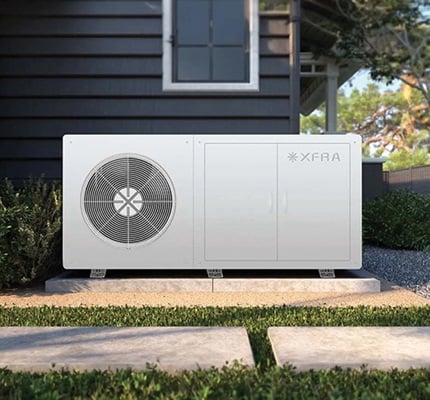
Another market that experienced significant year-over-year growth is the residential storage market, with installation of a record-breaking 458 MW in Q1. California and Puerto Rico led this growth with 74%, but new markets like Illinois are beginning to emerge.
Despite what is considered a strong five-year utility-scale capacity forecast, the segment is at risk for a potential 29% contraction in 2026 due to policy uncertainty. Already, the community-scale, commercial and industrial segment has seen a 42% reduction in its five-year outlook as it faces tariff uncertainty and slower-than-anticipated transition to NEM 3.0 projects in California.
According to the report, 15 GW/49 gigawatt-hours (GWh) of energy storage capacity will be installed across all segments in 2025. Expected growth of the utility-scale segment is 22% year-over-year in 2025. However, changes to current tax credits could affect the industry’s overall growth.
Perhaps the most affected segment would be distributed storage, with a potential 46% decrease over the next five years. Furthermore, tax provision changes mean utility-scale installations could decrease by 16 GW over the next five years.
“The industry stands at a crossroads, with potential policy changes threatening to disrupt this momentum,” said Allison Weis, global head of storage at Wood Mackenzie.
About The Author

Lori Lovely is an award-winning writer and editor in central Indiana. She writes on technical topics, heavy equipment, automotive, motorsports, energy, water and wastewater, animals, real estate, home improvement, gardening and more. Reach her at: [email protected]