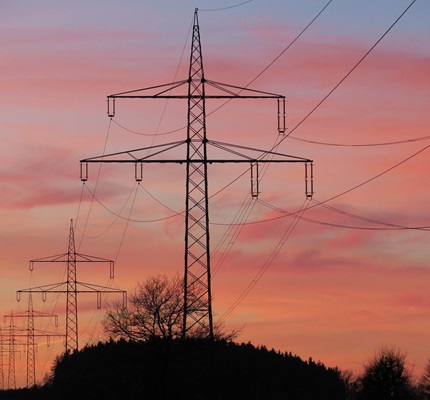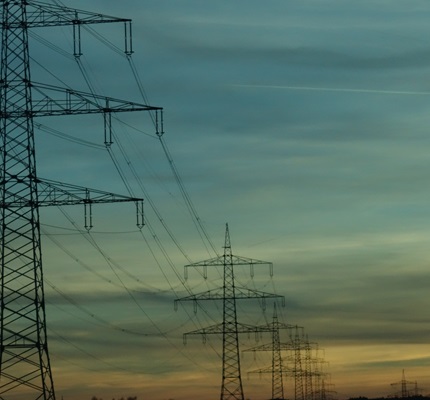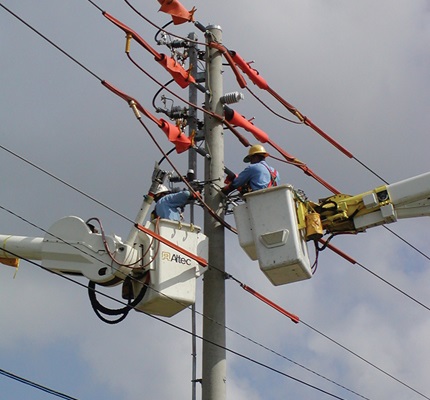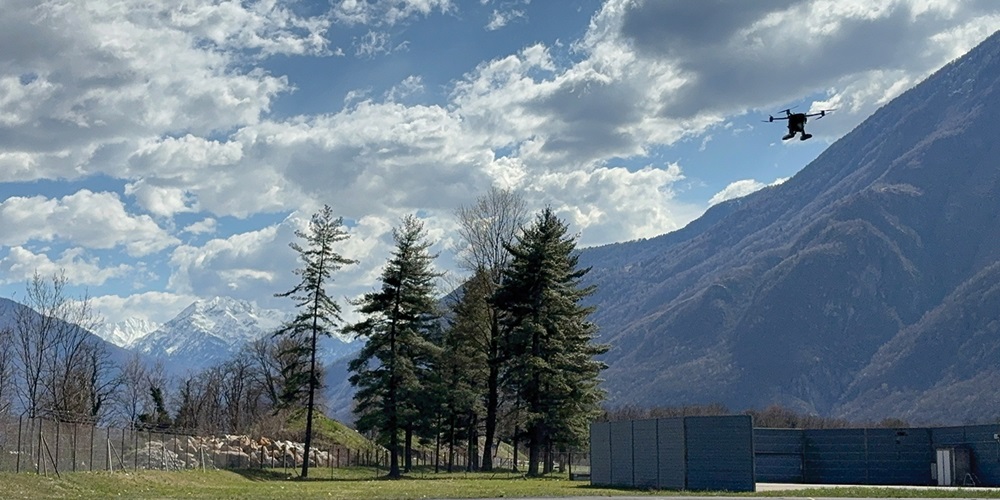
Four utilities in the Northeast owned by Avangrid, Orange, Conn.—New York State Electric and Gas, Rochester Gas and Electric, Central Maine Power and United Illuminating in Connecticut—use drones for comprehensive visual inspections on the group’s transmission system, according to Paul Iannuzzelli, manager of networks standardization and maintenance for Avangrid.
“Drones give us the ability to take high-resolution photos in close range to detect electrical or structural defects that might not be easily seen via helicopter inspections or visual inspections performed from the ground,” Iannuzzelli said.
The drones take multiple photos of each structure from several meters away at different angles to enhance deficiency detection, he said. Drone photometry is reviewed by qualified personnel to identify and categorize any damage. Deficiencies are then mitigated by either the utilities’ operations group or an external vendor within a capital project program.
Before any flight, the utilities report their plans to Avangrid’s Energy Control Center and local area managers, who coordinate with the local police department or other public agencies.
“That way, if the general public calls them to wonder who is flying the drones, authorities can let them know it’s approved,” Iannuzzelli said. “Safety is always our No. 1 concern—not only safety of personnel, but also safety of the customers we serve and the general public.”
Per FAA regulations, the drone pilots are certified under Part 107, in which utility personnel must maintain a visual line of sight of the drone while in flight, he said. Since the drone pilot spends the majority of flight time looking at the control screen, an observer walks along with the pilot to maintain visual line of sight of the drone.
“Right now we must have a visual line of sight per FAA regulations, but future technology advances that further [ensure] drone flight safety may allow for preprogrammed flight of drones with no line-of-sight requirement,” Iannuzzelli said.
The utilities conduct preflight checks, making sure that the weather is acceptable and that all FAA required clearances are maintained. Avangrid’s corporate security grid protection requirements ensure that information about the utilities’ critical infrastructure from drone telemetry data is kept confidential.
“Our pilots work off a ‘shot sheet’ which shows how the drone should be oriented with respect to the structure,” Iannuzzelli said. “Maintaining uniformity in how the inspection photos are taken is beneficial to the personnel reviewing the photos.”
Photos of deficiencies are reviewed and prioritized as they relate to the safety of the general public and the reliability of the electric system, he said. Priority one deficiencies are the highest priority and are mitigated within seven days of finding the deficiency.
Drone of many uses
Avangrid’s utilities want to expand the use of drones for a variety of other purposes, including:
Assessing vegetation encroachment to better optimize trim schedules, which positively affects grid reliability
Substation inspections for perimeter integrity assessment, theft prevention, equipment assessment and gauge logging
Prework inspections to assess critical infrastructure when taken in and out of service—for example, if a substation has parallel transmission line supply and work needs to be done with one line de-energized, the utilities could use drones to determine if there are any issues on the remaining line
Engineering assessments and considering right-of-way encroachments that might cause a construction issue when trying to determine the scope of a new transmission project
Obtaining up-to-date assessments of the quality of equipment that the utilities have on the lines
Obtaining more accurate GPS information of the utilities’ assets, as sometimes geolocations of assets have inaccurate coordinates that need correcting
“We are looking towards utilizing A.I. platforms for photometry review,” Iannuzzelli said. “We are currently training an internal platform with the hope that within the next few years, the platform will be able to assess deficiencies with a better than 90% confidence.”
Training programs
To fly a drone over any utility property, including power lines, operators need to have a certification and permission, he said. Without those, it’s a federal offense. The same rule applies to lesser-known drones, such as small robots that move around in substations to check if everything is working properly or anything needs to be repaired.
The IBEW-NECA Electrical Training Alliance (ETA) is deploying a drone certification program in partnership with the Unmanned Safety Institute (USI) based in Orlando, Fla., said Virgil Melton, director of ETA’s outside line program.
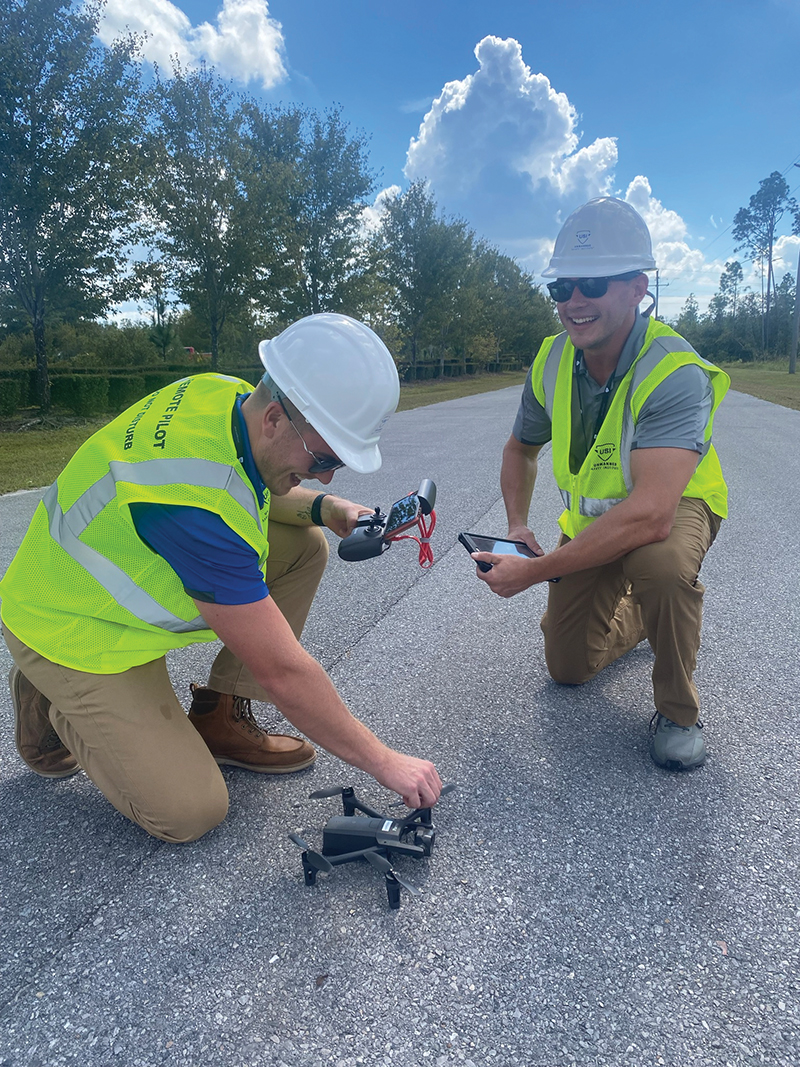
Drone pilots have a sheet showing how the device should be oriented.
“Our certification program will not only be available to apprentices, but also to all journeypersons already employed by a NECA contractor who is inspecting any type of flexible equipment—both line contractors and electrical contractors,” Melton said. “When you fly a drone over anything, it’s very important that you know what you’re doing.
“A lot of utilities are using drones now, so we want to try to get something on the training side,” he added. “It’s important to the industry to have a safer and quicker way of inspecting lines that may have been damaged in a storm and things of that nature. You can take that drone and do that in a day, whereas sometimes it takes weeks and months to do it manually.”
USI is offering the ETA a turnkey training and certification program, said Josh Olds, co-founder, president and CEO. It’s a combined model where USI personnel will train trainers at an ETA center, and then ETA will have USI-certified flight instructors, curriculum and certifications to train lineworkers across the various ETA centers across the country.
“We’re training the trainer so they can upskill their respective lineworkers or electricians to safely and effectively operate drone technology,” Olds said.
In USI’s program, trainers are taught the commercial requirements of FAA Part 107 and the extended requirements aligned to ASTM International standard, he said.
“In the world of drone technology, you have legal requirements to fly unmanned aircraft systems commercially with the FAA Part 107—but that’s really like getting your driver’s permit,” Olds said. “It allows you to fly for hire, but it doesn’t expand on the safe use of technology in the corporate workplace. So USI built a training and education program that is an approved training by ASTM—the only company in the world that has done that.”
Part 107 is general knowledge about drones that an individual needs to operate in the national airspace, he said. Then, using the ASTM standard, USI instructors conduct “a deep dive” in the technology from an operational and maintenance perspective of the drone.
For example, USI teaches trainers how to instruct, follow processes and properly recognize the various hazard domains that drones can encounter from an operational, environmental or personal perspective, so the pilot can understand how to safely and professionally use the technology in the field. USI’s program also teaches proper camera techniques, to capture good data, shot angles and sensor uses.
“Anyone can go to the FAA testing center and take a two-hour test—but we go beyond that,” Olds said. “We prepare professionals to operate safely and effectively within corporate workforce environments. We provide experiential learning, skill sets and competencies, so they can use it efficiently and effectively while mitigating risk to the corporation.”
USI’s program is a hybrid model, he said. About 80% to 85% of the program is delivered through online live instructor-based training and self-paced formats that culminate with a third-party proctored testing to evaluate the competencies.
“Then perhaps the most important part of the program is live in-person flight and maintenance training, where they learn and practice how to fly and fix the drone,” Olds said. “They also learn all the processes of operation, including following checklists, conducting mission briefings, job safety assessments, and flight risk assessments—identifying any hazards that could hinder the operation.”
With this live training, trainers and students learn how to practically operate drones safely in sustainable, repeatable formats—and also how to properly deploy the payload, he said. There are multiple modalities for course offerings. The most common is an eight-week hybrid online/in-person model.
The programs can also be delivered fully self-paced online or fully in-person, workshop style. Regardless of the model, the training culminates with in-person, hands-on training.
“At IBEW conferences, we are educating contractors on emerging drone technology, how it’s being used for utility companies today, how it’s impacting the way contractors do work and how they can enhance safety in their jobs to keep operations moving smoothly,” Olds said. “We’re also educating contractors on where the technology has expanded, including ground and water robotics.”
Future possibilities
One future use will be expanding the use of drones beyond visual line of sight, Olds said. In June, the White House issued an executive order, “Unleashing American Drone Dominance,” directing the FAA to propose a rule for flying unmanned aircraft systems beyond visual line of sight. This will be Part 108, replacing the need to obtain a waiver within Part 107 to fly drone technology beyond visual line of sight.
“Electrical utilities are one of the largest users of emerging technology in the world,” he said. “We’re trying to empower line workforces by providing an entirely new skill set within an existing great career field.”
Today, a lot of electrical utility companies either hire external vendor flight services or they do it in house—but line contractors who already perform work for utilities could become that flight professional, he said. Contractors should participate in the ETA’s program to upskill their lineworkers in drone technology, so contractors can offer a value-added service to utilities.
“Electrical contractors can also upskill their electricians because the use cases of drones, particularly heavy-lifting drones, has only just begun,” Olds said. “We haven’t even scraped the surface on use cases for drone technology in the construction industry.” //
About The Author

KUEHNER-HEBERT is a freelance writer based in Running Springs, Calif. She has more than three decades of journalism experience. Reach her at [email protected].