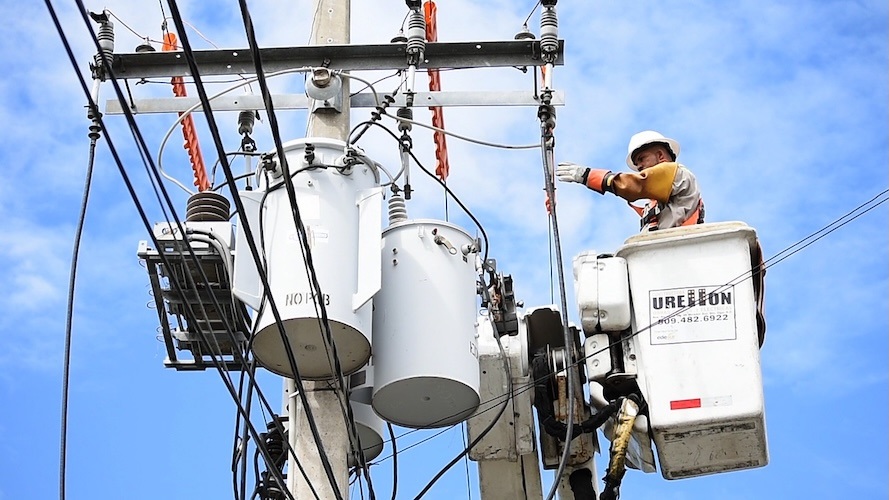
It is the nature of politics to add uncertainty to policies and regulations.
When the Biden administration published its Energy Conservation Standards for Distribution Transformers in 2024, the rule represented a compromise of sorts. Recognizing the manufacturing and supply constraints on the use of more efficient elements, the rule included a relaxed standard.
The American Public Power Association (APPA) reported at the time that the rule required only 25% of transformers to use the more efficient, but more expensive, amorphous steel cores. The remaining 75% of transformers could continue using less efficient, but more common and less expensive, grain-oriented electric steel (GOES) cores.
Stakeholders appreciated the balanced approach. APPA said in its statement that it “appreciates the Department of Energy taking positive steps in its final transformer efficiency standards rule.” One popular detail was the 5-year timeframe for compliance. Utilities did not have to comply until 2029.
Now, the Trump administration is considering changing that rule. In June of this year, the Department of Energy (DOE) published a Request for Information (RFI) on potential changes. In the RFI, the DOE cites President Trump’s January 2025 Executive Order declaring a national energy emergency, and his April 2026 finding that grid infrastructure and its associated upstream supply chains, including transformers, as essential to national defense.
Based on these previous orders, the new RFI is seeking data and information to determine how the 2024 efficiency rule interacts with domestic manufacturing, supply chains and national defense. The DOE is also seeking suggestions on actions it could take to expand domestic manufacturing of distribution transformers and on whether the 2024 standards result in “special hardship, inequity, or unfair distribution of burdens.”
Comments from industry stakeholders were mixed. Some industry groups, like the Edison Electric Institute (EEI), a national trade association of investor-owned electric companies, urged the administration to keep the existing rule, but extend the timeline for compliance.
“We support the existing Final Rule, but request greater flexibility with the compliance timelines,” wrote Jennifer DeCesaro, senior vice president, industry operations for EEI, in written public comments.
On the other hand, some manufacturers welcomed the possibility of changing the rules.
“As the demand for distribution transformers continues to grow, the enacted 2029 EPCA standards could introduce significant risks to supply reliability, manufacturing capacity, and affordability,” stated Hitachi Energy in its public comments. “Hitachi Energy strongly urges the Department of Energy to suspend the implementation of the 2029 energy efficiency standards for distribution transformers until the material availability naturally incites change in the industry.”
The public comment period on the RFI ended on July 15.
About The Author

LAEZMAN is a Los Angeles-based freelance writer who has been covering renewable power for more than 10 years. He may be reached at [email protected].
.tmb-art-li-th.png?Culture=en&sfvrsn=9278ce2b_1)