I recently had the unique experience of touring a modern data center. It was not one of the newfangled artificial intelligence (A.I.) computing factories.
As I was guided around this data center, it occurred to me how much a smart building should be designed like this. All that was missing was office space or a manufacturing floor. There is a lot to learn about smart buildings from data center designs.
When you arrive at the data center, you must go through several levels of security to get inside, including to enter the parking lot and the lobby. In the data center I visited, there were offices for visitors and a secure section of private offices for the employees of the company that owned it. As I walked around, my hosts needed a key card to open every door.
What’s inside a data center?
Once inside the data center proper (another key card entry), I saw what looked like a large warehouse with the floor covered by rows of wire cages, each filled with racks of equipment and lots of blinking lights. This equipment was mostly for the customers who locate their servers here, but a few cages belonged to the owner, and a few others were devoted to special operations.
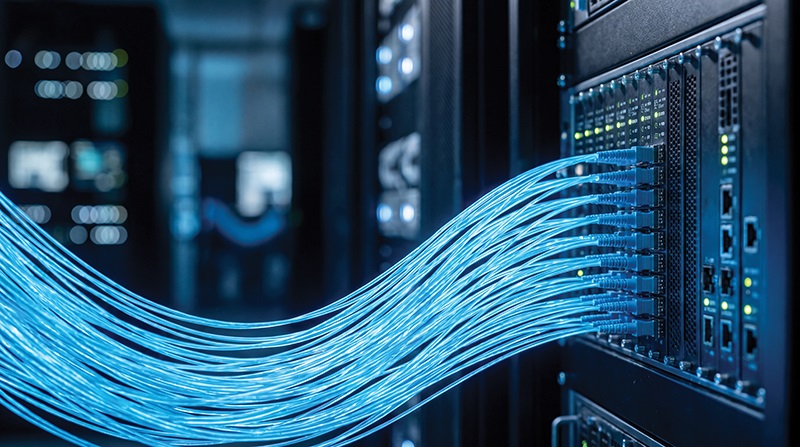
Since data centers are designed to accept and provide data from the outside world, the building must accommodate many connections to it, all on fiber optics, of course. There is a large entrance facility where cables come into the building and are connected to the electronics supporting each service provider connected to the building.
This particular data center was near the coast and had one special connection: a transoceanic cable that provided services to numerous customers. There was one cage full of equipment to handle the terabits of data carried by the cable and to connect it to many other service providers as well as customers in the building.
When you look up, you can see cable trays filled with the large numbers of cables needed to connect to the outside world and to the other cages in the data center. The “meet me” cage is where those being hosted in the data center can connect to others in the same building without going outside through the internet—a setup that reduces latency.
Most cages were filled with servers, switches and storage, which are the essential elements of a data center. Some were probably serving corporate data, while others may have been streaming services locating their content near local users to reduce traffic on the internet, web services such as cloud hosting or applications like TikTok.
Power needed
All of these services use electronics that require lots of power. This data center had been built across the street from a large utility substation that provided megawatts of power. But a data center needs backups in case of outages, so there were large battery systems that could power the data center for a short time until large diesel generators could come online. The employees also showed me the newest installation: a bank of fuel cells that were being tested to hopefully replace the diesel generators with a cleaner source of energy.
Consuming megawatts of electrical power generates heat, so there were large cooling towers for air conditioning, giant AC ducts and big, noisy fans. Data centers are not quiet places.
Every feature described here applies to a smart building. You need a large entrance facility to accommodate lots of cables coming in and going out. You need space for equipment, provision for easy installation of cables, adequate power—including backup—and air conditioning. You need security for entry and monitoring. If the building has multiple levels, you have to support all the hardware users need on every floor. You should even have a “meet me” room located within or near the entrance facilities.
And then you will need what every building needs: office space, a manufacturing floor or space for whatever will occupy the building.
stock.adobe.com/AVA
About The Author

HAYES is a VDV writer and educator and the president of the Fiber Optic Association. Find him at www.JimHayes.com.