Since May is National Electrical Safety Month, let’s take a break from the series on branches and feeders to talk more in-depth about the National Electrical Code. As you’ve read in this magazine before, the NEC’s purpose is the practical safeguarding of people and property from hazards arising from the use of electricity. It all starts with the proper installation of an electrical system. The NEC is the most successful safety document our industry has ever seen. NFPA 70 (NEC), NFPA 70B and NFPA 70E, the big three electrical documents, are published by the National Fire Protection Association. Take any one of these out of the loop and the risk of injury from electrical hazards increases significantly.
I hear this all the time: “I thought the NEC was an installation document. What place do safety requirements have in the NEC?” Well, hypothetical question asker, I am so glad you asked! Let’s look at a few of the installation requirements in the 2026 edition of the NEC that directly affect worker safety when done properly. Of course, every requirement in the NEC is a safety requirement, but let’s look at a few specifically rooted in personnel safety.
Label making
One of the biggest safety measures in the NEC is Section 110.16, Arc Flash Hazard Marking. This section has been around for a few cycles but has been getting a lot of attention lately because it is evolving. At first, this section was simply about warning workers that there could potentially be an arc flash hazard if the equipment was opened. Then the requirement was added that for service equipment larger than 1,200A and not in dwelling units, the marking or label would need to include specific information about the installation that would assist in the required risk assessments from NFPA 70E. Fast forward a few revision cycles to 2026, and this requirement is essentially the same information as what NFPA 70E requires on the label. Also, it applies to all service- and feeder-supplied equipment likely to require examination, servicing, adjustment or maintenance while energized.
So, why is this a big deal for electrical safety—doesn’t NFPA 70E already require a label like this? Yes, it does, and the only difference between the NEC and NFPA 70E labels is that the NEC requires the date the assessment was performed to be on there, too. But this is a major win for electrical safety efforts because the NEC applies at the time of initial installation. This label must be applied now as a part of the initial installation and not left up to the equipment owner to hopefully comply with NFPA 70E down the road. This has been a problem due to ignorance or willful decisions not to prioritize these efforts.
This has led to new equipment being installed without labels or without a plan to get it labeled. Unfortunately, this often is accompanied by employers saying their employees don’t work in energized electrical equipment, so they contract that out. Every time I hear that statement, my skin crawls a little bit, because it implies that a hired contractor’s safety does not have the same priority as the safety of their own employees. This requirement starts the process of fixing that—and while it is only for new equipment installed per the 2026 NEC, it is a step in the right direction, in my opinion.
GFCI concerns
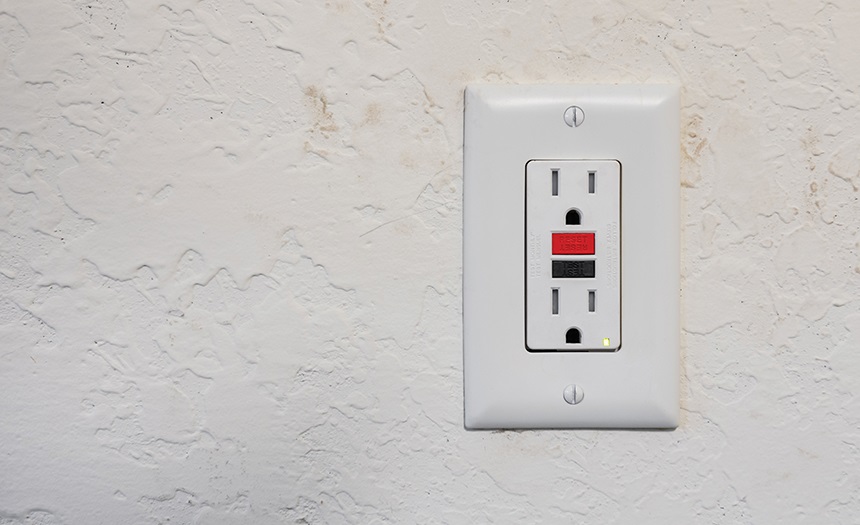
Next, we need to discuss one of the most prevalent safety-by-design features in the NEC. I mean, what would an NEC and safety conversation be without mentioning the ground-fault circuit interrupter? GFCI protection is not a new requirement in the NEC and has been around since before I was born. But it seems like just about everywhere you look in the code is a mention of GFCI protection.
So, what is the big deal? Well, the premise is simple and based on physics. What goes out on the circuit must come back in. If it doesn’t, then the current will find a different path back to the source, and that path could be through a person, so let’s shut it down until that alternate path is fixed. This doesn’t 100% prevent an electric shock, and it relies on the shock happening to jump in. But it significantly reduces the time an individual experiences that shock, which is critical.
Avid readers of this column will remember “GFCI Mythbusting,” which I wrote in the August 2025 edition of ELECTRICAL CONTRACTOR. I won’t rehash all the myths, but I do want to look at where the NEC requires GFCI protection, because one of the biggest myths is that the NEC requires GFCI anywhere electricity is around water, as though water is the magic element that sparks the need for GFCI. Water really has nothing to do with it. What sparks the need for GFCI is the proximity of electrical equipment to an effective alternate path for current. Bathrooms, kitchens, the outdoors, garages and many more locations tend to have great alternate pathways for electrical current to take if a person were to bridge the gap. So, we see requirements for GFCI protection in all these locations.
There are also GFCI requirements for electrical equipment used in a way where the shock risk might be elevated, such as cord-and-plug-connected power tools on construction sites. A damaged extension cord or faulty tool could easily cause a shock when someone uses it, and, therefore, GFCI protection is needed.
Requirements to keep people safe
GFCI and the arc flash label requirements are rooted in directly providing means for personnel safety, but there are so many more NEC requirements that focus on the same. Pretty much all of chapters 5, 6 and 7 focus on modifying the rules due to specific hazards related to unique locations, equipment or conditions. Take, for instance, the hazardous location rules. These requirements exist to minimize the chance that the electrical system will turn your workplace into a bomb!
Rules for healthcare facilities covered in Article 517 are essentially written to ensure that the doctors who are trying to save lives continue to have the tools they need available to them, even if there is a complete loss of power on the grid.
And I would love to take a deep dive into Article 680 and swimming pools to show just how much the NEC committee has prioritized your safety during your free time lounging around the pool on a hot summer day. Unfortunately, we can only cover so much here in any form of detail, but this illustrates the point. The NEC is arguably the most prolific safety document serving our industry and continues to evolve to protect you at work and those you love at home.
Next month’s article will return to the deep dive into how the feeder tap rules apply and how the NEC keeps us safe.
Until next time, stay safe and remember to always test before you touch!
stock.adobe.com / Scott Habermann
About The Author

Vigstol is an electrical safety consultant for E-Hazard, a provider of electrical safety consulting and training services. He is also the co-host of E-Hazard’s electrical safety podcast “Plugged Into Safety.” For more information, check out www.e-hazard.com.