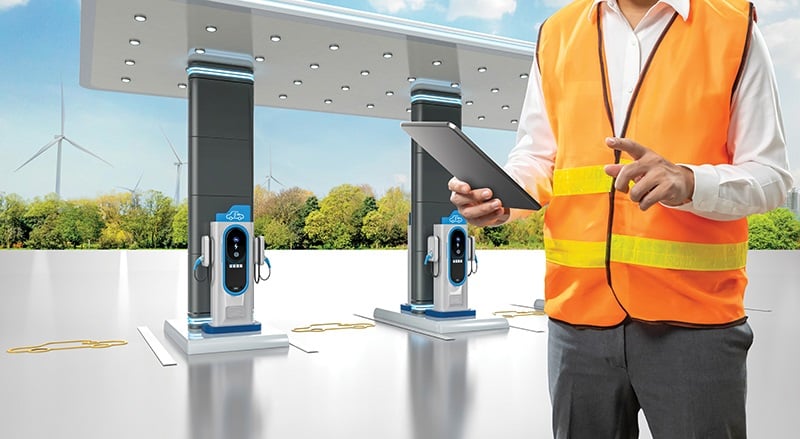
The rise of electric vehicles is transforming the industry and increasing demand for installation of electric vehicle supply equipment (EVSE), more commonly known as EV charging and power transfer systems. They introduce high-energy electrical infrastructure into parking garages, commercial properties, industrial facilities and residential settings. Although EVSE deployment presents significant opportunities for electrical contractors, it also introduces unique safety hazards that require careful planning, installation and maintenance. Electrical workers must understand that EVSE operates differently than traditional electrical equipment.
EVSE often involves continuous loads, bidirectional power transfer, outdoor installation environments and direct interaction with the public. They include conductors, equipment and devices that connect EVs to building wiring systems, which may use conductive, inductive or wireless power transfer. They can also support bidirectional current flow between vehicles and facilities. However, new code language recognizes these systems as infrastructure connecting EVs to premises wiring for charging, power export or energy storage applications.
EVSE hazards
The National Electrical Code established EVSE requirements for wiring methods, grounding, overcurrent protection, labeling, ventilation and installation practices. These standards are critical because EV charging systems function as high-energy continuous loads, often operating for extended durations at significant amperage levels. Therefore, electrical workers must ensure that feeder and service load calculations properly account for sustained loads. Failure to properly design or install these systems can result in shock hazards, fire risks, equipment failure and potential injury to workers and the public.
EVSE installations present several electrical hazards that contractors must address. The most obvious is exposure to high-voltage and high-current charging systems. While traditional electrical equipment is in secured rooms, EVSE infrastructure is often installed in public areas such as parking lots, garages and fleet yards. This creates increased exposure to physical damage, environmental hazards and unauthorized access.
As a safety measure, the NEC requires EV charging equipment to be installed in areas protected from physical damage, and barriers or bollards may be required when located near vehicle traffic. It must be mounted at a safe height and protected against water intrusion.
There is a significant risk of fire and thermal runaway on EVSE. Lithium-ion battery systems used in EVs also present unique fire risks. Charging failures, equipment damage or thermal runaway events can produce intense and prolonged fires that behave differently from traditional vehicles. Charging stations must be positioned away from flammable materials and installed in well-ventilated areas to reduce fire hazards and prevent overheating conditions. Additionally, the NEC dictates that charging equipment has emergency disconnects, which are designed to allow first responders to quickly eliminate external power sources in the event an incident occurs.
Health and safety programs must include practices to address all hazards, such as one for electrical safety that covers high-voltage exposure and arc-flash risks, and a hazard communication program for chemical issues related to EV batteries and cooling systems.
Regular inspections and maintenance are imperative. Industry guidance recommends routine testing, cable and connector inspections, verification of protective devices and preventative maintenance programs aligned with equipment maintenance standards.
Worker training
As with any emerging technology, worker training is critical. OSHA requires employers to communicate hazards associated with EV charging systems and provide employees with necessary training to safely install, operate and maintain equipment.
Employers should post clear signs to identify voltage, amperage and operational hazards. This helps protect workers, facility personnel and the public from improper use or accidental exposure.
Employers and workers must keep up with evolving NEC requirements, manufacturer specifications and industry best practices. Additionally, contractors should recognize that EVSE infrastructure often becomes a public interface with electrical systems, a departure from traditional electrical installations. Individuals with little or no electrical safety training may use charging stations, and this fact alone underscores the importance of proper installation, labeling and protective system design.
stock.adobe.com/phonlamaiphoto
About The Author

O’CONNOR is safety and regulatory affairs manager for Intec, a safety consulting, training and publishing firm. Reach him at [email protected].