Advancements in technology are rapidly changing many facets of our lives, including personal protective equipment (PPE) for electrical workers. Electricians and lineworkers have long relied on PPE to protect against shock and arc flash hazards. PPE is often seen as the last line of defense in protecting worker safety. While the fundamentals haven’t changed, the equipment has evolved significantly.
When most people think of modern protective solutions, they think of wearables. However, technology and advancement go far beyond that. PPE that was bulky, uncomfortable and often avoided is now lighter, more functional and increasingly integrated into mobility and daily work. For electrical workers, these advancements directly affect productivity, worker acceptance and, ultimately, safety outcomes.
Electrical PPE exists because hazards cannot always be eliminated. NFPA 70E continues to emphasize the hierarchy of risk control: eliminate the hazard first, then substitute, engineer and administratively control before relying on PPE. PPE is the last step in that process, not the plan itself.
However, expectations around PPE have increased. Workers now expect gear that protects them and enables them to do their job efficiently. They expect PPE to meet compliance requirements without creating new risks such as heat stress, restricted mobility or lower visibility. This thinking has driven innovation across nearly every category of electrical PPE.
AR clothing
One of the most noticeable improvements has been in arc-rated (AR) clothing. Older arc flash gear was often heavy, stiff and uncomfortable, which sometimes meant people didn't use it in the field. They would avoid wearing it unless absolutely necessary, particularly in hot environments.
Modern arc-rated fabrics have changed the game. Today, manufacturers are offering lighter-weight materials with improved breathability and moisture-wicking properties. Additionally, multilayer systems have been refined to provide required arc ratings without excessive bulk.
NFPA 70E requires arc-rated clothing to be selected based on energy exposure or the PPE category associated with the task. Modern PPE can meet those ratings without sacrificing comfort and mobility. For contractors, this has translated into higher use and compliance rates.
Gloves, face shields and boots
Rubber insulating gloves remain one of the most critical pieces of PPE for electrical workers. They are also one of the most heavily regulated. OSHA requires insulating gloves to be tested regularly and maintained in accordance with established standards. Gloves must still be checked prior to each use for issues including punctures, cracks and contamination.
While the basic function of voltage-rated gloves remains the same, improvements have been made in materials and manufacturing processes. Modern gloves offer better flexibility and tactile sensitivity, which allows workers to perform more precise tasks without removing protection. Durability has also improved, and it reduces the likelihood of cuts, abrasions and premature failure.
Arc flash face shields and hoods have also seen significant improvements. Older designs were often criticized for poor visibility, fogging and excessive weight. These issues could create secondary hazards, especially if workers remove protection to see clearly.
Newer face shields incorporate antifog coatings, improved vision and better ventilation. Some designs even integrate with hard hats and hearing protection systems, reducing the number of separate components workers must manage.
Foot protection often receives less attention than other PPE, but it plays an important role in reducing shock hazards. Dielectric footwear helps isolate workers from ground potential, particularly in environments where moisture or conductive surfaces are present. Advancements in materials have improved insulation properties and wearability. Modern dielectric boots are lighter and more comfortable, making them more practical for extended use. Insulating mats and blankets are used to cover energized parts or create barriers in work areas, and newer materials offer better durability and ease of handling.
Putting it all together
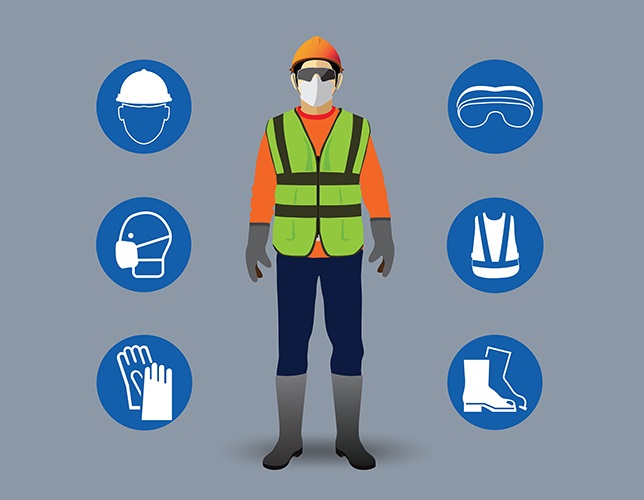
A recent trend in PPE is integration. Rather than treating each piece of equipment as separate, manufacturers are developing systems that work together. For example, some hard hats have integrated face shields and hearing protection. This approach makes it easy for workers and helps ensure all required protections are in place. For contractors, integrated apparel offerings can simplify training and enforcement. Instead of managing multiple individual components, crews can be outfitted with standardized kits that meet job requirements.
stock.adobe.com/electriceye
About The Author

O’CONNOR is safety and regulatory affairs manager for Intec, a safety consulting, training and publishing firm. Reach him at [email protected].