Working in windy weather poses challenges for line contractors—but with the right practices, equipment and grid hardening, workers, property and the general public can be protected.
Protecting workers from accidents
Lineworkers are trained to treat wind as a dynamic hazard that can change conditions in an instant, said Michael Anderson, vice president of safety at Hooper Corp., DeForest, Wis.
“Before starting a job, crews assess wind speed and direction as part of their job safety briefing,” Anderson said. “They factor in how wind may affect balance, line clearance and the stability of tools or equipment.”
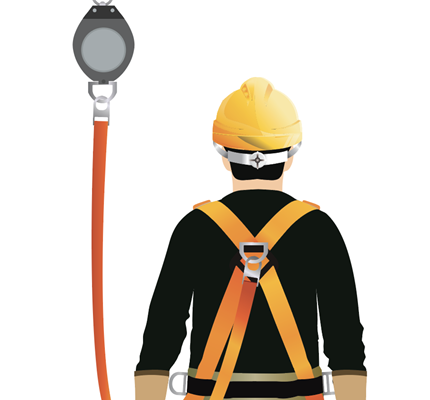
Protective measures include pausing or delaying work when wind exceeds safe operating thresholds for bucket trucks, cranes or helicopter operations; using fall protection and secured tools so nothing becomes airborne; and positioning crews strategically to avoid being downwind of suspended loads and potential falling debris by delineating fall zones.
“The guiding principle is that no job is so urgent that it can’t wait for conditions to stabilize,” he said.
Before any job begins, crews conduct prejob briefings and hazard analyses to identify tasks with the highest potential for serious injury or fatal outcomes, said Chris Murphy, director of safety at Aldridge Electric Inc., Libertyville, Ill. In high-wind conditions, this often includes working at heights, live line work or critical lifts.
“Crews are trained to ask, ‘What’s most likely to seriously hurt or kill me today?’—a question that sharpens focus on the most hazardous tasks and ensures that controls are in place before any work starts, or what is referred to as start work authority,” Murphy said.
Working in high winds brings a higher level of risk for lineworkers, including falls, flying debris and dropped tools, and that’s why crews rely on more than just helmets and harnesses, he said. They use controls such as fall protection, tool tethering and wind-speed monitors for operating bucket trucks and cranes. If the right controls aren’t in place, or if the weather takes a turn, the work doesn’t move forward.
It’s not just about physical hazards, Murphy said. Windy conditions also add stress, urgency, frustration and fatigue—and those can lead to mistakes even among experienced crews.
“Instead of expecting flawless execution, teams build a culture where it’s safe to speak up, pause work or adjust the plan when something doesn’t feel right,” he said. “Creating that kind of environment is key to preventing serious injury and fatality events before they happen.”
Stopping the job is one of the most effective ways to prevent serious incidents, and lineworkers are trained and trusted to do just that when conditions become unsafe, Murphy said. Whether it’s unstable equipment, poor visibility or unexpected line movement, crews are expected to pause and reassess when safety controls are adequate.
“This mindset goes beyond just following rules. It reflects a culture that values good judgment, encourages speaking up without fear and puts preventing serious injuries and fatalities above meeting deadlines,” he said.
Working in wind comes with the territory, especially during storm work, said Mike Starner, NECA’s executive director of outside line safety.
“Utility personnel are probably exposed more than contractors as they are often deployed during weather events to respond to public safety calls and to restore power as quickly as possible to maintain reliability metrics,” Starner said. “Contractors still have exposure, especially during prolonged events.”
The best way workers can protect themselves when using equipment is to be qualified, he said. This determination is made by the employer through observed demonstrated proficiency. Proficiency is developed through training and experience that the lineworker can apply to determine safe work methods.
The rules around safe operation in winds come from the ANSI/ASAE Aerial Lift Standards that set design and performance requirements for manufacturers, which limit aerial lift operations when wind speeds exceed 28 mph, Starner said. However, each manufacturer will set different levels based on the specific operational constraints of their equipment based on testing.
“At the end of the day, the manufacturer is king and OSHA will enforce noncompliance with manufacturer instructions,” he said. “Other requirements may come from the employer or from the customer but can never exceed what the manufacturer requires.”
Lineworkers should be familiar with the specific requirements of the equipment in use, and understand the work rules provided by their employer or customer, Starner said.
“When in doubt, bring the aerial lift down and discuss as a team and with your supervisor on how to proceed,” he said.
Protecting property and the public
The National Electrical Safety Code (NESC) defines technical standards for wind and ice loading of wood poles, structures and lines, Starner said.
“These rules are there to protect the public. Most utilities apply some revision of the NESC voluntarily or by state law,” he said. “The best way for companies to protect workers is to cease operations when the wind is creating a hazard or reduces the workers‘ ability to maintain positive control.”
When high winds knock down power lines or poles, lineworkers jump into action right away to protect people and property, Murphy said.
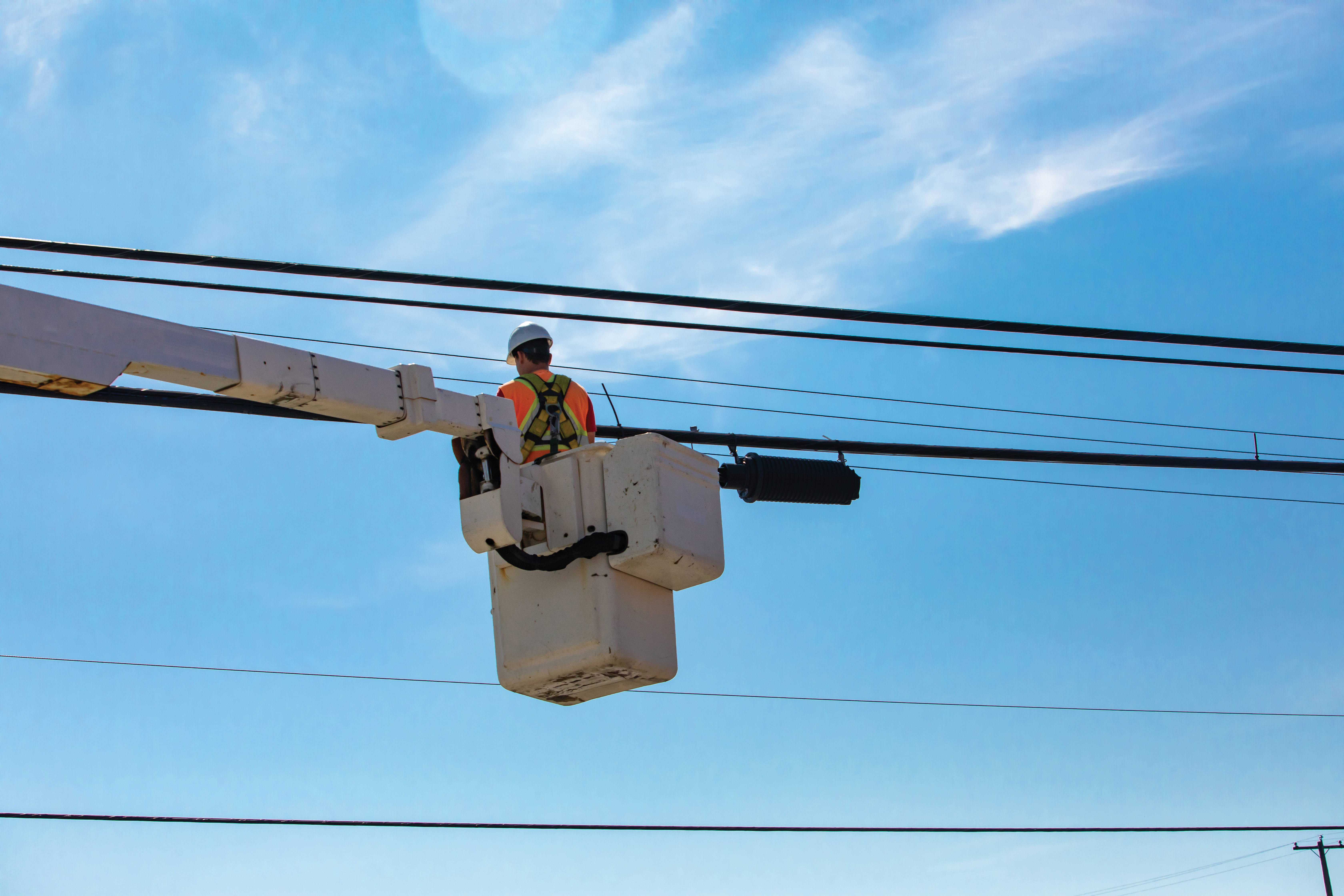
“The very first thing they do is de-energize the affected lines and secure the area—setting up barricades and signs, focus on stabilizing poles and equipment, and working closely with emergency responders to keep everyone safely away from any downed equipment,” he said. “They also take extra precautions to prevent fires or other hazards, like disabling automatic reclosers or shutting off power ahead of time in areas at higher risk.”
Before turning power back on, lineworkers carefully inspect the lines to make sure everything is safe, Murphy said. They work hand-in-hand with first responders throughout the storm, prioritizing power restoration for critical facilities such as hospitals and water plants, and reminding everyone to stay clear of downed lines. Once it’s safe, lineworkers assess the damage with specialized equipment and drones, coordinate debris removal and restore service to the communities.
Protecting the public is just as crucial as protecting lineworkers, Anderson said. When high winds bring down poles or conductors, line crews move quickly to establish secure work zones with barriers, cones and flaggers to keep the public away from energized or unstable areas.
Workers also de-energize and ground lines whenever possible to prevent accidental contact; communicate with emergency services to coordinate road closures or evacuations if hazards extend into public areas; and remove or secure debris that could be blown into nearby property, he said.
“The line crew’s goal is to contain the hazard footprint and restore stability before restoration work begins,” Anderson said.
Bolstering lines and poles
“Are there ways to bolster lines and poles to better withstand wind events? Yes,” Anderson said. “While no system is windproof, utilities and contractors are investing in infrastructure designed to withstand severe weather better.”
Examples include stronger pole materials such as steel, composite or laminated wood to replace aging infrastructure; improved foundations and guying systems that reduce the risk of pole failure; covered conductor systems and compact line designs that reduce galloping or line-to-line contact in wind; and vegetation management programs that minimize tree-related outages during storms.
“Resiliency planning is now a significant focus,” he said. “By combining more innovative engineering with proactive maintenance, utilities can minimize damage during wind events and accelerate recovery afterward.”
NESC Subcommittee 5 is responsible for evaluating strength loading of overhead lines and structures, which is included in Part 2 of the NESC. The code’s Safety Rules for the Installation and Maintenance of Overhead Electric Supply and Communication Lines covers this topic, Starner said.
“At the end of the day, utility owners are responsible for the construction and maintenance of their facilities,” he said. “Additional requirements and methods can be applied to offer more protection, and workers should concentrate on building per the specifications and ensuring a high degree of workmanship. Beyond that, making sure that work activity is performed in a way that does not create a hazard is important.”
Utilities and engineers around the country are working on designing grid hardening measures to better withstand high wind conditions, and lineworkers are a really important part of that process, Murphy said.
“They are the doers—making the power grid more resilient, especially with all the extreme weather we’ve been seeing in recent years,” he said. “They’re the ones out there upgrading old infrastructure—replacing weaker wooden poles with stronger materials like steel or concrete, and adding extra supports in areas that are more exposed to high winds.”
Lineworkers also install hardware and conductors that are better at holding up in stormy weather, Murphy said. In some of the highest risk spots, they bury the power lines to keep them protected. A lot of their work is also about prevention, such as installing devices that reduce the impact of wind on the wires over time.
When a storm does hit, lineworkers are usually first on the scene—clearing debris, fixing damaged lines and getting power restored, often in some pretty tough conditions, he said. When a natural disaster hits communities, lineworkers from across regions work together in a unified front to help those in need.
“The speed at which utilities and contractors mobilize their resources during major storms is impressive, to say the least—and it significantly accelerates recovery,” Murphy said. “Since lineworkers are out there every day, their experience is valuable as they provide feedback that helps engineers and planners make smarter decisions about how to harden the system in the future.”
STOCK.ADOBE.COM/hildawati, STOCK.ADOBE.COM/ kril / STOCK.ADOBE.COM/Valmedia
About The Author

KUEHNER-HEBERT is a freelance writer based in Running Springs, Calif. She has more than three decades of journalism experience. Reach her at [email protected].