For Cheryl Richardson, improving the safety of her crew goes far beyond protecting their bodies from harm—it’s about holistically enhancing their entire well-being.
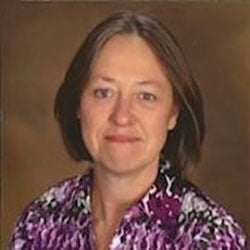
Richardson serves as the president and CEO of H. Richardson & Sons (HRS), a power line and telco contractor based in Ogdensburg, N.Y. She brings a fresh approach to safety in terms of introducing respect and empathy company-wide to create a base for engagement and team member buy-in. This has allowed the company to work safely and grow exponentially over the past five years.
The team at HRS is currently expanding the safety program proactively: introducing employee surveys, field empowerment and job brief discussions, all working toward deeper commitments and human connections to keep the team safe every day.
What are the unique safety challenges of line work?
While we have seen great advances in PPE, training and incident investigation over the past 15 years, our serious injury and fatality rate has not decreased. The training and PPE and investigations are relatively easy to measure, but the current frontier in improving safety is not so easy to measure and not always in harmony with utilities’ expectations.
These organizations may see improvement in the environment of a company as too abstract to get behind and, honestly, it may be very difficult for upper management to see the small changes that occur at the field level. This is, in my opinion, the biggest challenge at this time: becoming a partner with the utility so that they see value in small changes that we make, such as showing respect to every member of our team, displaying empathy from a leadership position and improving trust.
I would like to get away from the “box checking” and partner with the utilities to meet with them and discuss the small changes we are making which will affect engagement and, in turn, safety.
How do you help your crews mitigate these challenges?
Several key practices have proven highly effective in reducing incidents and improving safety engagement.
We have put together a robust, interactive training program that supports mental wellness, respect and trust within our company.
We have partnered with Sweethearts & Heroes [Saint Albans, Vt.] to expand our ideas of empathy and compassion and to set our people up for success in dealing with their team members every day. We have also partnered with Christian Conte for perspective workshops, Sharon Lipinski for positive feedback workshops and Billy Martin to encourage curiosity versus judgment.
This support can only make a difference if it is supported by upper management, and we feel that our leaders are exemplifying those characteristics that are being taught.
This year will be our second HRS Safety Base Camp to support wellness with speakers, competitions and fun, and we invite all contractors and utilities. Coming together for safety has not been something that this industry has supported in the past and we are proud to support it as a future endeavor.
How do utility companies support your crews’ safety practices?
Utility companies send safety professionals, also called bird dogs, to accompany our crews as they perform their work. In this position, the bird dogs communicate with the utility regarding outages and circuit reservations and take that pressure off the foreman in the field. The bird dog can also approve alternate specs or standard changes when situations arise. This liaison position is helpful in many respects to keep the crew moving in the manner that the utility expects.
Many of the utilities sponsor off-site contractor meetings to bring everyone together to understand expectations and add training into those meetings.
How do you see the safety profession evolving in the future?
I think the safety profession will focus more on health and wellness and their effects on safety.
I am currently attending a series of online training classes to expand my understanding of the human mind and how we can encourage our team to “buy in” to the company and, in turn, the safety of everyone. A person on the call spoke about field audits and checklists and then used the term “instilling trust” between the field and the safety department in that company. They are kind of the opposite.
Another safety professional recently suggested that we adopt their strategy of bringing a red pen to the job site and marking up the job brief like a teacher would mark up a paper. That thinking is difficult to challenge, yet impossible for me to see the value in.
We also emphasize leadership modeling. Field leaders are expected to demonstrate the behaviors we want to see, like using personal protection equipment, conducting thorough pretask planning and stopping work when needed.
Additionally, we’ve implemented performance reinforcement systems that recognize and reward safe practices in real time, creating a positive feedback loop.
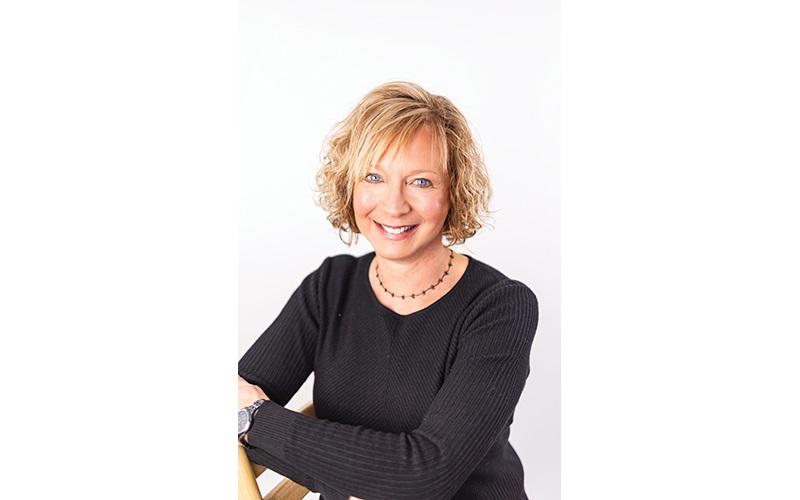
Jessica Evans Photography
About The Author
KUEHNER-HEBERT is a freelance writer based in Running Springs, Calif. She has more than three decades of journalism experience. Reach her at [email protected].