Why use a qualified observer?
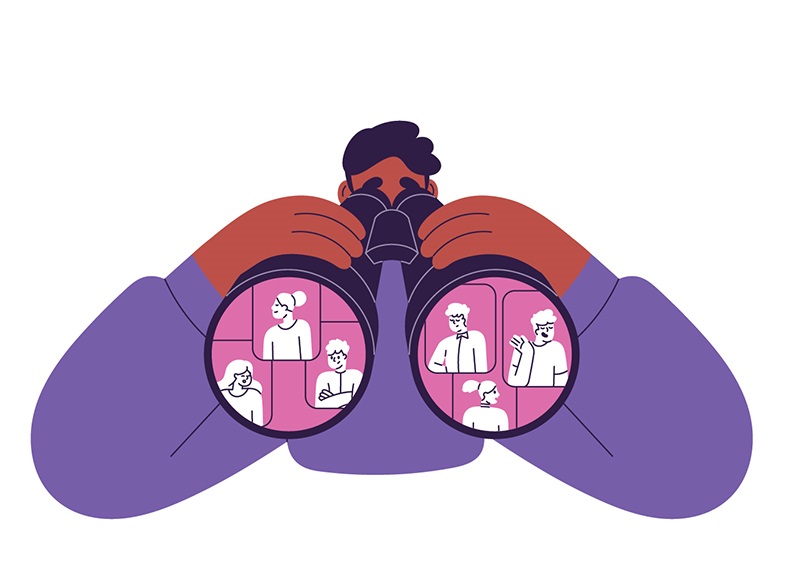
The majority of workplace injuries arise from worker behavior: mistakes, errors in judgment or lapses in attention. Having a qualified observer on site helps offset or eliminate these behaviors.
A qualified observer helps ensure that clearances are maintained, proper equipment is used and effective cover up is installed.
A qualified observer can help:
- Eliminate unintentional contact with energized components while working on, or near, lines and equipment
- Eliminate injuries from unrecognized hazards or changes in conditions
(The term “effective cover up” is used to describe the installation of phase-to-phase rated insulating protective cover on energized conductors or equipment of different potentials when the lineworker is within reaching distance or in areas extended by handling conductive objects.)
Side notes
- The qualified observer shall not perform other duties and all work shall stop if the qualified observer can no longer perform observer duties.
- The observer shall have the authority to stop work if needed.
Qualified observer qualifications
A qualified observer shall be designated to provide timely warning while working:
- On or within the minimum approach, including extended reach, of energized conductors or equipment (systems at and above 600V)
- When using mechanical mobile equipment near energized conductors
- When moving energized conductors
(The term “extended reach” is used to describe being within 5 feet of energized conductors or equipment or having a conductive object within 5 feet of energized conductors or equipment.)
Prior to work commencing, a member of the crew who is an electrically qualified worker and can meet the listed criteria shall be identified to act as the qualified observer.
A qualified observer is defined as is an electrically qualified worker that can identify all hazards present to the crew working energized conductors. The qualified observer shall be capable of:
- Distinguishing exposed live parts
- Identifying nominal voltages
- Determining minimum approach distances
- Knowing safe work practices for working on, or near, energized lines and equipment
- Recognizing electrical hazards to which workers will be exposed and knowing skills and techniques to control those hazards
- Rendering immediate assistance in case of an accident
Pop quiz
- 1. Why is it useful to have a qualified observer?
- 2. When is a qualified observer necessary?
- 3. Who may be a qualified observer?
- 4. While personnel are performing tasks that require a qualified observer, can the qualified observer perform other duties?
STOCK.ADOBE.COM/Good Studio source: powerline safety