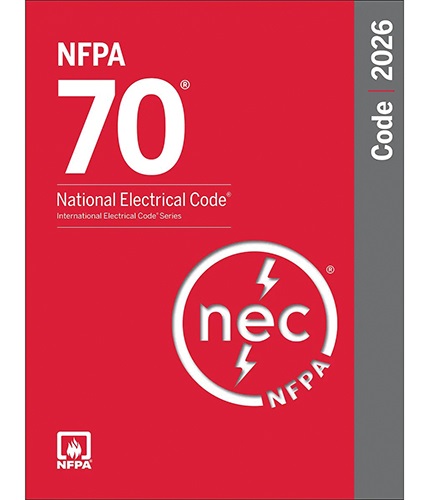
The National Electrical Code development process is continuous and dynamic. The 2026 NEC includes several new articles and structural adjustments mostly related to the document’s growth and evolution. There are also new requirements that address emerging electrical technologies. The electrical industry is evolving fast, and the codes and standards must keep pace.
Adoption
Jurisdictions that adopt the latest edition have the benefits of a code that has been developed and maintained by qualified technical committees through an open consensus process. Legal adoption of the NEC is typically accomplished through a process that makes it law. Where the NEC is adopted legally, anything less is illegal. That is an interesting way of looking at it, and it usually holds up in court. Jurisdictions often adopt the NEC without amendments because it places trust in the NFPA’s open consensus code-development process.
Some jurisdictions adopt the code with a few local amendments. Modifications may be necessary because of unique conditions and are usually more restrictive for justifiable and defendable reasons. However, alterations to electrical installation rules that lessen established national minimum requirements can present liabilities and result in less protection for people and property. Adopting jurisdictions should always have personnel and property safety at the forefront.
Purpose
Section 90.2(A) clearly states that the code’s purpose is the practical safeguarding of people and property from hazards arising from electricity use. Section 90.2(B) goes on to indicate that compliance with the NEC and proper maintenance should result in electrical systems that are essentially safe and free from hazards. The NEC is the minimum set of rules that must be followed for compliance and ensures that occupancies are safe from potential electrical hazards. Jurisdictions should always keep this purpose in mind.
Electrical safety should not be compromised by efforts to circumvent NEC adoption. The risk management departments of inspection jurisdictions strongly advise against compromising the minimum requirements of national standards, especially when the reasons are not safety-driven or defendable. Often, the risk-management departments are unaware of this type of activity. As safety requirements change, so does the cost of doing business. Successful and reputable organizations understand this and know the marketing benefits.
Consumer expectations
The public voice is seldom heard or considered in a code-adoption process. Consumers and the public just expect their electrical systems to work safely.
When the cost of building materials increases, does the cost typically get passed on to the customer? Of course it does, in most cases. Yet, when the cost of building materials decreases, the customer rarely gets discounts. Organizations that are proactive and proficient in business understand the value of staying current with the latest safety requirements that ultimately affect their bottom line and their consumers.
When the NEC is adopted into law and enforced, the public is the ultimate beneficiary. Deletion of any code requirements in the adoption process results in a compromise to already established minimums and the code’s integrity. It is risky business to selectively choose to delete requirements based on costs or other reasons not related to safety. The benefits of improved protection far outweigh the minimal additional cost to meet the new or changing code rules.
No compromise
The NEC technical committees have the responsibility to act in the best interest of protecting people and property. The result is a code available for adoption and enforcement by building departments. Its integrity must be upheld without compromise to result in electrical safety within the home and beyond.
As always, new and revised rules in the code are substantiated and result in better protection from fire, shock and electrocution. Some efforts to circumvent these new requirements are ongoing and should be carefully considered by code adoption authorities. There are risks in operating below the minimum. Unpleasant statistics can be found online and serve as reminders.
There is compromise and risk when local adoption processes delete rules selectively and without reasonable substantiation. There should always be justifiable reasons to reduce the requirements of established minimums. Consumers always deserve responsible leadership in NEC adoption processes—with the public interests and safety as priorities.
national fire protection association
About The Author

Michael Johnston
NECA Executive Director of Codes and Standards (retired)JOHNSTON, who retired as NECA’s executive director of codes and standards in 2023, is a former member and chair of NEC CMP-5 and immediate past chair of the NEC Correlating Committee. Johnston continues to serve on the NFPA Standards Council and the UL Electrical Council. Reach him at [email protected].