The 2026 edition of the National Electrical Code continues a multicycle effort to modernize the code’s structure and better reflect how electrical systems are designed, installed and maintained today. Few areas illustrate this evolution more clearly than Chapter 2. This article will review the significant changes in 2026 in articles 200 through 240 for grounded conductors, branch circuits, feeders, services and overcurrent protection for electrical system installations not exceeding 1,000V AC/1,500V DC.
 |  |
Article 200, Use and Identification of Grounded Conductors received targeted revisions that address real-world identification challenges. A notable update permits a single stripe—other than green—to identify grounded conductors sized 6 AWG or smaller. This reflects common industry practice in multicircuit and multivoltage systems, where associating grounded conductors with their corresponding phases improves troubleshooting and reduces errors.
Article 210, Branch Circuits Not Over 1,000V AC/1,500V DC continues to evolve as one of the most heavily modified sections of the NEC, largely due to changes in how buildings are used and equipment behaves. Ground-fault protection saw significant refinement. The NEC now formally recognizes Class A GFCIs alongside newly defined special-purpose GFCIs (SPGFCIs) in classes C, D and E. These devices address compatibility challenges, especially with HVAC equipment, while maintaining personnel protection.
Changes to 210.8 expand and reorganize GFCI requirements across dwelling and nondwelling occupancies, clarify indoor damp and wet locations, and introduce specific provisions for aquariums and similar vessels. The allowable amperage for the GFCI protection required for outdoor outlets (“outlet” is defined in Article 100) in 210.8(F) increased from 50A to 60A. Section 210.8(F) also has a new Exception No. 3 that allows for the use of a Class C SPGFCI for listed HVAC equipment.
The arc-fault requirements in Exception No. 2 of Section 210.12(B) were adjusted to remove the sunset date and expand the scope of the exception to include garages and accessory buildings. Another practical change for AFCI protection was made in 210.12(E) for modifications, extensions or replacements; it now allows branch circuit AFCI devices to be installed at the first receptacle or switch, which simplifies retrofits.
Section 210.17 was revised to add dormitories to the list of occupancies required to meet the branch circuit requirements for dwelling units. However, this only applies to guest rooms and guest suites with permanent provisions for cooking in hotels, motels, assisted living facilities and dormitories.
Section 210.70(C) was revised to address some potential safety concerns. Lighting control rules now explicitly prohibit exclusive automatic control in spaces where occupants could be left in darkness, such as attics, basements and utility rooms. This change reinforces basic safety principles and acknowledges that automation, while useful, cannot replace manual control in all situations.
Article 215, Feeders and Article 225, Outside Branch Circuits and Feeders, Not Over 1,000V AC/1,500V DC now extends surge protection requirements to additional occupancies, including dormitories and sleeping quarters in emergency service facilities. These changes recognize the increasing vulnerability of electronic safety devices installed for life safety purposes, such as GFCIs and AFCIs.
Section 225.31 was revised to clarify how disconnects and emergency disconnects are to be installed for one- and two-family dwelling units supplied by a feeder. The revisions parallel the changes made for disconnects/emergency disconnects for services, allowing a single disconnecting means to satisfy multiple code requirements when properly located and marked. Section 225.41(A)(1) now specifies that an outdoor disconnect installed for a dwelling unit must be located within sight, in accordance with 110.29, of the dwelling unit it serves.
Article 230, Services Not Over 1,000V AC/1,500V DC underwent extensive refinement aimed at improving worker safety and system clarity. Section 230.2 was revised to include a new item number (6) requiring permanently installed absence-of-voltage test devices to be listed.
Revisions to Section 230.62(C) were made to clarify that the required barriers must be specifically identified (not listed) for the purpose of guarding energized and uninsulated terminals and busbars.
Similar to the changes made in Article 215, Section 230.67(A) was revised to include a new list item (5) requiring service-level surge protection for sleeping quarters in fire, police, ambulance, rescue, ranger and other such stations. Again, this is to protect sensitive electronic life safety devices.
The requirements for meter sockets were moved to a new location in Section 230.68, with a new exception that clarifies a meter socket installed for a fire pump service application must only be sized to the circuit ampere rating and not the current rating of the fire pump service.
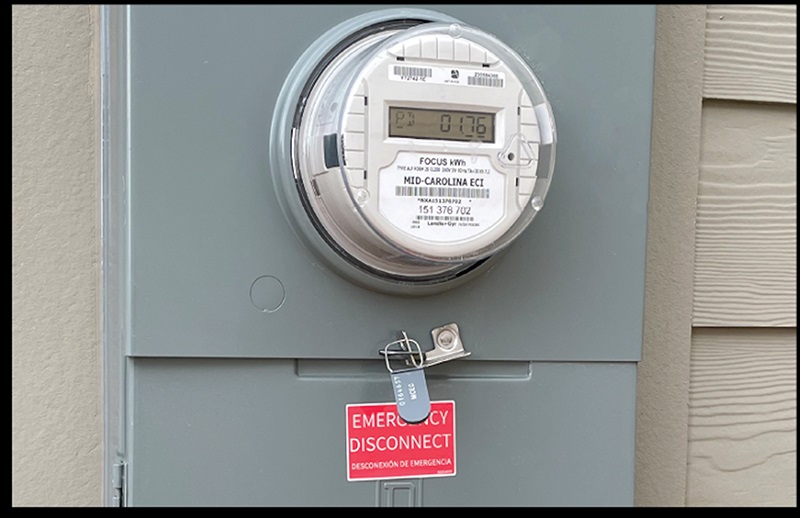
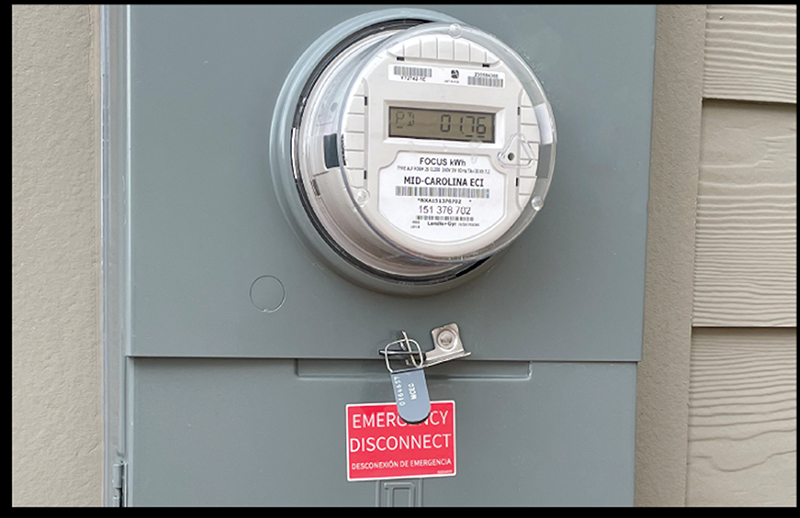
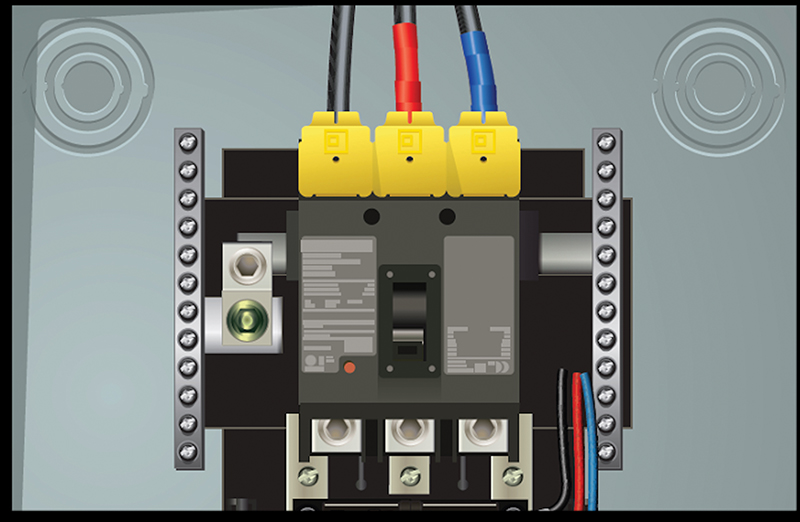
The requirements for service disconnecting means and emergency disconnects were consolidated into a revised Section 230.70. Subsection 230.70(A)(1) mandates that the service disconnect for one- and two-family dwellings must be installed in a readily accessible outdoor location either on or within sight of the dwelling unit the disconnect serves. 230.70(A)(2) clarifies that the disconnecting means for other than dwelling units must be installed in a readily accessible location either outside a building or structure or inside nearest the point of entrance of the service conductors.
A revised Section 230.70(B) requires that service disconnects be marked “SERVICE DISCONNECT,” and the marking must be on or adjacent to the service disconnect and in accordance with Section 110.21(B). Additionally, for one- and two-family dwellings, Section 230.70(B)(2) requires the enclosure(s) of service disconnect(s) to be marked “EMERGENCY DISCONNECT.” The marking must be made in accordance with 110.21(B) and be located on the front of the disconnect enclosure using a red background with white text, and the letters must be at least ½ inch high.
New Section 230.70(D) includes requirements relocated from 230.85 that mandate the identification of other isolation disconnects, with minor changes. Previously, this applied only to dwelling unit emergency disconnects. Now, a plaque or directory identifying the location of all equipment for disconnection of other energy sources shall be located adjacent to the service disconnect.
Finally, Section 230.70(F) was revised to clarify that a remote control for the device shall be permitted to actuate the service disconnecting means; however, the remote control device is not permitted as the service disconnect.
Article 240, Overcurrent Protection Not Exceeding 1,000V AC/1,500V DC simplifies terminology by adopting the broader term “overcurrent protective device“ and consolidates listing requirements. A new defined term—”transformer secondary conductors”—clarifies where feeder rules begin, reducing long-standing confusion during installations and inspections.
The 2026 NEC Chapter 2 changes reflect a code that is more technical and more aligned with modern electrical work. Electrical contractors that take the time to understand these changes will be better positioned to avoid delays, reduce rework and deliver safer, more resilient electrical systems in a rapidly evolving industry.
electrical training alliance
About The Author

Kyle Krueger
Executive Director of Codes and StandardsKRUEGER is NECA’s executive director of codes and standards. He has worked in the electrical industry for over 25 years as an inside wireman, authority having jurisdiction and educator. Kyle currently represents NECA on the NEC Correlating Committee, Code-Making Panel 3, NFPA 72 Correlating Committee, NFPA’s Electrical Section Executive Board and the UL Electrical Council. Reach him at kkrueger@ necanet.org.