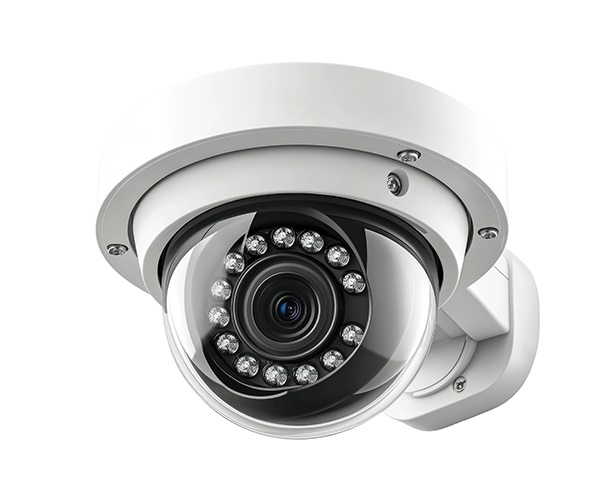
Video analytics are the brains behind modern surveillance systems. Intelligent IP cameras apply computer analytics to images, transforming video into active detectors that yield critical data and increase situational awareness for a more effective alarm response.
Analytics scrutinize content using artificial intelligence (A.I.), computer vision and machine-learning algorithms. Analytics can run in cameras or through local servers. Options for flexibility in application and system scalability include fully cloud-based analytics and hybrid approaches mixing on-premises servers and the cloud.
Traditional video analytics trigger on motion detection, pixel changes and virtual boundaries. The most common types of analytics detect and classify objects, such as with license plate recognition technology. Analytics also provide occupancy counting and crowd density data, and detect behavior modification such as a car or person moving in the wrong direction or anomalies like an object left behind. Vape, chemical and gunshot detection sensors also leverage analytics for accuracy and quick-catch performance.
Analytics generate metadata, which is used for searching, filtering and establishing real-time alerts or an automated response. To deploy analytics, users configure rules in the video management or other software. The latest analytics evolve and learn from their environment and familiar patterns, boosting reliability. Generative A.I., the next iteration of analytics, provides new insights from a deeper analysis of content and automated decision-making.
Assessing analytics for deployment
For systems integrators new to A.I. and analytics, a top consideration is selecting an open and vendor-agnostic platform, according to Barry Norton, fellow at Milestone Systems, which is based in Denmark.
“Start by ensuring the platform is truly open and vendor-agnostic with respect to integrations and extensions. You’ll need a high degree of flexibility when choosing cameras and analytics and may want to source these from multiple different manufacturers without being locked in,” Norton said. ”Understand the total cost of ownership beyond initial pricing, including storage costs and potential egress fees for retrieving archived data. Bandwidth requirements matter significantly, so assess your internal network infrastructure realistically, as well as bandwidth and costs for internet, should you choose a cloud-based solution. Finally, verify the system can scale as your needs grow and integrate with existing security tools.”
Camera characteristics matter
Chris Lonnett, vice president of U.S. video security and access control sales, Motorola Solutions, Chicago, said systems integrators getting started need to understand whether intelligence is built into the camera (edge-based) or processed at the server level.
“Edge-based analytics are often more scalable because they distribute the processing load, preventing the system from slowing down as more cameras are added,” he said. “Consider an open-architecture platform that is ONVIF-compliant to ensure it can work with a customer’s existing hardware. A common pitfall is underestimating the impact of image quality and lighting; analytics are only as good as the data they receive, so poor resolution or lack of low-light capabilities can lead to missed events or false alarms.”
When it comes to programming event rules and triggers in analytics, systems integrators can benefit from self-learning technologies, plug-and-play configurations and automated capabilities that flag anomalies without manual calibration.
“Creating complex rules, however, requires a deeper understanding of system logic,” Lonnett said. “For these types of deployments, integrators should have in-house IT support familiar with networking and bandwidth management, as high-resolution video and metadata streams can strain a client’s local network.”
Generative A.I. lends a helping hand
The expertise required to implement and maintain rules for events is on the verge of a transformation.
“Traditionally, rules have been difficult to set up and maintain, resulting in their being one of the most underutilized features of video and security management systems,” Norton said.
“Generative A.I. is changing this. Soon, conversational interfaces will explain how events are being handled and derive new rules that can be effected as A.I. agents,” he said. “Entry-level configuration will be as simple as describing what you want: ‘Alert security if someone lingers near the loading dock for more than two minutes.’”
Still, managing advanced deployments will require many skills.
“The most sophisticated implementations will involve orchestrating multiple A.I. agents to achieve adaptive behaviors. Integrators will increasingly need hybrid teams combining traditional security knowledge with data science understanding, whether developed in-house or accessed through strategic partnerships,” he said.
The ability to master video analytics will evolve as technologies advance.
stock.adobe.com/Nadya