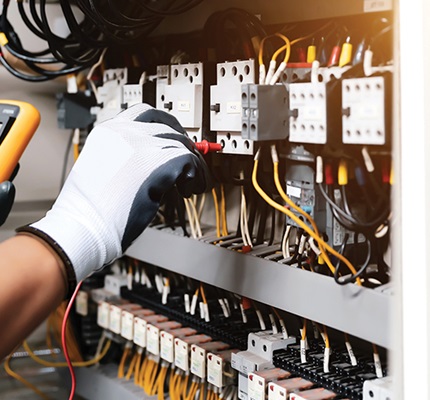
The National Electrical Code indicates that service equipment must be identified (marked) for use as such, especially when installed and used in the service position in the premises wiring system.
The identification (marking) must indicate that the equipment is either “suitable for use as service equipment” or “suitable for use only as service equipment.” These general requirements are found in Section 230.66 and apply to all services not over 1,000V AC or 1,500V DC, nominal. For services greater than that, refer to Part V of Article 268, which applies to service equipment and includes marking requirements. That topic is beyond the scope of this article, but it’s important for users to understand those requirements. One common requirement is listing or field evaluation of service equipment as indicated in 230.2(B) and 268.2.
Listed service equipment suitable for use as service equipment has been manufactured and evaluated to meet applicable product safety standards. Some equipment that could be identified as suitable for service use are switchboards, enclosed switches, panelboards, motor control centers and power outlets, among others. The designation of being “suitable for service equipment use” identifies the equipment for use in the service position of premises wiring installations. It does not limit the use of this equipment to only service use, as would be the case for service equipment marked “suitable for use only as service equipment.”
Equipment suitable for service equipment use has generally been evaluated for short-circuit current capabilities, and it includes a service disconnecting means and provisions for connection of a grounding electrode conductor, a grounded conductor disconnecting means (neutral link or terminal) and a main bonding jumper, to name a few. The “suitable for use as service equipment” markings are provided by the manufacturer to comply with the applicable product standard(s). These markings are different than the NEC field marking provisions in sections 230.70(B)(1) and 268.70(C), which specifically require each service disconnecting means to be identified as a “service disconnect.” These markings are applied by field installers.
Because service equipment includes grounding and bonding capabilities, the requirements in 250.24(D) are satisfied by installing the grounding and bonding connections using the means provided with the equipment. The main bonding jumper in listed service equipment is usually a bus, screw, strap, wire or other conductive material that has been evaluated by a qualified electrical testing laboratory for size and performance. This means the main bonding jumper in listed service equipment can be installed without calculating size. Usually the manufacturer has already done this.
If equipment is marked “suitable for use only as service equipment,” it typically has a grounded conductor terminal busbar that is factory-bolted or otherwise bonded to the enclosure, and no main bonding jumper is provided. This type of equipment is suitable for use only in the service position because the grounded conductor cannot be isolated from the enclosure. If a service is constructed using a wireway or an auxiliary gutter arrangement, then the main bonding jumper of a wire type would be sized using Table 250.102(C)(1); alternatively, 12.5% must be used if the largest ungrounded service conductor size exceeds 1,100-kcmil copper or 1,750-kcmil aluminum or copper-clad aluminum (see the first note of that table).
Disconnecting the grounded conductor
An important requirement for service equipment includes provisions for disconnecting the grounded conductor (usually a neutral) as required by 230.75. Listed service equipment includes such provisions either in the form of a busbar or terminal. In smaller service equipment such as a panelboard, the means to disconnect the grounded conductor is the terminal to which it is connected. In larger equipment such as a switchboard or motor control center, the means to disconnect a grounded conductor is a busbar identified as the “neutral disconnect link” in accordance with the applicable product safety standard such as UL 891 for switchboards or UL 67 for panelboards, as examples.
The product standard requires that the enclosure identify the vertical section in which the grounded conductor (neutral) disconnect link and main bonding jumper are located. There are many more types of equipment identified as suitable for use as service equipment or for use only as such and their related product standards address these requirements. Other important NEC requirements also apply to service disconnecting means. Be sure to verify the acceptability of the grouping and accessibility requirements with the authority having jurisdiction. They may also provide information about local electrical code amendments that may apply.
stock.adobe.com/Dewi Sari
About The Author

Michael Johnston
NECA Executive Director of Codes and Standards (retired)JOHNSTON, who retired as NECA’s executive director of codes and standards in 2023, is a former member and chair of NEC CMP-5 and immediate past chair of the NEC Correlating Committee. Johnston continues to serve on the NFPA Standards Council and the UL Electrical Council. Reach him at [email protected].