As home electrification expands its role, the high costs of conversion to all electric appliances attract more attention.
Efforts are underway to reduce those costs. In an article posted in December 2025, the online energy news source energycentral.com highlights the benefits of a new tool in the growing practice of home electrification.
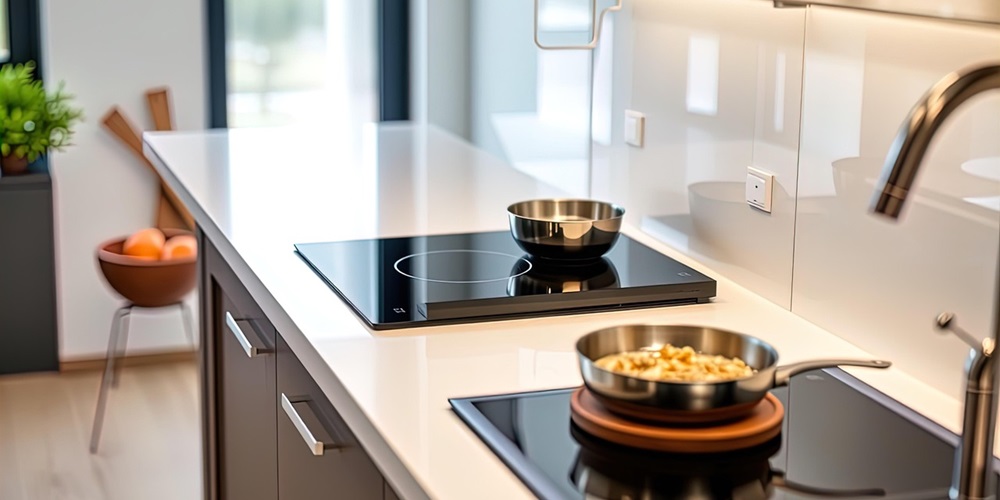
The post describes how 120V induction stoves “could make it much easier and more affordable for homeowners to electrify their kitchens.”
The article notes that traditional electric and induction stoves require a dedicated 240V circuit to run. Many homes with gas cooking do not have these outlets, and upgrades can cost as much as $30,000. Homeowners that do not have the funds for such an expensive upgrade choose instead to stick to a gas stove.
The 120V induction stove comes with a battery backup, making a dedicated 240V circuit, or an upgrade, unnecessary. The stove uses a built-in, 5-kilowatt-hour (kWh) battery to provide ample electricity to power the stove, even when all the burners are on and the stove requires more power than the wall outlet can provide. The stove draws a steady amount of power (about 1,200W) from the wall to keep the battery charged.
The blog post cites a 2024 study by Redwood Energy that estimated the stove’s battery could provide power for approximately two to eight days in the event of a grid outage. It also found that users could save approximately $54 to $71 on their annual energy bill.
The concept appears to be catching on. In November 2025, the California Public Utilities Commission approved a plan to spend $115 million on two “market transformative initiatives” intended to improve energy efficiency. The first initiative is to advance the use of electric room heat pumps, and the second is to advance the use of 120V induction stoves.
About The Author

LAEZMAN is a Los Angeles-based freelance writer who has been covering renewable power for more than 10 years. He may be reached at [email protected].