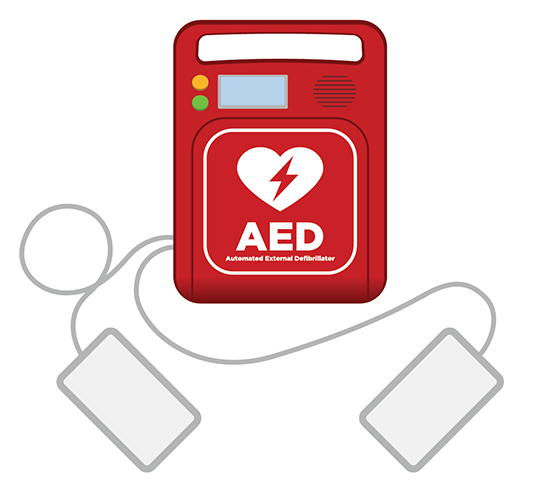
The American Heart Association estimates that approximately 10,000 cardiac arrests occur in workplaces each year. Immediate CPR and use of automated external defibrillators (AEDs) can vastly enhance a patient’s chances of survival. As a result, they have become increasingly common in workplaces in public and private facilities.
Employers in the electrical field spend significant time and resources to prevent electrical contact, arc flash, falls and other serious workplace hazards. However, even the best safety program cannot eliminate the possibility of a medical emergency or serious electrical accident. If cardiac arrest occurs, the response during the first several minutes can determine whether someone lives or dies.
CPR is critical
Cardiac arrest is different from many other workplace injuries because there may be only minutes to intervene. Although dialing 911 is imperative, first responders may not arrive quickly enough to provide the earliest lifesaving intervention. The American Heart Association’s Chain of Survival emphasizes early recognition of cardiac arrest, activation of emergency response, immediate CPR and rapid defibrillation. CPR helps maintain some circulation to the brain and other organs, and AEDs may address the abnormal rhythm responsible for the cardiac arrest.
AED use and requirements
Even small amounts of electrical current passing through the body can interfere with normal heart rhythm. It can even cause ventricular fibrillation, a potentially fatal rhythm that may require defibrillation. Ventricular fibrillation occurs when the heart’s electrical activity becomes disorganized. Instead of pumping blood normally, the lower chambers of the heart quiver ineffectively. Blood circulation stops, resulting in sudden cardiac arrest.
An AED analyzes the heart rhythm and determines whether an electrical shock is appropriate. If a shockable rhythm such as ventricular fibrillation is detected, the device can deliver a controlled electrical shock to restore an effective rhythm. Modern AEDs provide visual and audible instructions to guide responders through the process and will not deliver a shock unless the device determines that one is needed. AED availability and training should be considered a critical component of emergency planning for electrical work.
While OSHA does not currently have a construction standard specifically requiring employers to provide AEDs on job sites, that does not mean employers can overlook emergency medical planning. The need for rapid response in electrical work is clearly recognized within OSHA requirements.
Under 29 CFR 1926.50, employers must ensure medical personnel are available for advice and consultation and must have adequately trained personnel available to provide first aid when a hospital, clinic or physician is not reasonably accessible.
Additionally, electrical power transmission and distribution work has even more specific requirements. Under OSHA 1926.951, fixed work locations such as substations must have enough trained personnel available to ensure that an employee exposed to electric shock can be reached by a trained person within four minutes. At remote areas where staffing makes that impossible, each employee at the location must be trained.
OSHA recommends that employers providing AEDs designate employees to use them and provide appropriate training. Employers may also want to evaluate whether AEDs should travel with certain deployments or vehicles.
Simply purchasing an AED does not create an effective program. The equipment needs to be accessible. On a large construction project, placing one AED inside the main job trailer may provide little benefit to a worker several buildings or floors away. Employers should evaluate each site for the best location(s), which may include main construction trailers, gang boxes or designated safety stations, service trucks, substations, large electrical rooms or industrial maintenance facilities.
Caring for an AED
Like any piece of emergency equipment, AEDs require periodic inspection. Pads have expiration dates. Batteries require recharging and eventual replacement. Equipment can be damaged by temperature extremes, moisture, dust, vibration or improper storage.
Someone should be assigned responsibility for periodically inspecting each AED and confirming it is ready for service. Replacement pads, batteries and other components should be maintained according to manufacturer instructions.
Combining accessible AEDs with CPR training, first-aid preparedness, electrical rescue procedures and a well-planned emergency response program can provide workers with valuable defenses so that, when a serious incident occurs, they have the ability to act immediately rather than wait for help to arrive.
stock.adobe.com/metamorworks
About The Author

O’CONNOR is safety and regulatory affairs manager for Intec, a safety consulting, training and publishing firm. Reach him at [email protected].