The failure rate of lithium-ion battery energy storage systems (BESS) is improving significantly as enhanced safety protocols and new vintages come online, according to an October 2026 report from the Electric Power Research Institute (EPRI).
The annual failure rate per deployed gigawatt-hour has decreased by 98% between 2018 and 2025, according to EPRI’s analysis of publicly available data on BESS failure events for utility-scale, commercial and industrial systems. Failures are defined as a large-scale thermal event involving arc-flash, fire or explosion of a BESS unit caused by an internal issue.
The continued development, revision and enforcement of codes, standards and regulations helped improve BESS projects and reduce risk, according to EPRI.
“The failure rate reduction across all regions also points to real improvements in design, manufacturing and deployment practices in BESS products,” according to the report. “Continued progress on this front requires collaborative R&D and transparency related to failures and lessons learned.”
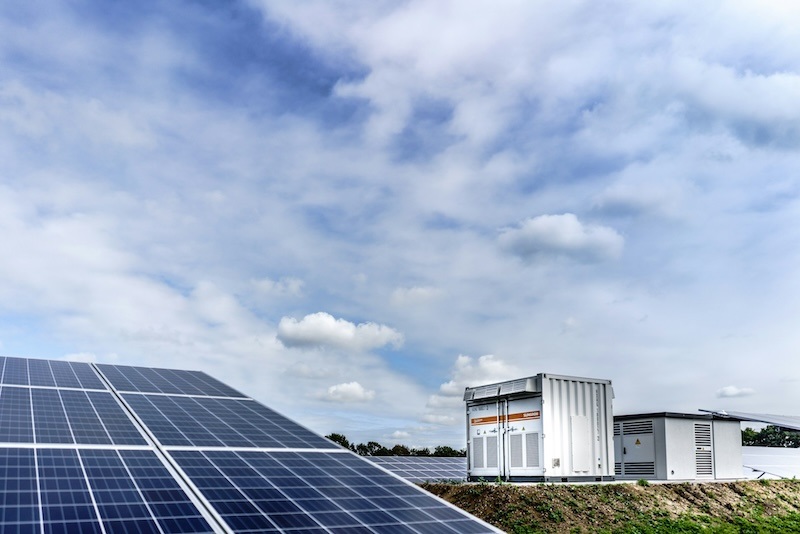
EPRI analyzed how the site architecture of a BESS affects risks. Containerized, outdoor solutions can advantage of modular BESS designs to
mitigate the risk of fire propagation and limit equipment damage, mainly through spacing. Damage to the entire system can be avoided by minimizing the size of a “unit” and preventing the spread of fire.
The smallest “unit” in containerized BESS is one container, but the smallest “unit” in a building-based BESS is one building, assuming no fire barriers or propagation mitigation exists. As such, indoor BESS facilities are overrepresented in failure incidents, and they also sustain more damage on average when an incident occurs because the indoor architecture usually leads to full propagation within a unit.
“For this type of site architecture, propagation prevention within the unit is paramount,” the report states. “The installation of barriers and segmentation of
indoor systems can prevent propagation within the structure.”
The BESS failure rate decreases with system age and with more recent vintages, as dendrites can form within cells in older systems over many cycles, which could lead to an internal cell short, thermal runaway and subsequently a fire.
“Conducting safety reviews and evaluating retrofits of early-vintage systems can help to ensure they include the latest codes, designs and practices,” according to the report.
As for the effect of the specific chemical makeup of the cells—nickel-manganese-cobalt, lithium-iron-phosphate or some other lithium-ion chemistry variant—EPRI could not conclude that cell-level chemistry in isolation was a risk factor for system-level BESS failures.
For all the potential risk factors, EPRI stressed that its analysis was limited by missing information and the possibility of missing incidents altogether.
“Without increased transparency and collaboration, it is not possible to fully identify gaps or trends that could lead to improved design, deployment practices and increased BESS safety,” EPRI wrote.
About The Author

KUEHNER-HEBERT is a freelance writer based in Running Springs, Calif. She has more than three decades of journalism experience. Reach her at [email protected].