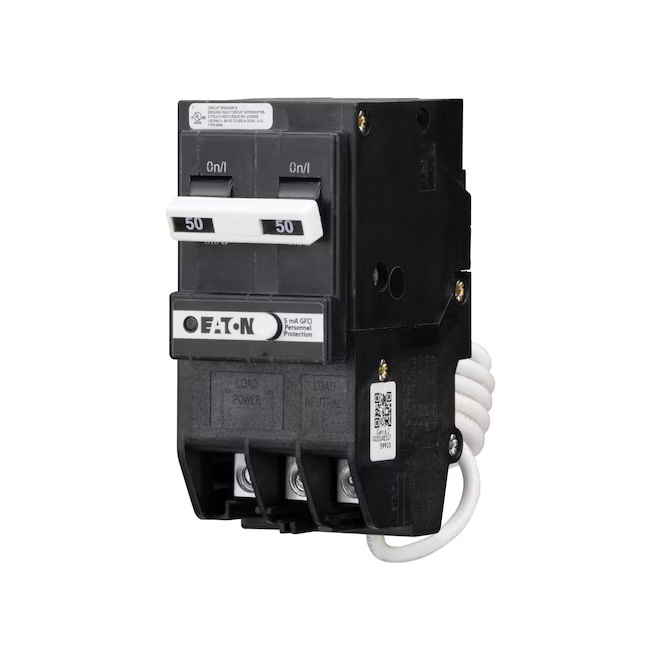
Nuisance Tripping of ground-fault circuit interrupters (GFCIs) not a new issue. Before the mid-1980s, it was very common for refrigerators, freezers and other solid-state electronic devices and equipment, such as remote-controlled ceiling paddle fans, to cause nuisance tripping of GFCI circuit breakers and GFCI receptacles.
In many cases, refrigerator and freezer manufacturers would use the equipment grounding conductor for leakage current (really, functional current) during their defrosting process. Since a GFCI is basically a current monitor that uses balanced current between the hot and neutral, any current imbalance of 4–6 milliamps or greater between those two conductors would trip the GFCI.
In the mid- to late-1980s, refrigerator and freezer manufacturers designed a simple electronic circuit to alleviate this problem. Electronic equipment, such as printers, computers, variable-frequency drive units, HVAC, inverters and others, remain a cause of nuisance tripping. Electronic equipment often had similar problems (such as those with the same problems as refrigerators and freezers) with leakage current or with generating high frequencies that cause nuisance tripping of GFCIs. I also know of one neighborhood where GFCI tripping was caused by small levels of induction from high-voltage lines in close proximity to the homes.
Whenever there are problems with protective devices, the electrical industry and UL are very quick to seek out a remedy. For example, UL Solutions provides GFCI testing and certification based on UL 943, the Standard for Ground-Fault Circuit-Interrupters. Recently UL and the U.S. Consumer Product Safety Commission (CPSC) addressed the issue of nuisance tripping of GFCIs. The CPSC supported proposals, dated Nov. 22, 2024, to revise UL 943 to address high-frequency GFCIs. The proposed requirements are necessary to complement the GFCI interoperability requirements added to UL 101, the Standard for Leakage Current for Utilization Equipment, for other than 60-Hz systems.
High-frequency GFCIs
This additional testing would cover the incorporation of high-frequency (HF+) GFCIs into UL 943 as part of mandatory Class A GFCI requirements. The proposed Class A HF+ GFCI requirements are compatible with new products tested to UL 101 requirements as well as existing products in the field. This will ensure there are no compatibility issues with electronic equipment and GFCIs.
What is a “Class A HF+ GFCI”? Some modern appliances, especially those using variable-frequency drives (VFD), such as those used in pool pumps, HVAC systems and electric vehicle chargers, can generate high-frequency electrical noise that traditional GFCIs can misinterpret as a ground fault. This can lead to nuisance tripping, where the GFCI engages even when there’s no real danger.
HF+ GFCIs are designed with improved sensing and filtering capabilities to differentiate between harmless high-frequency noise and actual dangerous ground faults. By accurately detecting ground faults, even in the presence of high-frequency noise, these specialized GFCIs enhance safety and reduce nuisance tripping.
Many new AC units, especially high-efficiency, variable-speed models, use VFDs or an electronically commutated motor, which is a type of brushless DC motor. VFDs control the speed of AC motors by varying the frequency and voltage of the electrical power supplied to the motor. The VFD can control the motor so the speed matches the building’s cooling demands. By adjusting speed, VFDs significantly reduce energy consumption compared to traditional AC systems that run at full capacity regardless of the actual cooling load.
VFDs also allow for smooth and gradual changes in motor speed, leading to more consistent and precise temperature control, rather than a hard start each time the compressor starts up. In addition, soft starts and continuous operation at lower speeds minimize stress on the motor and other components, extending the equipment’s lifespan. Unfortunately, high frequencies can result and may cause nuisance tripping of GFCIs.
Exceptions in the Code
The 2023 National Electrical Code, Section 210.8(F) states “all outdoor outlets, other than those covered in 210.8(A), Exception No. 1, including outlets installed in the following locations, and supplied by single-phase branch circuits rated 150 volts or less to ground, 50 amperes or less, shall be provided with GFCI protection: (1) Garages that have floors located at or below grade level; (2) Accessory buildings; and (3) Boathouses. If equipment supplied by an outlet covered under the requirements of this section is replaced, the outlet shall be supplied with GFCI protection.”
An Exception No. 2 has been added as follows: “GFCI protection shall not be required for listed HVAC equipment. This exception shall expire September 1, 2026.”
Hopefully, the HF+ GFCI will solve nuisance tripping issues. At least four manufacturers offer them.
Eaton
About The Author

ODE is a retired lead engineering instructor at Underwriters Laboratories and is owner of Southwest Electrical Training and Consulting. Contact him at 919.949.2576 and [email protected].