Green wire nuts
Are green wire nuts required when splicing equipment grounding conductors (EGC)? We have an inspector who claims they are.
No, green wire nuts (a wire nut is a pressure connector) are not required for splicing EGCs. See Section 250.8, which provides minimum requirements for connections of EGCs, grounding electrode conductors and bonding jumpers.
There are four list items in this section identifying permitted methods to splice EGCs. List item (1) permits listed pressure connectors. This means that any listed wire nut without respect to color (yellow, red, blue, etc.) is permitted to splice EGCs. List item (2) is terminal bars. List item (3) is pressure connectors (green wire nuts) listed as grounding and bonding equipment. It is imperative to note that this is one permitted method, not the only one. List item (4) is the exothermic welding process that is permitted but not required. Additionally, Article 250 contains specific requirements for equipment grounding and EGCs.
When splicing EGCs, there are no NEC requirements that mandate the use of green wire nuts. An EGC’s role is to carry fault current to facilitate the operation of an overcurrent protective device. It is important to note that any fault current placed on an EGC would be delivered by circuit conductors spliced with listed wire nuts (pressure connectors) that may be red, blue, yellow or other colors.
Preventing surges
When upgrading an old dwelling unit service, I know a surge protective device (SPD) is required. What is the minimum rating, and what type of device, in or next to the panelboard, is required?
Section 230.67 requires dwelling unit services be provided with an SPD in new installations and service replacements. The SPD may be an integral part of the service equipment, such as a device that takes the place of a two-pole circuit breaker, or it may be located immediately adjacent to the service equipment, such as an external SPD connected with an offset nipple. Type 1 and Type 2 SPDs are permitted. The minimum performance requirement for the SPD is a nominal discharge current rating of not less than 10 kA.
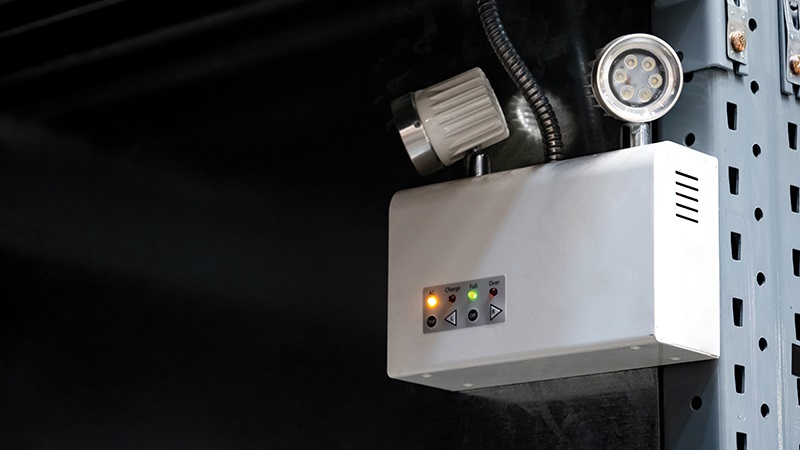
Emergency lighting controls
When installing emergency lighting, automatic load control relays (ALCR) and branch-circuit emergency lighting transfer switches (BCELTS) are permitted. What is the difference between them, and why not just transfer all emergency power with a large transfer switch?
As stated in your question, emergency lighting could be supplied directly from a panelboard on the load side of a transfer switch supplied by normal and an emergency power source. The use of ALCRs and BCELTs is permitted, not required, and it is a design issue. The primary difference between an ALCR and a BCELTS is in how they handle power sources and the UL standards that apply.
An ALCR (listed to UL 924) is a control device, supplied only by emergency power that bypasses local switches and dimmers to supply full-power illumination levels in the event of a loss of the normal supply and to return the emergency lighting equipment to normal status when the device senses the normal supply has been restored. Section 700.26 permits an ALCR to automatically energize an emergency lighting load upon loss of the normal supply. An ALCR cannot be used as transfer equipment.
A BCELTS (listed to UL 1008) is a device supplied by a normal and an emergency source on the load side of branch-circuit overcurrent protective devices. The BCELT transfers only emergency lighting loads from the normal power source to an emergency power source. Section 700.25 permits emergency lighting loads rated at not more than 20A to be transferred from the normal branch circuit to an emergency branch circuit by a listed BCELTS.
Type MI cable
When installing Type MI cable, is a separate EGC required?
Type MI cable is an assembly of one or more conductors insulated with a highly compressed refractory mineral insulation enclosed in a liquidtight and gastight continuous copper or alloy steel sheath. Where Type MI cable has an outer sheath made of copper, the NEC construction requirements mandate that the copper sheath provide an adequate path to serve as an EGC. Where the outer sheath is made of steel, a separate equipment grounding conductor is required.
Isolated power system required?
Are isolated power systems required in all operating rooms? A new project is using only GFCI receptacles. We have been involved in many healthcare facility installations, and an isolated system is always in the operating rooms.
The requirements that address your question are found in Section 517.20 on wet procedure locations. An operating room is a wet procedure location and special protection against electric shock is required. Permitted methods in 517.20(A) include (1) isolated power systems that remain in operation in the event of a single line-to-ground fault condition that limits the possible ground-fault current due to a first fault to a low value, without interrupting the power supply; (2) power distribution systems that interrupt the power supply if a ground-fault exceeds the trip value of a Class A GFCI; and (3) GFCI protection where each receptacle is an individual GFCI device or where each receptacle is protected by a single GFCI device.
Receptacle in a cabinet
In a dwelling unit bathroom, is the required receptacle permitted inside a cabinet? New designs have a cabinet intended for keeping a hair dryer plugged in, which seems to make sense.
No, the required receptacle outlet in 210.52(D) must be installed within 3 feet of the outside edge of the sink. If there is more than one sink, a receptacle outlet must be installed within 3 feet of the outside edge of each one. The receptacle is permitted to be installed on a wall or partition adjacent to the sink or sink countertop, located on the countertop or installed on the side or face of the sink cabinet not more than 12 inches below the top of the sink or sink countertop. Installing a receptacle outlet in a cabinet as stated in your question is not prohibited, provided the requirements in 210.52(D) are met. The general requirement in the parent text of 210.52 applies here, and the required bathroom receptacle outlet must be in addition to any others installed in a cabinet.
Circuit breakers as switches
We are being questioned by an owner’s representative on using circuit breakers (CBs) as switches. Does the NEC specifically permit such use? This is a large commercial occupancy that will likely be occupied as a warehouse or similar use.
Yes, hand-operable CBs equipped with a lever or handle, or power-operated CBs able to be opened by hand in the event of a power failure, are permitted to be used as switches for lighting. See Section 404.11. The CBs must meet all general requirements in Part VII of Article 240. Additionally, Section 240.83(D) requires CBs used as switches in 120V and 277V fluorescent lighting circuits be listed and marked SWD or HID. CBs used as switches in high-intensity discharge lighting circuits must be listed and marked as HID.
Workspace clearance required?
Does a control panel for an electrochromic glass system we are installing require workspace clearance? It has a dedicated 120V, 1 PH branch circuit and a Cat 6 communication feed. Are we subject to NEC clearance requirements for this control panel similar to a panelboard or do we just need to make this control panel accessible?
Workspace clearance is required in accordance with Table 110.26(A)(1). See the last sentence in Section 110.26(A). Systems operating at not greater than 30 Vrms, 42V peak or 60V DC are permitted by special permission to have smaller clearances applied.
Cable jackets inside device box?
Does the jacket of Type NM cable (Romex) need to extend inside a single- or two-gang box where a connector is used? An inspector is making us loosen all of the connector clamps and pull more cable into the box.
The inspector is correct. See Section 314.17(B)(2), which requires cable assemblies with nonmetallic sheaths (such as Type NM cable) to extend not less ¼ inch inside the box and ¼ inch beyond the end of any cable clamp.
stock.adobe.com/Summer Paradive
About The Author

DOLLARD is retired safety coordinator for IBEW Local 98 in Philadelphia. He is a past member of the UL Electrical Council, NEC Correlating Committee, NEC CMP-10, CMP-13, CMP-15, NFPA 90A/B and NFPA 855. Jim continues to serve on NFPA 70E as a Special Expert. Reach him at [email protected].