In April, the U.S. Department of Energy (DOE) announced the winners of its fourth annual Race to Zero Student Design Competition, a collegiate competition that engages college students to design net-zero-energy-ready homes.
This year’s contest featured 39 teams from 33 universities from four countries and was held at the National Renewable Energy Laboratory (NREL) in Golden, Colo.
The grand prize-winning team, Future Cities Collective, was composed of 15 students from Ryerson University, Toronto, and the University of Toronto. The team’s project, “LaneZero,” featured, among other energy-related concepts, solar panels, a smart thermostat and LED lighting. The homes are designed to be built in publicly owned laneways that traverse the city’s dense urban area.
The team opted for a three-tiered approach. First, it minimized air conditioning needs through building envelope, geometry, mass and orientation. Second, it used passive conditioning strategies through natural ventilation, solar heat gains and daylighting. Third, it provided supplemental active conditioning through an efficient conditioning system.
“Energy simulation was used throughout the interactive design process to guide design decisions on the window-to-wall ratio for north- and south-facing walls,” said Vera Straka, team sponsor, professor and associate chair in the department of architectural science at Ryerson University.
The simulation addressed insulation and glazing requirements, with a focus on solar heat gain coefficient and shading.
“These passive measures resulted in a design adopting well-insulated and airtight building envelope, with significantly reduced heating demand and dominant cooling loads,” she said. “It was only then that the selection of efficient active systems commenced.”
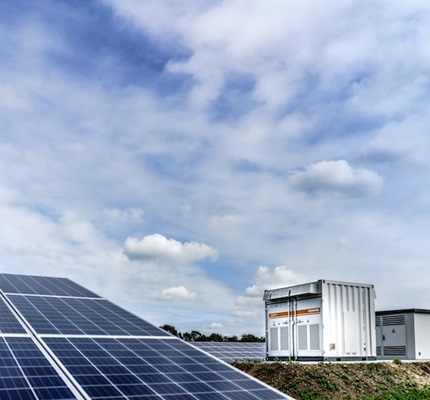
The resulting passive design and elements ended up requiring 6,000 kilowatt-hours (kWh) or 20.5 million British thermal units (MMBtu), which the team opted to supply through a photovoltaic array. The team selected Canadian Solar’s double-glass monocrystalline panels.
“The south-facing area of the roof can accommodate 18 of these panels with the maximum capacity of 5.13 kW,” Straka said. “These panels at the location and orientation can provide 6,100 kWh annually, or 20.8 MMBtu.”
This leaves a surplus of 100 kWh (0.3 MMBtu). A building-integrated photovoltaics system was selected to integrate PV panels into the architectural design and eliminate the cost of roof shingles.
About The Author

ATKINSON has been a full-time business magazine writer since 1976. Contact him at [email protected].