Passive House Construction and Electrical Efficiency
A lot has been written in recent months about net-zero energy homes, especially in California, where legislation is beginning to mandate the practice.
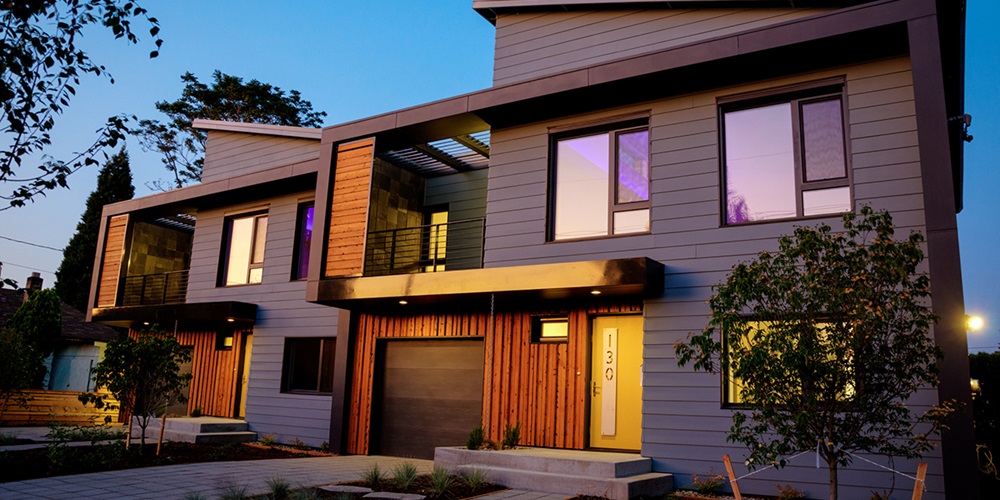
However, a concept that has tended to be in the background, "passive house construction," has been gaining more traction recently and is being studied in side-by-side apartment buildings in Minneapolis.
PHIUS Demonstration Project and Electrical Design in Minneapolis
Passive House Institute US, Inc. (PHIUS), a non-profit 501(c)(3) organization focused on making high-performance passive building practices the mainstream market standard, is working on the project. For electrical contractors, these projects present opportunities to integrate advanced energy-efficient systems, controls and electrical infrastructure that align with passive house standards.
The identical-looking apartment building will be built to conventional construction standards. It is the first-of-its-kind demonstration project designed to showcase passive house construction techniques in multifamily construction in comparison to traditional construction.
Proving the Value of Passive House for Multifamily Housing Systems
The goal of the project is to demonstrate to lenders, property owners and underwriters that the additional cost of the passive house approach can dramatically reduce operating costs and make rental apartments more appealing.
LHB Architects, which is designing the buildings, expects the passive house building to use at least one-third less energy than a conventional apartment building. Construction is expected to begin in mid-2018. This level of efficiency reinforces the growing demand for green building practices that electrical professionals are increasingly expected to support in both design and installation.
Standards and Certification Affecting Electrical Installations
"Passive house" is the creation of the PHIUS (www.phius.org). The organization's mission statement is "To develop and promote North American passive building standards, practices, and certifications for buildings, professionals, and products to create structures that are durable, resilient, comfortable, healthy, and super energy efficient."
In March 2015, PHIUS released the "PHIUS - 2015 Passive Building Standard," which is the only passive building standard in existence based on climate-specific comfort and performance criteria. PHIUS Certified and Pre-Certified projects now total over 1 million square feet, across 1,200 units nationwide.
Electrical Considerations in Passive House Design Principles
Passive house projects comprise a set of design principles used to achieve a rigorous and quantifiable level of energy efficiency within a specific quantifiable comfort level. For a building to achieve certification, it must be built in accordance with five principles. Understanding these principles will help contractors anticipate electrical system needs for ventilation, heating, cooling and airtight construction.
- Employs continuous insulation through its entire envelope without any thermal bridging
- Employs an extremely airtight building envelope, preventing infiltration of outside air and loss of conditioned air
- Employs high-performance windows (typically triple-paned) and doors
- Uses some form of balanced heat- and moisture-recovery ventilation and a minimal space-conditioning system
- Manages solar gain to exploit the sun's energy for heating purposes in the heating season and to minimize overheating during the cooling season
About The Author

ATKINSON has been a full-time business magazine writer since 1976. Contact him at [email protected].