The 2025 version of California’s energy code has been released and will take effect on Jan. 1, 2026, superseding the 2022 version. Local electrical construction professionals must adhere to its requirements for all new construction and alteration projects covered by the code.
Energy codes regulate the designed energy efficiency of buildings. While a majority of states adopt model codes and standards, California developed its own: Title 24, Part 6 of the Building Standards Code. It is enforced by local building departments through the permit application process.
For lighting in nonresidential commercial buildings, the majority of changes involve cleanup, clarifications and tweaks. In terms of substantial changes, the 2025 code focuses on encouraging electric heat pumps in certain building types, replacing end-of-life rooftop HVAC units with high-efficiency systems, strengthening ventilation standards, updating solar and storage standards for certain buildings, and establishing electric-ready requirements for commercial kitchens and some multifamily buildings.
Notable changes
The lighting section establishes limits on maximum lighting power that can be installed—expressed as lighting power densities (LPDs), which are based on use of energy-efficient technology while being able to provide satisfactory light levels. Designers can comply through a prescriptive method, applying LPD limits by space or building type, or using a performance method involving building energy modeling. Additional installed lighting power may be gained by using optional controls that qualify for power adjustment factors.
One notable change is the removal of the Tailored Method from compliance, with its wattage allowances now being additional power allowances under the Area Category Method. An additional lighting power allowance is added for outdoor spaces that use security cameras.
Mandatory lighting control requirements cover manual, multilevel, automatic shutoff, daylight-responsive and demand-responsive controls. For each requirement, there may be significant exceptions.
Manual controls (Sec. 130.1a) are required to allow occupants to control lighting with switches, dimmers or scene controllers—either readily accessible within the space or installed remotely. Egress lighting (up to 0.1W/sq.ft.) may remain on continuously.
In spaces larger than 100 sq.ft. and with more than 0.5W/sq.ft. general lighting, the code requires multilevel controls (Sec. 130.1b) that provide continuous dimming from 100% to 10%, with step dimming allowed for HID and induction.
Automatic shutoff controls (Sec. 130.1c) are required to turn lights off when spaces are vacant using occupant sensors (vacancy or partial-on), time-switch controls or some other appropriate control. Control zones generally cannot exceed 5,000 sq.ft.; special cases such as malls and industrial areas can go up to 20,000 sq.ft. Warehouses, library stacks, corridors, stairwells and open offices have application-specific requirements for automatic shutoff combined with light reduction.
Daylight-responsive controls (Sec. 130.1d) are required in areas apt to receive consistent daylight, identified as primary sidelit, secondary sidelit and skylit zones. General lighting in these zones must dim automatically as daylight increases. Parking garages also need daylight controls that fully switch off lighting when daylight levels exceed certain thresholds.
Demand-responsive controls (Sec. 110.12) are required for projects with general lighting loads greater than or equal to 4,000W and spaces required to have multilevel lighting. Controls must reduce power by at least 15% on receipt of a demand-response signal from a certified node (like OpenADR). Controlled receptacles must also be able to shut off during DR events.
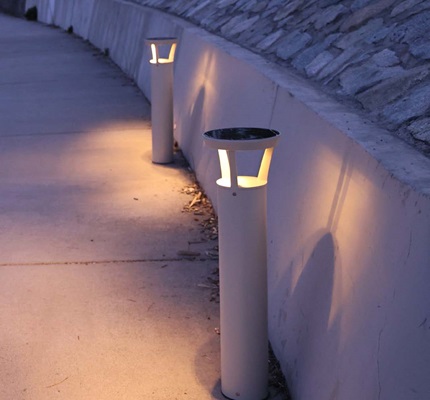
Outdoor lighting (Sec. 130.2c) must turn off during the day through photosensors, scheduling or other means. Scheduling controls must be capable of power reduction during after-hours periods. Motion sensors are required for certain area lighting luminaires that reduce power when the area is unoccupied, with zones limited to 1,500W.
Controlled receptacles (Sec. 130.5d) are mandatory in offices, lobbies, conference rooms, copy rooms and hotel/motel guestrooms, automatically turning off when spaces are unoccupied. They must be clearly marked.
The code also offers power adjustment factors (Sec. 140.6a) to encourage optional advanced controls by letting some controlled wattage not count toward installed lighting power.
Finally, all installed lighting controls require acceptance testing (Sec. 130.4) by a certified acceptance test technician who will issue a certificate of installation and a certificate of acceptance.
Another important change is that, for lighting controls, manual controls can now be located either in the space or installed remotely for all space types. Where required, multilevel controls must be capable of continuous dimming from 100% to 10% of lighting power unless HID or induction sources are used, in which case it must be capable of a step between 30% and 70% of lighting power.
Additionally, the threshold lighting load for daylight response has been lowered. All demand-response controls must be compliant with a qualifying standard. And where occupant sensors are used to provide inputs to the HVAC system for occupied-standby mode, ventilation air will be reduced to zero when the mode is triggered.
For more information, consult the 2025 version of Title 24, Part 6 and helpful resources such as Energy Code Ace.
stock.adobe.com / Pixels Hunter
About The Author

DiLouie, L.C. is a journalist and educator specializing in the lighting industry. Learn more at ZINGinc.com and LightNOWblog.com.