You're reading an older article from ELECTRICAL CONTRACTOR. Some content, such as code-related information, may be outdated. Visit our homepage to view the most up-to-date articles.
Talk to folks in the electric vehicle (EV) industry about commercial charging opportunities, and there is a very good chance you’ll hear that old which-came-first/chicken-or-egg metaphor applied to the market’s potential. You need enough cars to make charging equipment profitable, but prospective EV buyers may balk if they fear there won’t be enough charging stations to meet their needs. As public/private partnerships expanded their public-charging installation efforts this year, this paradox became a little less relevant, but questions about standards for faster charging equipment and universal payment methods remain as hurdles to faster growth.
Where things stand
With every major electrical manufacturer now offering commercial-scale electric vehicle supply equipment (EVSE), one might think this market was both booming and highly competitive. However, not much of anyone is making money yet on public chargers, except the few manufacturers with government contracts and the electrical pros installing the devices.
And most drivers using these stations aren’t paying for their refills, according to Richard Lowenthal, founder and chief technology officer of Coulomb Technologies, an EVSE manufacturer and the developer of ChargePoint, the most frequently used charging-station payment system. Only 20 percent of ChargePoint station owners now require users to pay for their kilowatt-hour top-offs, though he says this number is growing quickly.
Part of the station owners’ challenge is determining how to price a driver’s electricity purchase.
“The revenue model is still undecided,” said Prajyot Sath, a research associate with the market-research firm Frost & Sullivan and author of a study on North American EV charging infrastructure. While simply metering the electricity the driver draws from the system may seem an obvious choice, many station owners are opting for time-of-use payment schemes to avoid run-ins with their state public utility commissions (PUCs).
In fact, this is one of the confusions showing up as growing pains as commercial charging expands nationally. PUCs regulate the cost of electricity sold in their states by electric utilities, and the definition of “electric utility” can vary from state to state.
“In California, they’ve ruled that we’re not a utility, so we can charge whatever we want,” Lowenthal said, while New York City station owners only can charge a set amount for each charging session. “The shift to using electricity as a fuel is forcing people to rethink” how they price electricity.
DC standards wars
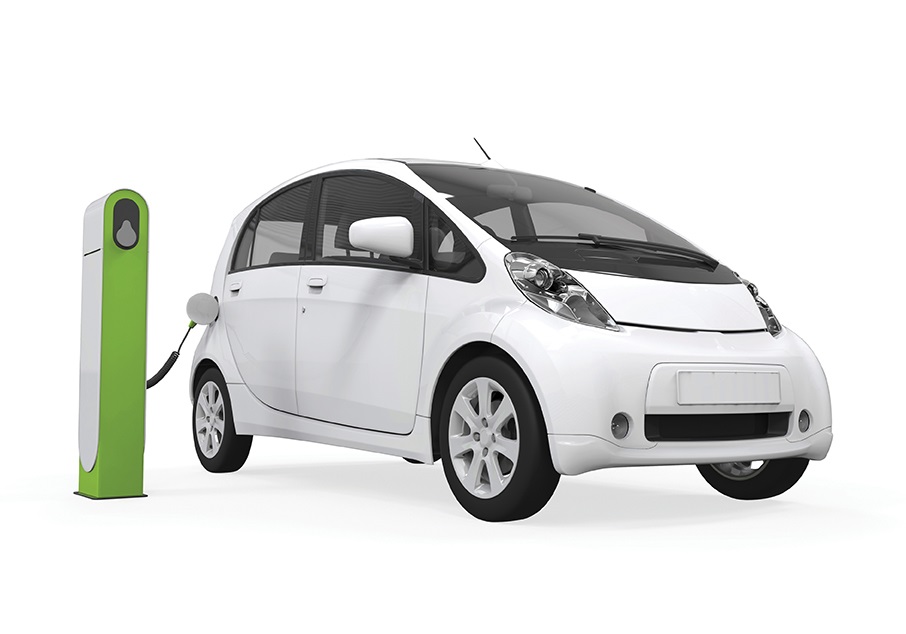
Establishing understandable pricing schemes will become even more important as faster—and more expensive—public charging systems come online. Today, most EV drivers are juicing up their cars using AC equipment—either by plugging into a home outlet or using public Level 2 AC equipment. The new systems use DC power to recharge batteries more quickly. The time-savings is considerable, with an 80 percent recharge in 15 or 20 minutes. However, a battle now underway over DC equipment standards could keep facility owners from committing to EVSE installation.
The standards war involves the connectors used to hook an EV to the new equipment—both the charger inlet mounted on the car body and the arrangement of pins at the end of the power cord. A Japanese standard called CHAdeMO is the only DC guideline now on the books (in the United States, this is called “DC fast charging”), and Nissan is equipping its Leaf with CHAdeMO-compliant receptacles. The problem with this standard is that it requires an entirely different cord and inlet from those used for AC charging, so vehicles need two receptacles and chargers need two cords.
[SB]Only Nissan and Mitsubishi offer cars equipped with DC receptacles, so the situation isn’t a large problem, yet. But, while their competitors all see the advantage of faster charging, many view the CHAdeMO dual-outlet approach as overly complicated, so the Society of Automotive Engineers International (SAE) has proposed a different standard for what it calls a “combo connector.” SAE developed the standard for AC charging equipment, J1772, and this new effort builds off that previous work to describe a single inlet capable of accepting both AC and DC charging devices. All three of the major US automakers have adopted this new standard, along with the five major German manufacturers (Audi, BMW, Daimler, Porsche and Volkswagen).
For EVSE manufacturers, this evolving standards issue raises the risk that fast charging equipment they install today could become obsolete in just a couple years. As a result, those companies seeking an early entrance into this market are building in a way to upgrade their products in the future.
“If you look at our design, we only populated one side of the charger with cords,” said Mike Calise, Schneider’s director of electric vehicles, implying that future retrofits to incorporate J1772-compliant couplers could be made. He said that a recent California settlement against the electric utility NRG likely will help fund a $100 million network of charging stations, including fast-charging equipment, throughout that state. “There are a lot of quick chargers in the scheme.”
Show me the money
While the vast majority of public charging stations now dispense their kilowatts for free, drivers can’t expect this electrical largesse to last forever. At some point—probably sooner, rather than later—they will need to start paying to recharge. How they make that payment, however, may differ from station to station. While we’ve all grown accustomed to swiping whatever debit or credit card we have at hand to pay for gasoline at the pump, the situation could be more complicated for EV drivers, with a mix of EVSE manufacturers, payment-system service providers and even an electric utility all seeking a piece of the electronic payment pie.
ChargePoint is the biggest player in the payments business. Their system, which includes a cellular modem used to communicate with a secure transactions network, began as an offshoot of Coulomb Technologies’ EVSE manufacturing business. It’s become so successful that ChargePoint has become the branding used for both the payment system and the charging equipment. Now other manufacturers, including Eaton and Fuji, build those modems into their EVSE, as well. When drivers recharge at a participating station, ChargePoint takes a small percentage of the sale to process the transaction, much like a credit card processing company.
“We collect money from drivers and hand it to station owners,” Lowenthal said. Users can identify ChargePoint-connected stations using a mobile app that comes complete with GPS-based mapping capabilities.
Not all commercial EVSE manufacturers are buying into the ChargePoint approach, however. For example, GE recently announced a new pedestal-mounted level 2 AC system designed for public applications equipped for Paypal payments through a proprietary GE network.
“Anybody with a smartphone can do payment through a PayPal account,” said Seth Cutler, GE’s EV infrastructure product manager.
And NRG, the electric utility at the heart of the California settlement described above, also is getting into the payments game with its eVgo-branded charging stations. The stations originated in the utility’s home turf in Texas but likely will expand quickly if the California settlement can fend off a legal challenge by EVSE maker ECOtality and its own Blink network. With eVgo, users pay a monthly fee for an unlimited amount of charging capacity.
What contractors can expect
Unanswered standards questions aren’t slowing down the flow of public EVSE installations, according to Coulomb’s Lowenthal, who said workplace installations now make up 40 percent of the company’s business. And he sees another hot opportunity in the multiunit dwellings that 41 percent of Americans now call home. EV sales might be a fraction of those for traditional vehicles, but they’re growing quickly and those new EV drivers represent a brand new market that’s growing exponentially.
About The Author

ROSS has covered building and energy technologies and electric-utility business issues for more than 25 years. Contact him at [email protected].