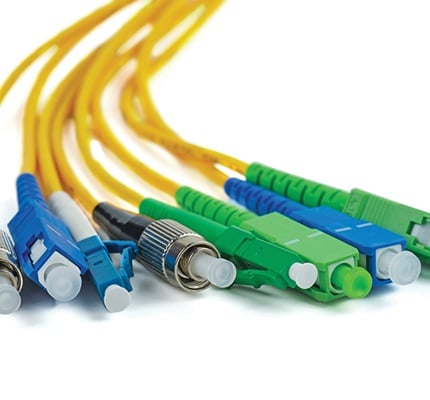
During the early days of fiber optics, there were many ideas about making connectors. Splicing was easily solved using an electric arc to fuse (weld) two fibers together for a permanent connection, but connectors were much more difficult. You needed to mate two fibers with low loss and reflectance, but the connector had to be durable enough to make and break connections many times while still having low loss. It needed to be stable over changes in environmental changes such as temperature and humidity, and rugged enough to withstand typical handling.
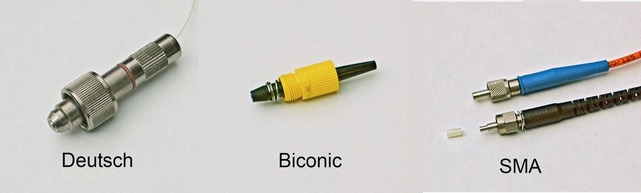
In the early days of fiber optics, connectors used many different techniques to connect two fibers: molded connector ferrules (AT&T Biconic, AMP Optimate), machined ferrules (SMA), bare fiber connectors like mechanical splices (Deutsch, TRW) and even a few expanded-beam connectors. The need for micron-level precision in fiber alignment was not easily obtained.
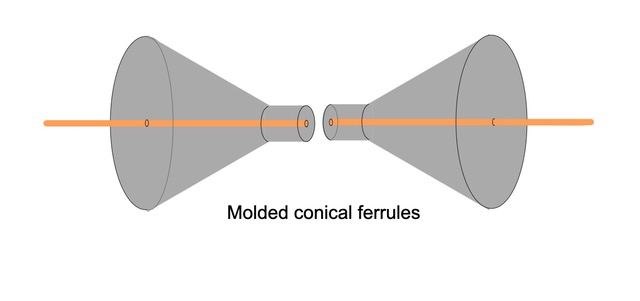
The AT&T Biconic and AMP Optimate connectors used molded plastic conical ferrules aligned by a dual conical adapter (hence the name biconic). The AT&T Biconic was a more stable connector since the plastic was glass-filled, making it almost as hard as glass or ceramic. The AMP version was just plastic, making it less hard and unstable over temperature changes.
Conical connectors have multiple alignment issues. The fiber must be in the center of the cone, and the cones must be perfectly round and tapered. The mating adapter must have the cones on each side perfectly aligned. The polished end of the ferrule must be exactly the right length because it sets the separation of the two fiber ends. Too much separation causes loss, while not enough can cause fiber damage and misalignment.
Molding the connectors was not easy either. The fiber is only 125 microns diameter; that is 0.005 inch (five-thousandth of an inch). In the beginning, the Biconic ferrule was molded around the fiber because the technology did not exist to mold a hole in plastic that small. Eventually, techniques were developed to mold the small hole for the fiber precisely enough.
When single-mode fiber became available, the Biconic connector was not precise enough until they started grinding the ferrules to align the fiber, a very expensive process. Even so, loss was greater than 0.5 decibels (dB).
The Optimate never made the transition to single-mode. Many Biconics were used in telecom systems, and we occasionally hear from someone looking for replacements today. They are indeed still available.
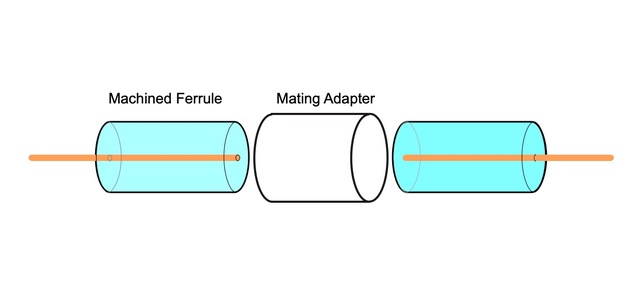
Machined cylindrical ferrules
Machining metal ferrules was equally difficult. The SMA connector was adapted from a miniature microwave connector with a 1/8-inch ferrule. Machining the ferrule and polishing it to a smooth surface with the precise diameter was difficult enough, but then they had to drill a hole for the fiber. Drilling a 0.005 hole in stainless steel or aluminum is a very delicate process. And finally, a cylindrical mating adapter also required precision machining.
Machined ferrules never worked for single-mode. Even with multimode fiber, typical losses were 1 dB or more. Somewhat better loss was obtained with a version that machined a smaller end to the ferrule and used a hard nylon bushing for alignment, but losses were still not low enough.
Machined ferrules have one more problem; metal expands and contracts over temperature changes. The biggest problem this causes is breaking the bond on the glue that holds the fiber in the ferrule, allowing the fiber to pull back or poke out of the end, causing loss or damage when mating.

Bare fiber connectors
Another idea used in some connectors was to avoid the ferrule entirely¾just have a bare fiber extending from the connector and a means of aligning it in the mating adapter. The Deutsch 1000 connector used a plastic lens with index-matching fluid to reduce both loss and reflectance. Loss, however, was more than 1 dB and the plastic lens degraded after just a few mating cycles. The connector was also enormous, about 1 inch diameter and almost 3 inches long.
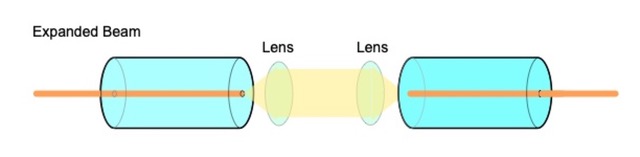
The idea of an expanded beam connector was to use a lens to make the beam of light from the fiber bigger to ease the alignment between the connectors. Bigger beams of light also had another advantage; dust was small compared to the beam of light and was no longer a problem.
But expanded-beam connectors were not easy to build. They required precisely aligning a fiber with a tiny lens in the connector to get low loss, which was exceedingly difficult, and even more so with single-mode fiber.
Some surprising companies became involved in the early days of fiber optics. In 1982, the beginning of the expansion of fiber optics, Eastman Kodak introduced a new type of camera, the Disc camera. The camera used a tiny film size, 8 x 10 mm, compared to 24 x 36 mm for a 35-mm film camera. With the Disc camera, Kodak also pioneered a new technology: molded lenses.
Some engineers decided that this lens molding technology could be used to solve the connection problem for fiber optics, especially with single-mode fiber. Kodak developed a molded collimating lens to the specifications of single-mode fiber and a plastic body to hold it, the fiber and the cable. They called it the Lamdek connector.
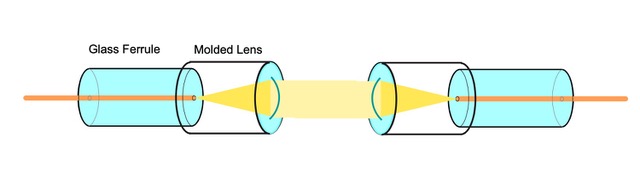
Lamdek expanded beam connector
Read more about the Lamdek connector and how FOTEC helped Kodak measure power and other factors from the connector and more, and what became of the Lamdek connector in my column in the October 2026 issue of ELECTRICAL CONTRACTOR.
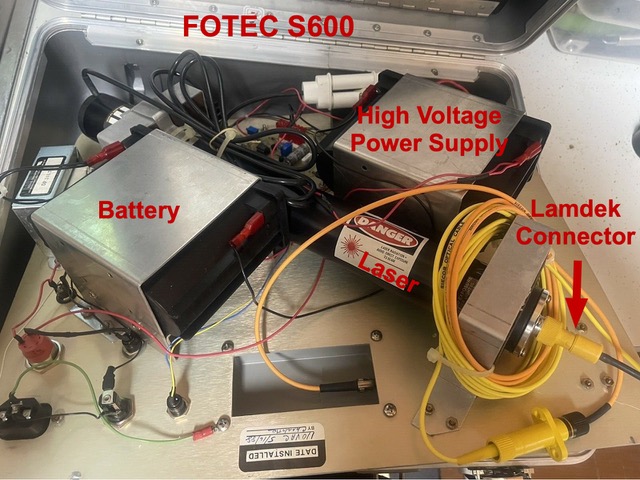
More than 100 types of connectors have been developed and offered commercially since the beginning of fiber optics. We’ve lost count recently, but when FOTEC made test equipment, we made adapters for over 100 connectors.
About The Author

HAYES is a VDV writer and educator and the president of the Fiber Optic Association. Find him at www.JimHayes.com.