The Inflation Reduction Act will pump more than $300 billion into measures intended to significantly reduce greenhouse gas emissions. Three separate analyses have concluded the bill could cut net greenhouse gas emissions down to 40% of 2005 levels by 2030, getting the nation 80% of the way toward President Joe Biden’s goal of a 50% cut versus 2005 by the end of the decade.
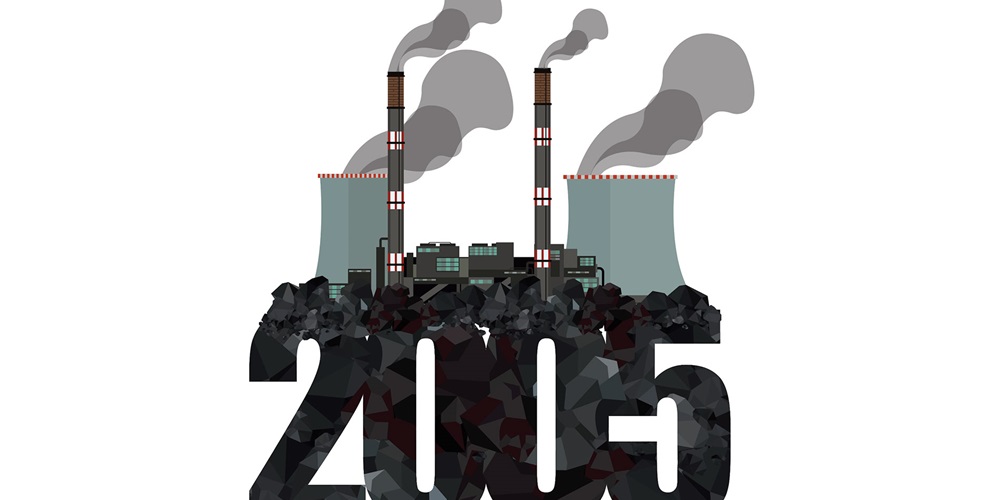
What is it about 2005—why do policymakers keep referring to it in their emissions-reduction plans, and why isn’t the rest of the world working with that same data point? The answers are both simple and not so simple, and they illustrate just how complicated it can be to politically address such issues on a global scale.
A brief history lesson
To begin understanding these climate targets, a short history lesson is required. These emissions-reduction goals are called “nationally determined contributions” (NDCs) in the series of international agreements in which they’re defined. They originated in negotiations over the 2015 Paris Agreement, during which 186 nations responsible for more than 90% of global emissions submitted NDCs with target dates of 2030 or 2035.
But the NDCs could take different forms. For example, while most countries’ commitments took the form of an absolute reduction of emissions, others, such as China and India, submitted reductions of emissions per unit of GDP, which allows these developing countries to dial back emissions-reduction efforts during periods of slower growth.
Why 2005?
The choice of base year—the year against which emissions reductions would be compared—was left up to individual nations. In most cases, this was the year a country had experienced its peak level of emissions. For the United States, that was 2005, when coal-fired power plants generated 50% of U.S. electricity demand, compared to 19% for natural gas, and greenhouse gas emissions hit the equivalent of 7,260 million metric tons.
It’s been downhill since then for coal, as 2005 also marked the beginning of the fracking boom that made natural gas the cheapest fossil fuel on the market. Additionally, natural gas burns cleaner than coal, so emissions began falling as power companies shifted to gas generators.
In the United Kingdom, coal was historically an even bigger generation resource, accounting for almost 80% of the country’s electricity demand in the early 1980s. But Margaret Thatcher was elected prime minister in 1979—and coal-workers’ unions, which had disrupted the British economy with a series of strikes in the 1970s, became a major political target for her.
Because the industry was highly dependent on government subsidies, Thatcher wanted to see it privatized and she succeeded. Natural gas soon began to replace coal among newly privatized electric utilities, and today the U.K. only has three operating coal stations, all marked for closure by 2024. This is one reason why the U.K., along with the European Union, pegged 1990 as its year for emissions-reduction comparisons.
PR benefits?
Choosing a peak-emissions year as a baseline offers some obvious public relations benefits for politicians and environmental advocates, because it makes a goal like Biden’s 50% reduction by 2030 seem easier to meet. In the United States, for example, we’ve already cut emissions by 20% versus 2005 levels, according to July data from the U.S. Environmental Protection Agency, but the latest readings show only a 7% drop from 1990. Similarly, figures reported by the emissions-tracking group Climate Scorecard in December 2020 showed the U.K. had reduced its emissions by 40% versus 1990, a number that would have been much lower if 2005 was used for comparison.
NDCs are up for reconsideration at the next meeting of the international Council of Parties (COP), COP 27, to be held in November 2023. At the COP 26 meeting last November in Glasgow, Scotland, a U.N. Climate Change report showed that progress was falling short of what was needed to limit global warming to 1.5°C above preindustrial levels by the end of the century. As a result, an agreement was reached to require all countries to come up with stronger plans on an annual basis, rather than every other year, starting in 2022.
Of course, these near-term NDCs, regardless of their baseline dates and reduction targets, are all just stepping stones to an even more important and absolute date: achieving net-zero emissions by 2050. The British climate-tracking website Carbon Brief estimated soon after the Glasgow meeting that simply maintaining current policies without continuing to work toward the 2050 goal could lead to a 2.6–2.7°C warming by 2100. Meeting long-term net-zero promises, though, could limit that rise to 1.8°C. But, climate experts say, more aggressive work needs to be done now to hit net-zero emissions by 2050.
About The Author

ROSS has covered building and energy technologies and electric-utility business issues for more than 25 years. Contact him at [email protected].