For more years than I would like to admit, there hasn’t been a major change in dwelling unit calculations until the 2026 NEC. Many electrical contractors may not even realize the change since it can easily be overlooked. The difference in the 2023 and 2026 editions is between NEC 120.13 for the minimum unit load for dwelling unit branch circuits at 3 VA per square foot, which was unchanged, and NEC 120.41 for feeder and service minimum unit loads at a new value of 2 VA per square foot instead of 3 VA per square foot. NEC 120.41 applies to one-family, two-family and multifamily dwelling feeder and service loads, so this overall unit calculation change will affect a large number of feeders and services on new installations.
Code-Making Panel 2 reduced feeder and service loads from 3 VA per square foot to 2 VA per square foot primarily due to advancements in lighting energy efficiency. This change reflects the widespread use of higher-efficiency LED lighting by replacing larger and less-efficient incandescent lighting loads. For example, a typical LED lamp may use about 10W, while an incandescent lamp would use 60W for similar brightness. LED power factor is a measure of how efficiently an LED light converts electrical power into useful light output. Therefore, power factor is the ratio of real power (measured in watts) used by the LED to the apparent power (measured in volt-amperes) drawn from the electrical supply system.
Calculating abounds
The formula for calculating power factor is real power in watts divided by apparent power in voltage times amperes. A power factor close to 1.00 indicates high efficiency, meaning most of the electrical power is being converted into light, rather than wasted as heat, as would be the case with an incandescent lamp. For example, an LED with a power factor of 0.95 is 95% efficient. High power factor values (typically above 0.90) are desirable, especially in lighting applications, since the reduced load results in reduced energy costs and improved system reliability.
These more efficient luminaires have significantly lowered the actual energy consumption in dwelling unit loads, as well as for commercial installation lighting loads. This reduction provides a more accurate representation of current energy use, ultimately affecting feeder and service size calculations and promoting energy conservation—thus the reason for the change in the 2026 NEC.
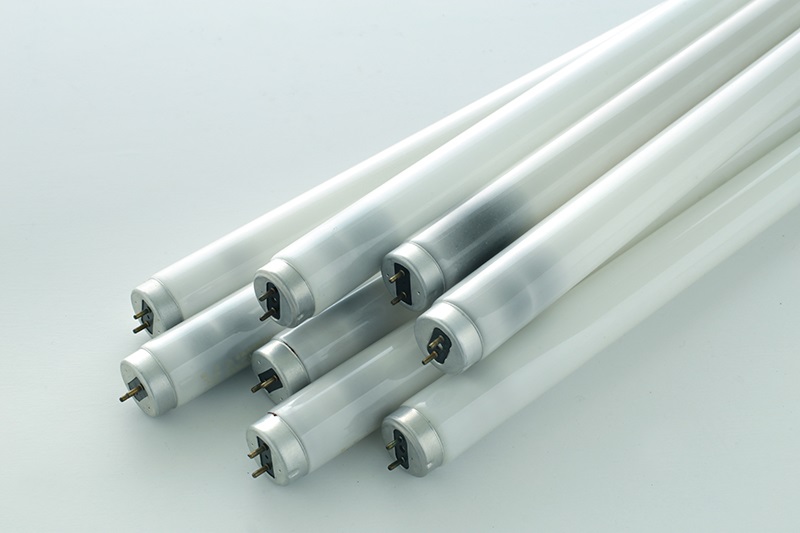
Similar to LEDs, fluorescent lighting also now uses solid-state ballasts that are power-factor-rated in excess of 0.90 for higher efficiency. These electronic ballasts are more efficient, often reducing energy consumption by up to 30% compared to the old magnetic ballasts. Electronic ballasts now also operate at higher frequencies that minimize losses and improve lamp life, operating at frequencies above 20 kilohertz, which reduces flicker and improves light output.
Be very careful on how to replace lamps in existing fluorescent luminaires since there are four different applications to understand. I covered those in a separate article in October 2022 (see “The ABCDs of LED Tube Lighting”) and am repeating it as follows:
Type A LED tubes have an integrated driver for use with existing T-8 electronic fluorescent ballasts. Where there is an existing T-8 electronic ballast, remove the old fluorescent lamps and replace them with new T-8 LED Type A lamps. It is also contingent on the Type A LED tubes being compatible with the particular ballast.
A Type B LED tube require the ballasts be removed from the existing luminaire and the power then be wired directly to the sockets. Having no ballast also reduces future maintenance costs, since the ballast will not have to be replaced. Most Type B LED tubes these days can be single- or double-end wired, so if the sockets are in good shape, you can leave the reconnected sockets as-is and just bypass the ballast.
Type C LED tubes use a remote driver rather than an internal one within the tube itself. This remote driver is the difference between Type C LED tubes and the Type A and Type B LED tubes, which have internal drivers. A remote driver can power multiple LED tubes, similar to regular fluorescent lighting; however, Type C LED installations require disconnecting or removing the original fluorescent ballast.
Type D LED T-8 lighting (also commonly called Type AB, combo-drive or dual-mode) is fairly new. Type D LED lamps will operate connected to existing fluorescent ballasts, although you must verify that the existing ballasts are compatible with Type D LED lamps. When the fluorescent ballast finally goes bad, the Type D LED lamps can be directly connected to the line voltage connection of 120V or 277V and could be single- or dual-end wired based on the manufacturers’ recommendations.
Next month’s article will provide an actual calculation based on NEC Annex D.
stock.adobe.com/Free1970
About The Author

ODE is a retired lead engineering instructor at Underwriters Laboratories and is owner of Southwest Electrical Training and Consulting. Contact him at 919.949.2576 and [email protected].