Work surface or countertop?
There are different code requirements for countertops and work surfaces. How do I know which one applies?
The terms counter, countertop and work surface are defined in Article 100. A countertop is a fixed or stationary surface typically used for food or beverage preparation or serving (such as in a kitchen, deli, restaurant or bar), personal lavation (bathroom) or laundering, or a similar surface that faces a routine risk of large quantities of liquids spilling onto outlets mounted directly on or in the surface. A work surface may look the same, but the location clearly intends dry use and tasks other than those in the definition of a countertop. A work surface presents an incidental risk of spilling much smaller quantities of liquids.
Arc flash hazard marking
Do all panelboards require an arc flash label with an incident energy level marked on them? The designing engineer has informed us it is a requirement and not a design issue. Is this new? I thought labeling started at 1,000A?
The 2026 NEC mandates that in other than dwelling units, a permanent arc flash marking must be field- or factory-applied to service equipment and feeder-supplied equipment. There is no threshold for rating the equipment as seen in earlier editions of the NEC, which were at 1,200A or 1,000A. This requirement is not limited to panelboards and includes switchboards, switchgear, industrial control panels, meter socket enclosures and motor control centers likely to require examination, adjustment, servicing or maintenance while energized.
The required markings provide an option: an incident energy level is not always required. The marking must include the nominal system voltage, arc flash boundary and date of the assessment. Additionally, the label must include the available incident energy or minimum required rating of personal protective equipment (PPE). This means the label could identify an arc flash PPE category in accordance with NFPA 70E requirements, which would include the minimum required rating.
It is important for the code user to read 110.16 Informational Note No. 2 that references NFPA 70E for applicable industry practices for equipment marking. See Section 130.5(H) for NFPA 70E equipment labeling requirements. Note that NFPA 70E is not an installation standard and the labeling required there is an option for the equipment owner. The required marking in NFPA 70E Section 130.5 mirrors the NEC requirement mandating nominal system voltage and an arc flash boundary. The 70E marking for PPE permits labeling with three options: (1) available incident energy and corresponding working distance, or the arc flash PPE category, but not both, (2) the minimum arc rating of clothing or (3) a site-specific level of PPE.
Temporary wiring methods
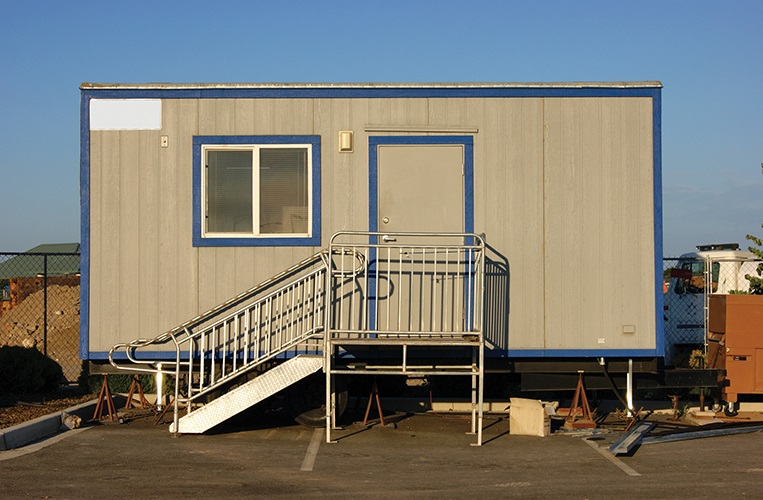
A general contractor provided equipment to supply temporary trailers for a large construction project that will be in place for at least 1½ to 2 years. Due to the lack of a utility source, a large standby generator will supply the power. To reduce fuel costs, multiple energy storage systems (ESSs) will be used. Conductors to the generator, then to a large panelboard and then to the ESSs, will be wired with single-conductor cable and cam locks. Is that permitted?
No. See Section 590.6, which contains requirements for branch circuits and feeders installed for temporary wiring. The conductors you identified are feeders and 590.6(A) applies. The general rule in this section does not permit single-conductor cables. The exception does permit single insulated conductors where accessible only to qualified people and are installed for the purpose(s) as specified in Section 590.5(C). This means that single-conductor cable is only permitted for temporary power during emergencies and for tests, which may include experiments and developmental work.
The use of single-conductor cable and a generator (or other source) is also permitted for events covered in Article 525 including, but not limited to, carnivals, concerts and similar events. Electrical installations for these events are not considered temporary wiring; in Article 525, they are portable wiring.
Handhole enclosures
When installing PVC conduit underground into a handhole enclosure, do we need to drill into the enclosure and terminate in a connector? Where splices are made, can we use standard wire nuts in the handhole?
Raceways, including PVC conduit or cable assemblies listed for underground use, are not required to be mechanically connected to the enclosure; see 314.30(B). Raceways and cable assemblies are required to extend into the enclosure, not under it. Section 314.30(C) requires all conductors and any splices (including wire nuts) or terminations inside of the handhole enclosure to be listed as suitable for wet locations.
Ground ring or rod electrodes
Is it permissible to use a 6 AWG copper ground ring instead of rod electrodes to supplement a water pipe? The project we are on has a significant bedrock below, and it is not likely rods can be driven.
A ground ring electrode is permitted to supplement a metal underground water pipe electrode. Section 250.53(D)(2) permits any of the grounding electrodes listed in 250.52(A)(2) through 250.52(A)(8) as a supplemental electrode, including a ground ring in 250.52(A)(4).
Where used as a grounding electrode, a ground ring [250.52(A)(4)] is not permitted to be smaller than a 2 AWG bare copper conductor with a minimum of 20 feet buried in the earth. Ground rings are required to be installed not less than 30 inches below the earth’s surface.
The supplemental electrode (ground ring) is required to be bonded to the grounding electrode conductor from the metal underground water pipe, a grounded service entrance conductor, a nonflexible grounded service raceway, any grounded service enclosure or directly to the metal underground water pipe in accordance with 250.68(C)(1).
Emergency and optional loads
Can we install a generator to supply emergency and optional standby loads for a commercial occupancy with large meeting rooms considered a place of assembly?
Yes, see Section 700.5(C), which requires selective load management in such an installation. The alternate source (a standby generator here) is permitted to supply emergency, legally required standby and optional standby system loads. The generator must be able to supply all connected loads, or a load management system must be installed. This will permit automatic selective load pickup and load shedding to supply and prioritize the connected loads. The priority would be: (1) emergency circuits, (2) legally required standby circuits and (3) optional standby circuits.
Outside feeder
An inspector failed the installation of a 200A feeder to a new building that contains a small welding fabrication shop. The feeder was installed underground and came up indoors directly into a 200A MLO panelboard, as seen on the drawings. The panelboard contains four circuit breakers. Three supply welders and one supplies a small panelboard. Is the inspector right?
No. It seems that the inspector thought the building was service supplied and is applying Section 230.71(B), which would not permit a panelboard to contain more than one service disconnecting means. However, as described in your question, this is a 200A outside feeder and Article 225 applies, not Article 230. See Section 225.33(A), which permits not more than six switches or six circuit breakers mounted in a single enclosure, in a group of separate enclosures, or in or on a switchboard or switchgear.
GFCI required
We are bidding on a large condo project. One estimator noted that the electric ovens and cooktops will require GFCI protection. Is it required in all cases? These units will all be hardwired.
The answer is in Section 210.8(D) for specific appliances. It is important to note that this section applies to all appliances listed as rated 150V or less to ground and 60A or less, single- or three-phase, without regard to them being hardwired or supplied through a receptacle. Your question addresses kitchens in dwelling units. It is important to note that this requirement is in addition to the GFCI requirements in 210.8(A). The specific appliances requiring GFCI protection apply to all occupancies and include automotive vacuum machines, drinking water coolers and bottle fill stations, high-pressure spray washing machines, tire inflation machines, vending machines, sump pumps, dishwashers, electric ranges, wall-mounted ovens, counter-mounted cooking units, clothes dryers and microwave ovens.
stock.adobe.com/jdoms
About The Author

DOLLARD is retired safety coordinator for IBEW Local 98 in Philadelphia. He is a past member of the UL Electrical Council, NEC Correlating Committee, NEC CMP-10, CMP-13, CMP-15, NFPA 90A/B and NFPA 855. Jim continues to serve on NFPA 70E as a Special Expert. Reach him at [email protected].