Between the countless emails, social media messages and questions from my IEEE 1584 and NFPA 70E classes, I see many gaps in knowledge about performing arc flash studies. This is part one of a series covering these frequently asked questions.
Maximum short-circuit current
Is the maximum available short-circuit current the worst case?
Short-circuit current defines the intensity of an arc flash. The greater the current, the more incident energy per unit time, i.e., per cycle. However, if the current is too low, an upstream protective device may take longer to trip, which can increase the arc duration and incident energy exposure.
If the maximum and minimum short-circuit current result in the upstream overcurrent device taking the same time to clear the arc flash, then the maximum fault current is the worst case. But, if the minimum fault current results in the device taking longer to operate, such as in a time delay region, then the minimum fault current may be worst case. That means you must conduct a detailed analysis.
Is less than 1.2 cal/cm2 safe?
If an arc flash label indicates the incident energy is less than 1.2 calories per square centimeter (1.2 cal/cm2 ), is it safe?
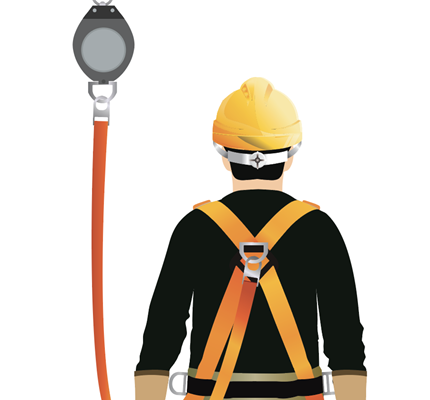
No! 1.2 cal/cm2 is the incident energy commonly considered to be where the onset of a second-degree burn may occur. It is also the threshold where arc-rated PPE is required. The incident energy on the label is based on the distance from the arc flash to a person’s body and head, known as the working distance. It must be noted that parts of the body that may be closer, such as hands, will have an incident energy exposure greater than what is listed on the label.
Also, don’t forget that many other hazards may exist in this case. These include sound pressure, shrapnel and blinding ultraviolet light. In addition, exposed energized conductors create a potentially lethal shock hazard.
Horizontal electrode orientation
I have a switchboard that contains horizontal bus. Should I use the HCB model?
HCB means horizontal conductors/electrodes inside a metal box/enclosure. Similarly, the term HOA is for horizontal conductors in open air. The terms were first introduced in the 2018 edition of IEEE 1584, IEEE Guide for Performing Arc-Flash Hazard Calculations, as one of five possible electrode configurations used for modeling equipment in an arc flash study.
Although “horizontal” is part of the description, it does not apply to all horizontal bus. HCB is used when the end of a horizontal bus is pointed toward the worker, such as stabs in a motor control center. This is not the same as having a bus running horizontally left to right. When an arc flash occurs, the arc runs away from the source, and for HCB, the resulting incident energy is ejected off the end of the bus more aggressively than other configurations.
Multiple configurations, PPE ratings
Our distribution system can be configured in many ways, resulting in different PPE requirements. What should we do?
This can be an issue for larger complex systems. As an example, the system may operate in a normal configuration with a lower incident energy and PPE arc rating such as 8 cal/cm2. However, alternate configurations, such as a tie circuit breaker closed, alternate utility feed, emergency mode, etc., may result in a higher incident energy and higher PPE arc rating such as 40 cal/cm2. Which value should be on the arc flash label?
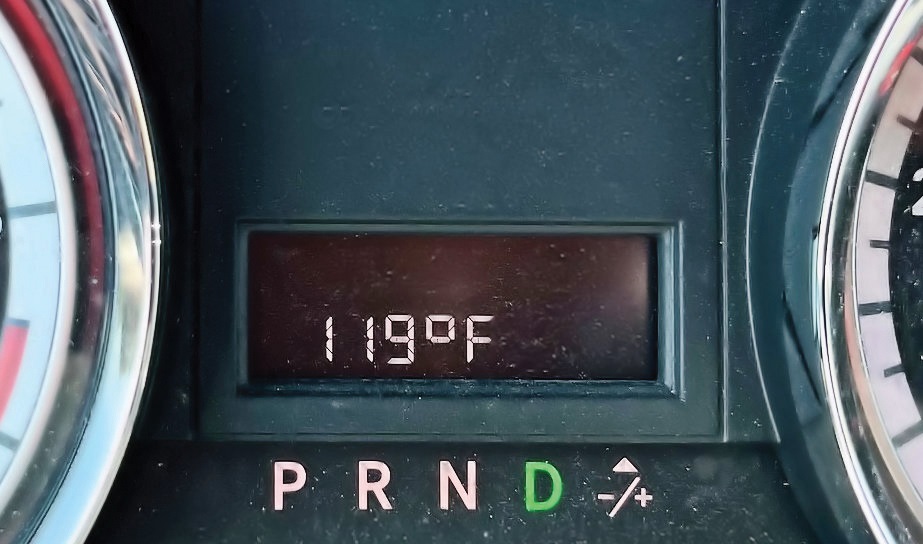
People may use different approaches for this situation—none are optimal. Some may use multiple labels for different configurations, while others may list the worst-case incident energy. Multiple labels can add confusion. Listing the worst-case scenario on the labels means the highest rated PPE is always required, even if the existing configuration only requires the lower rated and lighter weight PPE. This worst-case approach might seem like a simple solution, especially while performing the study from a comfortable air-conditioned office. However, requiring worst-case PPE in cases when it is not necessary can create a difficult situation—especially if you live in a hot location like I do in Phoenix, as shown in the photo. At least it’s a dry heat.
NFPA 70E 130.5(H) Exception No. 2 provides another option, which is subject to very specific requirements. Information normally required on a label shall be permitted to be documented in a manner that is readily available to people likely to perform examination, servicing, maintenance and operation of the equipment while energized. This means the arc flash risk assessment is taken on a case-by-case basis by first determining the configuration, then looking up the specific information for the specific configuration in the arc flash study.
Note: This is the opinion of the author and not an official position of any standards organization.
jim phillips
About The Author

PHILLIPS, P.E., is founder of brainfiller.com and provides training globally. He is Vice-Chair of IEEE 1584 Arc Flash Working Group, International Chair of IEC TC78 Live Working Standards and Technical Committee Member of NFPA 70E. He can be reached at [email protected].