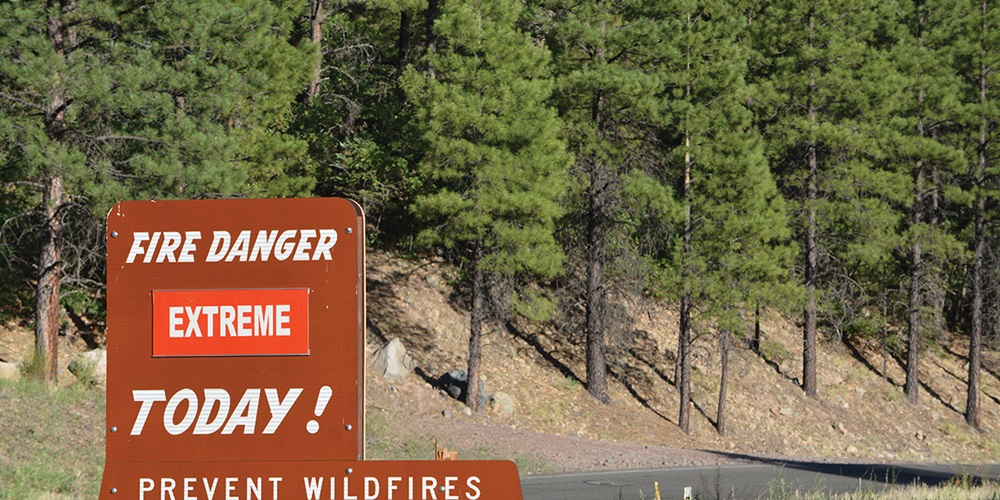
Wildfires throughout the country cause billions of dollars in damage each year. These fires are also responsible for countless preventable deaths, the decimation of homes and businesses, and destruction of massive amounts of property.
Wildfires pose a major threat to public safety and electrical infrastructure. They result in damaged electrical equipment that can cause widespread power outages. Additionally, from the line contractor and utilities perspective, legal liability claims cost billions of dollars in payouts. As a result, the importance of wildfire mitigation and prevention is higher than ever.
According to “Wildfire: An Updated Look at Utility Risk and Mitigation,” a new white paper by Stanford University’s Climate and Energy Policy Program, “Electric utilities will play an important role in the society-wide process of adapting to increased wildfire risk, as well as the related process of building a more resilient electric system.
“In the near future, a massive amount of new electric infrastructure is needed, due to increasing demand for energy from sectors like data centers and the electrification of homes, businesses, and vehicles, as well as the related need for increased transmission capacity to meet demand by bringing electricity from sites where it can be generated at large scale to the areas where it is consumed. In order for this transition to take place, utilities will need to raise capital and enter into contract relationships to build infrastructure. However, wildfires complicate this core function of utilities, particularly for investor-owned utilities.”
What to know
There are many ways a wildfire can start. Although one can spark naturally, such as from a lightning strike, that is rarely the root cause. Wildfires are almost always caused by human activity. According to the National Park Service, 85% of wildfires in the United States are intentionally or unintentionally started by humans. Unattended campfires, discarded cigarettes and failing or damaged electrical infrastructure are often to blame. Fallen power lines remain energized until a line contractor disconnects the source of energy. In the event a live wire touches vegetation on the ground, it can ignite a fire.
Vegetation can also catch on fire even without direct contact. This can happen if a high-temperature electrical arc between transformers and energized lines or equipment reaches plant life. However, for a fire to burn, it needs three things: oxygen, fuel and an ignition source.
Locations with hot temperatures, low humidity, high winds, dry vegetation and hilly, mountainous regions are most at-risk for wildfires. Unfortunately, a significant amount of the power grid runs through areas that match that description.
Deteriorating and old infrastructure can fail, producing sparks capable of starting a wildfire. Additionally, “the increasing demands for electricity and the increase in extreme weather conditions are putting unprecedented pressure on our electric grids. Often, this pressure leads to electrical component failures, which might ignite wildfires,” according to the National Renewable Energy Laboratory.
Prevention methods
There are a number of measures that line contractors can employ to reduce the likelihood of a wildfire. Employers should have a wildfire safety plan in place that includes prevention and mitigation tactics. It should also establish evacuation plans; systems for protecting equipment such as trucks, tools and other assets; emergency contacts, including the local fire department and all relevant government agencies; and communication plans for informing workers and the general public of the wildfire.
Lineworkers must also inspect electrical equipment and infrastructure on a regular basis, which can lower the threat of fire. More specifically, these inspections may include checking trucks, tools and any other equipment for signs of wear and tear that could cause a spark.
It should go without saying that flammable materials such as gasoline and oil must be stored safely. These inspections are a proactive way to identify potential hazards and lower risk.
It is critical for lineworkers to create a “defensible space” around equipment. This is an area of land in and around equipment that has been cleared of vegetation and other flammable materials. This creates a buffer zone that prevents the fire from spreading.
Other ways to maintain the defensible space are eliminating dead or dying vegetation around equipment storage areas, ensuring grass is mowed and well-watered, getting rid of any tree limbs near power lines or equipment, and storing all flammable materials at least 30 feet away.
Finally, it is imperative for workers and employers to monitor wildfire conditions and weather reports, specifically, warnings or alerts issued by local fire departments or government agencies.
Pay attention to social media and news outlets for updates on wildfire conditions; stay in communication with other line contractors in the area to share information and updates; and be prepared to evacuate if necessary. Being aware is critical to protecting workers, equipment, personal property and the general public.
STOCK.ADOBE.COM/NORM
About The Author

O’CONNOR is safety and regulatory affairs manager for Intec, a safety consulting, training and publishing firm. Reach him at [email protected].