You're reading an older article from ELECTRICAL CONTRACTOR. Some content, such as code-related information, may be outdated. Visit our homepage to view the most up-to-date articles.
Rising energy costs, maturing technologies, simplified interfaces, government initiatives and utility incentives are all driving the predicted 29.5 percent compound annual growth rate of the global smart homes and buildings market, creating any number of opportunities for electrical contractors (ECs).
Incentives that mostly cover the energy and security aspects of residences can be specific to region or insurance provider, according to Fritz Werder, Legrand vice president and general manager for On-Q and NuVo. For example, some utilities offer rebate incentives for the use of home automation systems and the resultant energy savings from programmable thermostats, lighting and motorized window shades.
“Shades, especially, can immediately reduce temperatures by 15 degrees in a sunny room,” said Delia Hansen, senior residential marketing manager for Crestron Electronics Inc., Rockleigh, N.J. “In addition, solar-backed shades reflect light and reduce heat, while photocell sensors enable the use of daylight harvesting.”
Specific technologies and homeowner demands are driving the growth of the smart home market. The push for better home security, including remote and mobile access; the acceptance and pervasiveness of digital audio systems; and the increasing dependence of people on their connected smart devices are a few specific motivations.
“In addition, the competition in the new home market, as builders look to differentiate their homes, is driving them to offer features desired by new buyers,” Werder said.
Mainstream players such as ADT, AT&T, Comcast and Verizon are driving those desires for home automation.
“Although these companies are electrical contractors’ competitors, they are generating homeowner awareness, which can actually help contractors to provide neutral solutions that give homeowners more flexibility,” said Joe Lautner, director of business development for Core Brands, Petaluma, Calif.
What do potential customers actually want in their smart homes?
“Homeowners are motivated by convenience and comfort, security and life safety, and energy conservation,” Lautner said.
To be successful in this market, contractors must learn to determine what motivates the individual customer the most and develop the expertise to provide that solution.
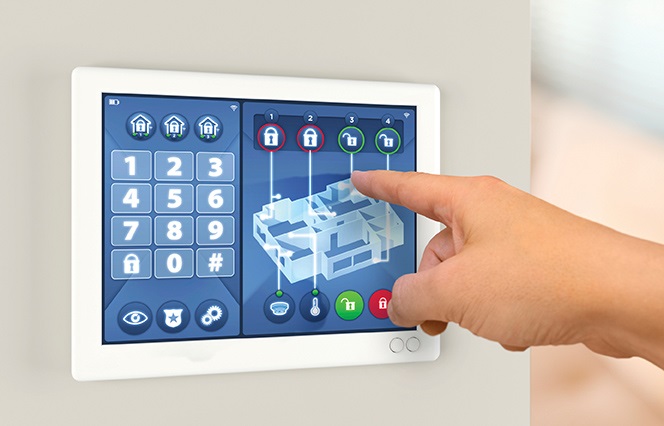
The convenience homeowners desire is partially satisfied by the fact that home automation systems increasingly are controlled by apps on smartphones or tablets.
“Devices in smart homes, such as TVs, Blu-ray players, receivers, locks, security devices, thermostats and so on, are now coming with apps that enable some automation and allow homeowners to control individual devices in the home without touching them,” Hansen said.
There are still challenges smart home service providers and ECs must overcome for wider market acceptance and growth. According to Parks Associates, one is the lack of a concise value proposition. Smart homes may be able to perform hundreds of tasks and generally include a diverse group of products and capabilities, but it appears that no “killer app” is creating demand.
According to Werder, the challenges to acceptance lie in educating the channel on systems that are available and their price ranges and understanding how to create packages that meet consumer demand.
“Providers need to adopt a sales approach that includes presenting technology options to homeowners, including how many systems are now modular in design, which allows easily configured packages that meet needs and budgets,” he said.
Lautner said the biggest consumer challenge, and an opportunity for the electrical contractor, is knowing where to get the technology.
“Consumers see the commercials, and if the contractor is there, it can bring the right solution to the homeowner,” he said.
But, according to Parks Associates, motivating homeowners to upgrade, replace a working product, or seek a benefit they have lived without requires strong, clear marketing.
Finally, price objections and deciding how to spend resources can stop homeowners in their tracks.
“The industry needs to overcome the misperception that home automation is an all-or-nothing proposition,” Hansen said.
ECs can show homeowners how to start small and then grow as their ability to invest improves or how they can reap the benefits of a true smart home. Eventually, new homes just going to include some level of home automation.
The future holds tremendous growth potential at every level of the market, from new construction to remodels and do-it-yourself projects, according to Werder.
“In fact, the growth occurring in the DIY market is helping to drive consumer awareness and the adoption of smart home technology,” he said.
Therefore, the outlook for electrical contractors is especially positive. As smart home technology becomes increasingly mainstream, there will be a great need for an efficient infrastructure to support these systems.
“Beyond that, consumers will be looking for their contractor to offer the conveniences of a smart home,” he said.
About The Author
Darlene Bremer, a freelance writer based in Solomons, Md., contributed frequently to ELECTRICAL CONTRACTOR until the end of 2015.