You're reading an older article from ELECTRICAL CONTRACTOR. Some content, such as code-related information, may be outdated. Visit our homepage to view the most up-to-date articles.
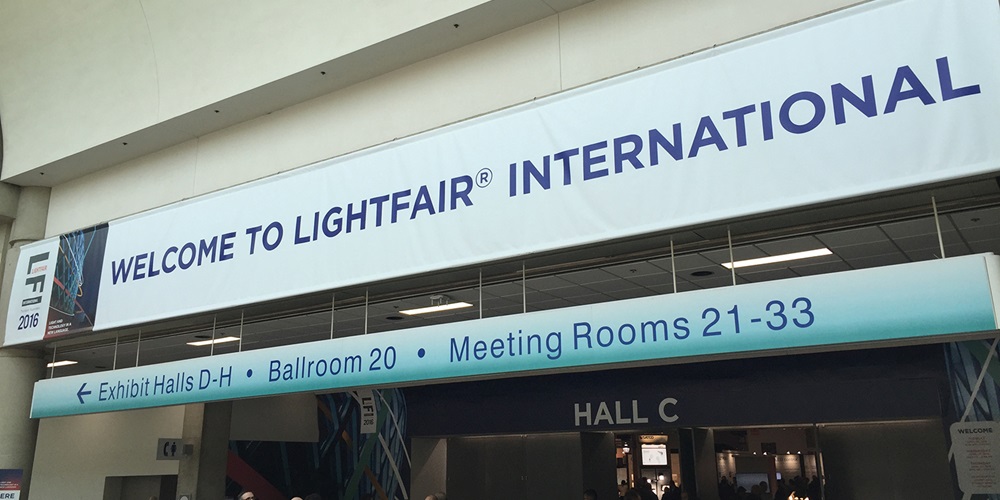
Last week, some of the magazine staff were in San Diego for Lightfair. Of course, if you follow us on Twitter or Instagram, you already know that.
The lighting industry is very important to electrical contractors. We know from our biannual profile that more than 90 percent of ECs engage in this work. Lightfair is a huge show, and every major player attends, so we look to the conference to inform us of what's going on in lighting.
This year, we noted two big trends that will likely hit mainstream soon: lighting fixtures integrating with the Internet of Things and color tuning. Product innovators are building sensors right into lighting fixtures and cutting out the reliance on wireless networks and controls. Of course, that isn't to say modular and proprietary controls systems and networking protocols are on the way out. However, this new trend of putting sensors into fixtures will offer contractors the ability to reach a level of granularity that was previously infeasible because doing so would have been too labor-intensive and/or costly. It also will appeal to owners who don't have much money to spend on automation.
Many companies are offering advanced analytics to boot, which brings to the real world monitoring capabilities that have only existed for digital and Internet usage statistics. For instance, with occupancy sensors at every desk in an office, business owners will be able to see when employees come into the building, where they go and what paths they take as they move through their space, and even who occupied their desks and offices and when.
Beyond that, many companies are offering color tuning systems, tapping into the LED's ability to produce a range of color temperatures to, for example, influence human circadian rhythms. Of course, innovations in efficiency, color rendering, and lighting quality continue. For example, the LED's problem with flicker has been all but eliminated. Lighting performance is becoming such a narrow field with many companies achieving great results. In other areas of more traditional development, we also were introduced to many products that found new ways to complete old tasks, saving time and money on the job.
We noted that the OLED was nowhere in sight. In recent years, we've been told that it would compete with the LED in the future, but no one had anything to say about OLED developments. We did ask, and we were told that OLEDs are still expected to develop and make their way into markets, but for now, there just isn't much exciting to report.
Over the three days, we were invited to meet with many companies, and while we can't list them all here because it would be a long list, we thank them for their hospitality and education. Many of the individual achievements and announcements will be focuses in our editorial coverage through the remainder of the year, so stay tuned for that.
For more on Lightfair, visit www.lightfair.com or follow LFI on Twitter.
About The Author

JOHNSON is a writer and editor living outside Washington, D.C. He has worked in magazine, web and journal publishing since 2006, and was formerly the digital editor for ELECTRICAL CONTRACTOR magazine. Learn more at www.tjfreelance.com.