You're reading an older article from ELECTRICAL CONTRACTOR. Some content, such as code-related information, may be outdated. Visit our homepage to view the most up-to-date articles.
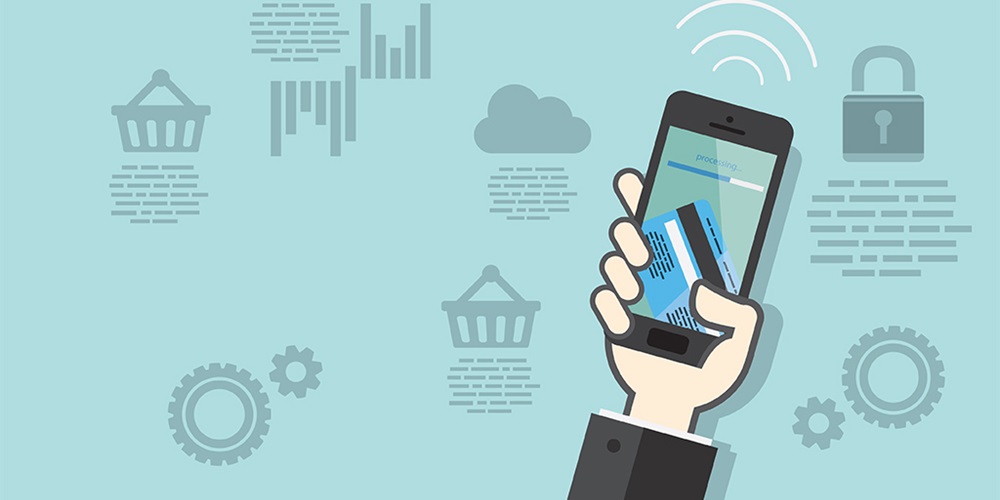
Cell phone makers, developers and some chip manufacturers have been preparing for a boom in near-field communication (NFC) technology adoption that seems on the cusp of turning most people’s phones into tools for payments, picture sharing, access control and marketing. It is poised to affect the lives of contractors, both as systems installers and users.
With that in mind, the Electrical Training Alliance (formerly the NJATC) intends to include NFC in its curriculum, as a primer in the next local area network (LAN) textbook as well as part of its radio frequency (RF) content, said Terry Coleman, electrical training director, Telecommunications Curriculum Development and Training.
NFC can be thought of as a digital key for access to nearly anything, Coleman said. The technology is an offshoot of radio frequency identification (RFID), designed for transmission of data between devices, but only within close proximity of each other. Most new phones and tablets running the Android operating system come equipped with NFC readers that can be used by developers to create a wide variety of applications. The iPhone 6 also incorporates NFC technology, but it is closed to developers outside of Apple.
The NFC system itself consists of a very small, HF 13.56-megahertz chip and antenna that transmits in response to an interrogation from a reader, using the power from the mobile phone or tablet into which the reader is built. That makes the system passive, and no power is required to accomplish the data transmission. Usually, the phone or tablet acts as the reader while a card or sticker with a built-in NFC chip and antenna serves as the passive device.
Smartphones can also take on the role of credit card for contactless payments. In this case, a wired device would be used to reach data from the smartphone and then forward it to a server.
An app on the phone typically determines what to do with the transmitted information. NFC—by virtue of its very short reading range—is more secure than other RFID systems or Bluetooth. NFC uses a secure channel and encryption to protect private data.
Access is one of the obstacles still thwarting NFC adoption. Data transfer speeds are still slow, and the use of NFC technology is going to require more broadband and cellular access, which will put demands on users’ existing networks. Also, the technology isn’t necessarily available where it is needed.
“NFC needs more businesses to adopt point-of-sale [POS] equipment to become mainstream,” Coleman said.
New adoption of smart credit cards will force the implementation of POS equipment that can read NFC devices.
The new hardware
Phone hardware updates have moved NFC forward. While Android devices have NFC readers, the iPhone 6’s NFC capabilities are limited for use only with its proprietary ApplePay solution, and the device won’t interoperate with systems being developed for Android devices.
For NFC-enabled Android devices, and perhaps iPhones of the future, numerous solutions are springing up. Contractors are going to find themselves using the technology rather than just providing infrastructure. For instance, NFC will allow data transfer at job sites between compatible devices.
“If NFC is the ‘key,’ we just need different ‘locks’ to be invented. What those locks are or will be for our [electrical contractors], only imagination and innovation will tell,” Coleman said.
Some companies are offering the NFC tags that can be sold in the form of stickers or built into items such as smart posters, wristbands, key fobs and price tags.
One year ago, RapidNFC was shipping NFC tags in quantities of 20s or 30s around the world, as companies began testing systems that use phones with NFC to capture data automatically from tags. That’s been growing to quantities of 2,000–3,000 this year, said Jack Sage, account manager for RapidNFC, London.
Developing apps
Still, there is a shortage of application developers to bring consumers’ ideas to reality, Sage said. RapidNFC receives daily calls from prospective customers around the world who want a full solution for an application they have conceived of, but the company only sells the tags.
For example, RapidNFC customers wanted to use NFC to track information about what is in crates (users tap a tag that sends a list of goods in that crate to the phone or tablet) or to track who enters or leaves a site, such as a festival or a construction site. However, RapidNFC doesn’t do that, so it instead directed the inquiries to a local app developer.
Most app developers, especially in the United States, should have no problem bringing an NFC-based app to the market or developing the necessary software for a specific customer.
Some developers are finding the best wide-scale adoption options focus on the retail space, where NFC technology could bring customer behavior data and analytics to store owners and brands.
“There’s been a lot of fanfare around payment,” said James Yancey, CloudTags co-founder and CEO.
Google Wallet was established to allow Android owners to make payments with the tap of an NFC-enabled phone. However, Apple’s absence of an open-use NFC reader presents a complication for wide adoption.
“As soon as you say you can only do this on Androids, they lose interest,” he said.
That may change in the next year or two. Yancey predicts Apple will offer an open version of the NFC technology in its phones either with the release of a new phone next year or through an updated operating system.
Developers are getting ready for the resulting surge in NFC in retail and other markets. In the retail space, Yancey said, NFC could rival RFID price tags used for inventory management. NFC competes with RFID because smartphones can read it. Only devices designed specifically for a frequency can read corresponding RFID tags.
With an NFC system in place in stores, he envisions that, when consumers see a product that interests them, they can tap the phone against the tag on that product and view data about it. At the same time, the brand or retailer can collect information about who is interested in that product so that they can potentially reach out to that customer in the future with targeted promotions.
Outside of retail, the technology can be even more interesting. Users touching NFC phones together can share business cards, pictures, music or a link to a website. Phones could be used to unlock doors, change the settings in your car or provide an automatic digital record that you were at a specific location or near a specific object.
For Yancey, it’s a combination of the capabilities of the Internet to track users’ page views and purchases with the advantages of a brick-and-mortar store where consumers can put their hands on a product.
To that end, last year, Apple also fueled an interest in Bluetooth low-energy (BLE) technology, an active system (as opposed to passive NFC). This, too, will require more bandwidth and allow stores to communicate with their shoppers wirelessly. In the case of BLE, a sensor with a battery or outlet power connection actively transmits data that can be received by phones, prompting the phones to send their own unique identifiers to a server using the cellular connection.
Like NFC, BLE technology allows consumers access to information relevant to a beaconing sensor (such as discounts in jeans when they enter the denim department of a store) and allows a store to collect data about who was in their department and for how long. Combined with NFC, the store can capture even more data.
London furniture company Made.com provides a solution to stores that employs both BLE and NFC technology. With BLE, the retailer can prompt a shopper to accept content relevant to his or her location and can recommend that the shopper tap the phone against an NFC tag. That way, the shopper gets information about a specific product, and the store owner collects details about who was in a department and what product he or she was interested in.
Construction applications and more
On construction sites, users could tap a phone against a tagged tool or material and be directed to information about it, including where it should be, how and when it is intended to be used, and any other information the application developers include.
Electricians and supervisors could tap their phones against an NFC tag at the entrance to a work site to record when they arrived or left the area. Electronic documents and drawings could be shared between general contractors and subcontractors with the tap of phones or tablets.
Other applications are simply waiting to be created, Yancey said.
Some home healthcare companies use NFC stickers for workers to provide proof of the time they enter and exit a home. Other companies use the technology to track their security staff’s movements around a facility and check the status of locks, for instance.
These kinds of deployments will become more commonplace in the next year or two, analysts predict, regardless of whether Apple joins the NFC industry with an open-source version.
NFC and BLE will also be part of the Internet of Things trend by providing an easy way for mobile phone users to capture or share data–the temperatures of a cooler, the location of an asset, or the condition or expiration date of a piece of equipment.
“We still think NFC is going to be the future,” Yancey said.
With that in mind, CloudTags is prepacking solutions that will be ready to go to customers when Apple finally adopts open NFC.
About The Author

SWEDBERG was a freelance writer based in western Washington. Claire passed away in 2025 after a short illness and is remembered fondly for her prolific contributions to the magazine. Read more about her here.