On November 21, 2016, the Department of Energy (DOE) released a report titled “Assessing the Future of Distributed Wind: Opportunities for Behind-the-Meter Projects” which explores the potential of distributed wind energy in the U.S. through 2050. According to a DOE press release, the assessment—commissioned by the DOE and authored by the National Renewable Energy Laboratory— is the first of its kind and considers and quantifies the energy sources’ addressable resource potential, economic potential and market potential.
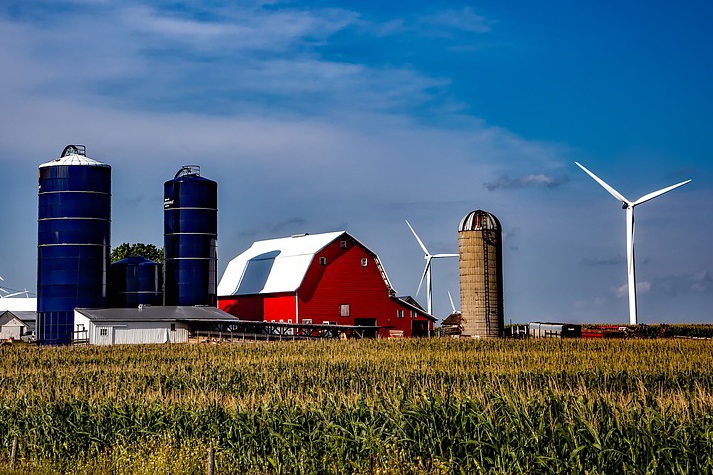
Unlike utility-scale wind, distributed wind is installed at or near the location where it will ultimately be used—often rural or suburban homes, farms and manufacturing facilities.
Although distributed wind can be connected in front of meters or used in remote, off-grid applications, the report does not assess these potential opportunities.
Instead, the report focuses on the grid-connected, customer-side projects, also known as behind-the-meter systems and found that these systems could play a sizable role in the country’s electricity future as distributed wind’s addressable resource potential is large and large-quantity distributed wind energy generation could become more economically viable with time.
As for distributed wind’s addressable resource potential, researchers found that the systems could feasibly be constructed in approximately 49.5 million residential, commercial and industrial sites. Wind turbines less than 1 megawatt in size could produce an estimated 3 terawatts (TW) of capacity or 4,400 TW-hours (TWh) of generation—more electricity than the United States consumes in a year. Larger megawatt-scale distributed turbines could provide an additional 5.1 TW of capacity or 14,000 TWh of annual energy generation.
The report does note that these findings and this potential could be spoiled with the introduction or overlap with some multimegawatt-utility-focused wind power resource or other distributed generation resource. Additionally, the report states that reducing technology costs and improving performance is necessary but, alone, will not produce more robust growth. In addition, the industry will likely need to encourage consumer adoption, increase access to low-cost capitol, and pushing for industry-wide efficiencies, among other strategies, to drive a strong market.
Visit the DOE’s Wind Energy Technologies Office website to learn more about distributed wind. You can also read the report in full here.
About The Author

FULLMER is the senior editor at ELECTRICAL CONTRACTOR. Contact her at [email protected].