
You're reading an older article from ELECTRICAL CONTRACTOR. Some content, such as code-related information, may be outdated. Visit our homepage to view the most up-to-date articles.
Are you awaiting your retirement date, eagerly embracing a well-earned life of leisure? Or does the very thought of replacing your work routine with unscheduled days on your couch bring on a full-scale anxiety attack? Do you get the shakes if you even begin to imagine handing someone else the keys to your carefully built company and walking into the sunset? Don’t worry—there is good news on the retirement scene as baby boomers restructure yet another paradigm.
In sheer numbers, the boomers affect the economics of later life—Social Security, financial systems and medical costs. This generation is rethinking the nature of retirement—some for financial reasons and others because they love their work. Whether a younger replacement is raising a foot to shove the 60-something out the door, or placing a gentle hand on a shoulder to ease him into the parking lot, the boomers are resisting. They want to decide for themselves how much value they still add to their companies.
Will you go quietly? Or will you take the advice of poet Dylan Thomas:
“Do not go gentle into that good night,
Old age should burn and rave at close of day;
Rage, rage against the dying of the light.”
Although the poem is literally about confronting aging and death, retirement can feel like a form of death for those who feel they aren’t finished contributing. We are expected to serve our time, add value to the organization that employs us, and stroll gracefully into the world at some predetermined time with a wave and a smile. No one seems to care about the loss of our talent, experience and historical knowledge, and no one measures the loss. Like so many intangibles, the value we added simply evaporates.
Of course, with adequate notice, we may have a little time to train our successors, who may not take our advice. They are younger and may want to do things their own way.
Sometime in my early 50s, I began to notice that the organizations I served did not recognize or respect my potential contributions as much as I hoped. After closing the family construction business, I wandered into education as an eager explorer—first as a nonprofit staff trainer, then a high school teacher, and finally a contract program auditor, writer and workshop facilitator. Occasionally, I wondered how often my employees had felt their potential ideas and contributions went unrecognized, to the detriment of the company and its clients, and I was ashamed of my ignorance.
My leadership and management experience was often ignored, as 25-year-old teachers and consultants with new masters’ degrees earned the same compensation but offered their students little depth and no life experience to support their theoretical methods. Sharing stories to provide context had no place in the world of scripted learning. Public education neither respected nor welcomed new ideas or radical change. Eventually I slunk away, like so many other disillusioned teachers. I’d been demoted from general to invisible bench sitter.
Too many company leaders and employees become warriors without a territory to defend or a world to conquer, like the general in the film “White Christmas” who receives only condescension when he asks to return to active duty. The characters played by Bing Crosby and Danny Kaye bring his old troops together and fete him with the poignant and ironic song lyrics, “What do you do with a general, when he stops being a general?” After he retires, “They’re delighted that he came, but they can’t recall his name … nobody thinks of assigning him, when they stop wining and dining him.”
Despite available volunteer activities, such as SCORE and Habitat for Humanity, too many retired executives and employees take their knowledge and talent with them to live an average of fewer than 10 years—at least that was the calculation union retirement programs traditionally used to predict payments. Retirees moved on to the couches and took their stories with them.
Often they died too quickly. There is a basic tenet in biological science—living organisms continually regenerate and renew their cells and organ systems. Death can be defined as lack of change—the body simply stops working. So, the poet was right. Thomas’ poem is not simply about old age and death but how life is lived in the final years.
Do not “go gentle” into a retirement devoid of meaningful action. The rage against a dying light is about reclaiming power; the desire to remain known, heard and understood; burning with the light that is your passion for new experiences; and your desire to remain valuable—to make a contribution. Regardless of your age, rage can be a positive and forceful tool for choosing to continue making a difference to the world.
About The Author
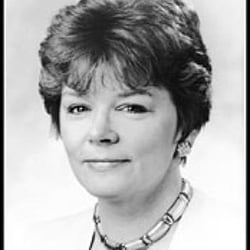
Denise Norberg-Johnson is a former subcontractor and past president of two national construction associations. She may be reached at [email protected].