You're reading an older article from ELECTRICAL CONTRACTOR. Some content, such as code-related information, may be outdated. Visit our homepage to view the most up-to-date articles.
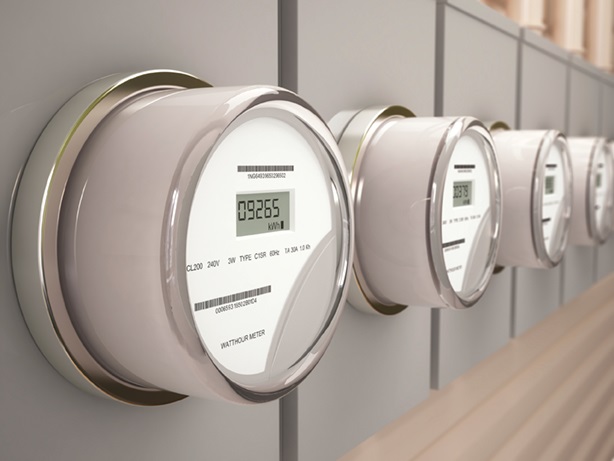
One of the cornerstones of the smart grid evolution is the smart meter itself. Capturing and sending data in real time between the utility and the consumer has enabled a level of communication between the two that is almost science fiction-like. This communication has also made it much easier for utilities to offer—and for customers to participate in—programs that encourage cutting back on energy usage.
A recent study confirms that the use of smart meters and demand management programs are on the rise. Released by the Federal Energy Regulatory Commission in December 2014, the “Assessment of Demand Response and Advanced Metering” looks at the penetration of advanced meters and the reduction in electricity consumption from the programs that this technology makes possible.
The report defines advanced meters as devices “that measure and record usage data at a minimum, in hourly intervals and provide usage data at least daily to energy companies and may also provide data to consumers.” It adds that “advanced meters include basic hourly interval meters and extend to real-time meters with built-in two-way communication capable of recording and transmitting instantaneous data.”
According to the report, advanced meters are on the rise. Citing statistics from the U.S. Energy Information Administration, it notes that an additional 5.9 million advanced meters were installed between 2011 and 2012. As a result of this trend, advanced meters now represent almost 30 percent of all meters in the United States.
Perhaps more important, the programs that these meters support are also having an impact. The report notes that potential peak reduction from demand response in the regional transmission organizations (RTOs), independent system operators (ISOs), and Electric Reliability Council of Texas markets increased by 2,451 MW to 28,503 MW from 2012 to 2013, and gained 9.3 percent.
The report adds that demand-response resources made significant contributions to balancing supply and demand during the late 2013 and early 2014 extreme cold weather events and helped preserve Eastern RTO and ISO reserve levels.
About The Author

LAEZMAN is a Los Angeles-based freelance writer who has been covering renewable power for more than 10 years. He may be reached at [email protected].