At some premises, an electric utility service supplies multiple buildings or structures. In these installations, the service often directly supplies one of the buildings, and feeders or branch circuits supply the others. Alternatively, the utility service can be freestanding, and separate feeders or branch circuits are installed to supply all buildings or structures on the premises. Many buildings or structures are supplied by power from a source other than a utility service. Specific grounding and bonding rules apply to separate structures supplied by feeders or branch circuits.
Examples range from a small, detached garage supplied by a branch circuit or feeder from a single-family dwelling to a university campus or industrial facility with higher voltages supplied by an outdoor substation.
First things first
By definition, a service is supplied from an electric utility. If the supply source, such as a transformer or generator, is customer-owned, it is either a feeder or branch circuit. When a building or structure is supplied by a feeder(s) or branch circuit(s), specific rules in the National Electrical Code must be applied. Section 250.32 of the Code provides the general requirements for grounding and bonding at separate buildings or structures supplied by a source (feeder or branch circuit) other than a service.
The purpose of grounding and bonding systems of branch circuit- or feeder-supplied structures is the same as for those supplied by a utility service. A grounding electrode system (connection to ground) is generally required to establish a reference to ground (earth). This renders all normally conductive non–current-carrying metal parts and other conductive materials at or as close as possible to earth potential at the structure served.
Building versus structure
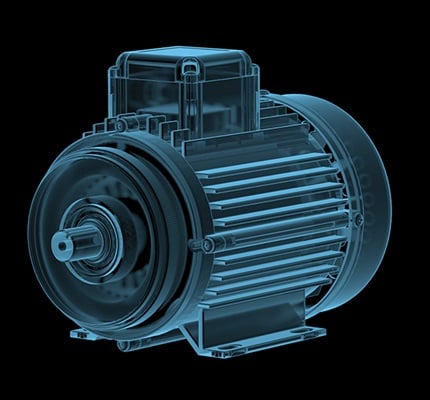
An important point to emphasize is the differentiation between a building and a structure. The definitions in Article 100 clarify that all buildings are structures, but not all structures are buildings. For example, a school is a building, while a billboard sign along the roadway is a structure. Other examples are motors or ground-mounted air-conditioner equipment covered by Chapter 4 of the NEC. When installed outdoors, they are typically anchored to a concrete pad or footing. This does not render the combination of the equipment and footing a structure and therefore does not impose the requirements for a grounding electrode. Any grounding electrode at these types of equipment installations is typically an auxiliary one and is thus optional.
It is important to establish a clear differentiation between equipment and structures to effectively determine if a grounding electrode is required to be installed by 250.32(A) and if it is permitted as an option in accordance with 250.54.
The definition of “structure” makes clear the term does not apply to equipment. It is important to clearly differentiate between equipment and structures to effectively determine if 250.32(A) requires a grounding electrode to be installed and if it is permitted as an option in accordance with 250.54.
The why
The reasons equipment and systems are grounded at separate buildings or structures are essentially the same reasons why grounding is required if it is supplied by a utility service. The performance grounding requirements for equipment supplied by grounded and ungrounded systems are provided in 250.4(A) and (B).
These performance rules indicate that normally non–current-carrying conductive materials enclosing electrical conductors or equipment, or forming part of such equipment, must be connected to the earth (grounded) in a manner that will limit the voltage imposed by lightning or unintentional contact with higher-voltage lines and limit the voltage to ground on these conductive materials.
A grounding electrode system is generally required at a separate building or structure supplied by feeders or branch circuits as stated in 250.32(A). This condition is relaxed if (1) the building or structure is not supplied by electrical power or (2) the structure or building is supplied by a single branch circuit (including a multiwire branch circuit) that includes an equipment grounding conductor (EGC) for grounding non–current-carrying equipment parts. Examples of installations meeting this condition are a parking lot light pole or a detached garage supplied by only one branch circuit.
If feeders or branch circuits are installed to supply a separate building or structure, an EGC must also be installed. It can be a wire type EGC or any wiring method in 250.118 that qualifies as an EGC. If it is a wire type, it must be sized in accordance with 250.122. Note that Section 250.24(B) generally requires the grounded conductor (often the neutral conductor) to be isolated from grounding connections on the load side of the service.
The informational note following 250.24(C) names a few specific instances (typically exceptions) where the grounded conductor is recognized and permitted for grounding equipment.
About The Author

Michael Johnston
NECA Executive Director of Codes and Standards (retired)JOHNSTON, who retired as NECA’s executive director of codes and standards in 2023, is a former member and chair of NEC CMP-5 and immediate past chair of the NEC Correlating Committee. Johnston continues to serve on the NFPA Standards Council and the UL Electrical Council. Reach him at [email protected].