With the ongoing labor shortage and experienced workers nearing retirement, many contractors are looking for ways to do more with less. Software—and integration platforms in particular—are taking processes and making them more efficient and streamlined, so users can get more done.
Below is a snapshot of some platforms designed to meet a variety of the needs electrical contractors face on the job.
AECInspire
AECInspire’s, Newark, Calif., Inspired Query helps users do efficient takeoffs by integrating inquiries enhanced by artificial intelligence (A.I.) to combine drawings and specs.
Because of the skilled labor shortage, developers also wanted to bring prefab abilities into the platform. It is expensive to grow a prefab shop, and this software gives small- and medium-sized contractors access to tap into the network of AECInspire users that already have working shops. This can also be a revenue driver for larger contractors.
Augmenta
Augmenta, Toronto, automates building information modeling (BIM). It is an independent system designed to change contractors’ workflows. Electrical contractors can use the platform to automate the routing and coordination of conduit systems that comply with the National Electrical Code and project specifications. It blends classical A.I. techniques with generative machine learning to explore potential design solutions to find one that is feasible and cost-effective.
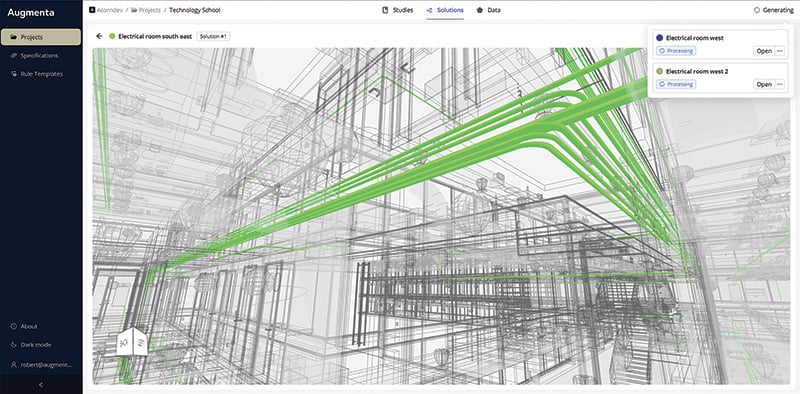
Users can set relevant requirements such as device and panel locations, blockouts and more. Then, they specify support methods, spacing and clearances. From there, the platform creates fully modeled designs with cost and labor estimates using industry-average cost and labor rates. Finally, the contractor can explore, compare, edit and export the designs into their existing workflows.
Augmenta can increase accessibility to BIM resources for smaller contractors.
Condoit
Condoit, Birmingham, Ala., is an all-in-one data platform designed for electricians in the field. Users can create single-line diagrams on their phones and tablets while cataloging equipment on-site, as well as adding photos and custom labels.
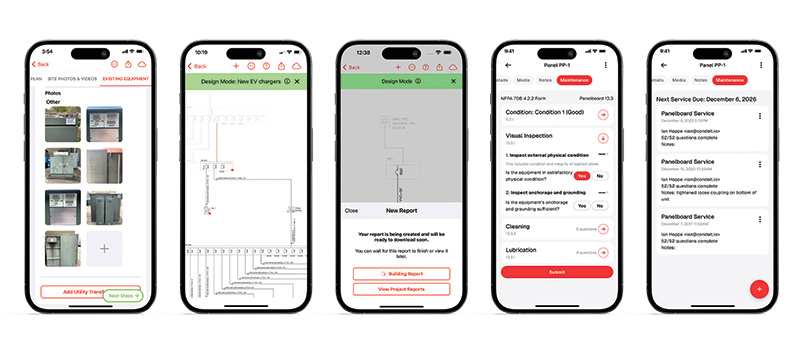
Site walks are an important part of many contractors’ safety planning, and Condoit stores a detailed and interactive map of the area. Users can plot and label existing equipment and plan for what has yet to arrive. The automated raceway materials generation feature detects measurements based on the single-line diagrams.
CrewCost
CrewCost’s mission is to help level the financial playing field for small and medium-sized contractors. The Austin, Texas-based company creates accessible and affordable construction accounting and financial management products.
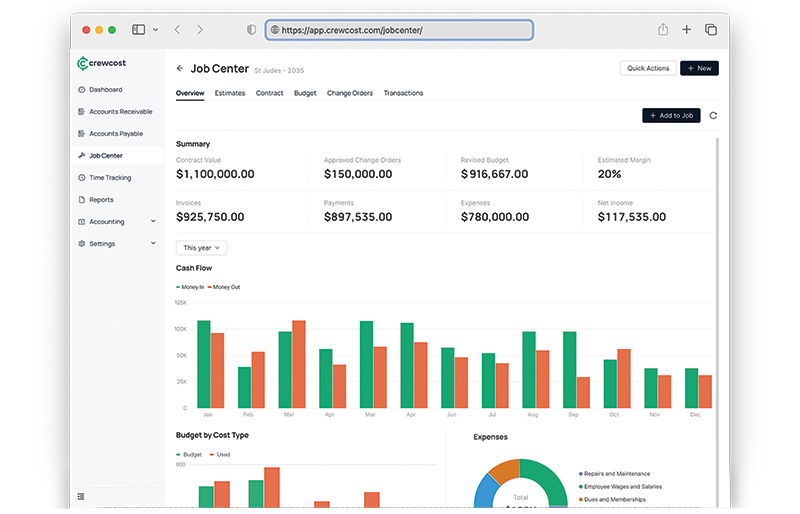
Big risks for ECs are labor and material costs. CrewCost has time monitoring that allows employees to track time against a project and budget code and streamlined purchase order workflows.
CrewCost enables users to manage and track project budgets, work-in-progress reports, change orders, retainage and progress billings. Then, it rolls all that information into reporting on the overall company so contractors can have real-time insights into how each job affects overall profits. This enables contractors to identify and address potential issues early.
Deltek
Deltek’s, Herndon, Va., ComputerEase construction and management software is designed for commercial contractors. It enables users to manage jobs, inventory, finances and people and predicts and tracks cash flow for every job. Contractors can collaborate with internal and external contacts while generating accounting, bonding and banking financial reports. Because it is an all-encompassing platform, users only need one accounting system, which avoids double data entry mistakes. It integrates with Kojo, Rake, Procore and other platforms.
Field Materials
Field Materials, San Jose, Calif., is an A.I. procurement platform for contractors to control and verify spending. It is used for new construction jobs where contractors must process numerous purchases and associated invoices. The web and mobile apps eliminate manual data entry for quotes, invoices, packing slips and receipts and can identify billing errors.
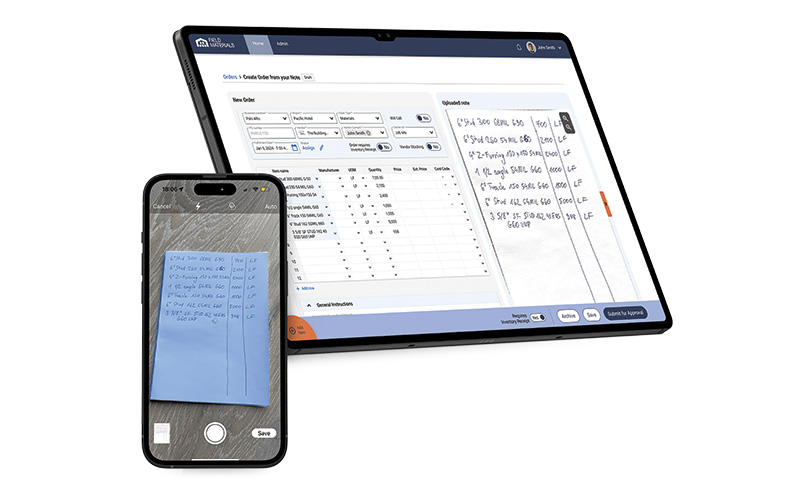
Field Materials doesn’t require any manual data entry. The software reads vendor quotes, automatically extracts all line items and pushes purchase orders (PO) into the contractors’ accounting software. It then automatically matches packing slips and invoices to the corresponding POs and reconciles line items down to quantities and unit costs, highlighting any discrepancies.
It integrates with all major construction accounting software.
Knowify
Knowify, New York, keeps construction management software simple. It is scalable, so users can start by implementing the software in one problem area and then grow from there as they get more comfortable. It does scheduling, time management, contract management and budgeting services. Knowify is an end-to-end platform built with subcontractors in mind. It automates with Quickbooks.
Kojo
Kojo, Covina, Calif., is a materials management software designed for commercial contractors. The platform features invoice reconciliation, which is helpful for contractors, because 11% of invoices have errors, according to Maria Davidson, Kojo’s CEO and co-founder.
There is also a procurement app, which Davidson likened to “Amazon for construction,” where users can monitor when material ships and arrives, compare prices and inventory across suppliers and reduce data entry, saving time.
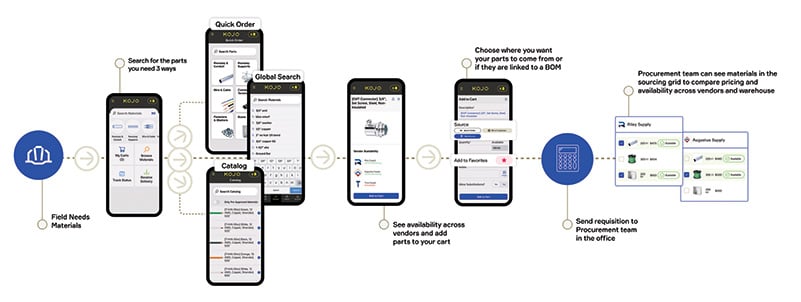
Kojo offers a digital warehouse option so users can leverage, track and use their inventory to streamline processes. The real-time visibility enables users to look right into their stock levels, and they can set alerts for when material is running low. This helps ensure over-ordering doesn’t happen.
The platform integrates with 13 main accounting programs, project management platforms and service work integrations, including platforms such as Quickbooks, Procore, Autodesk and more.
Kojo’s platform also enables users to connect their prefab operations with the rest of their business. Multiple people can see the prefab requests and production status, which helps with resource use. Teams can digitize and customize their prefab catalog to meet their unique needs.
Besides materials in the warehouse, users can also track their tools’ locations. There is a central feature so users can see where a certain tool is, who signed it out and its condition. Tool conditions can be marked on the platform with “service,” “damaged,” “lost” and “stolen” so a worker only reserves appropriate tools. This standardizes tool management and enforces employee accountability.
Kopperfield
Kopperfield’s electrical load calculator is fast and simple to use, outputting a permit-ready PDF in minutes. It works on phones, tablets or desktops and has high acceptance rates with AHJs. Kopperfield’s load calculator is a part of a software toolbox built specifically for electrical contractors. Businesses of all sizes use Kopperfield to design, win and manage projects. Kopperfield integrates with all major accounting, project management and field service tools. The NEC chatbot feature enables users to reference the latest Code, look up calculations, prepare for exams and more.
Miter
Miter, San Francisco, is a payroll software built for construction workers. Contractors of all sizes can use it, and it collects time from the field and calculates gross pay and overtime. Users can assign pay rates to certain employees, and it can save time by eliminating duplicate data entry. It also has HR solutions to help contractors onboard new employees from one dashboard. Users can create a new hire portal with documents, policies and forms.
PlanHub
PlanHub, West Palm Beach, Fla., is an end-to-end solution that centralizes all aspects of preconstruction, which is everything that occurs before ground is broken. Preconstruction is the foundation for a project’s entire life cycle, including cost, timelines and outcomes.
The platform is a system of record that houses all the data and workflows acquired during preconstruction. This process is still often done manually by pen and pencil or with spreadsheets.
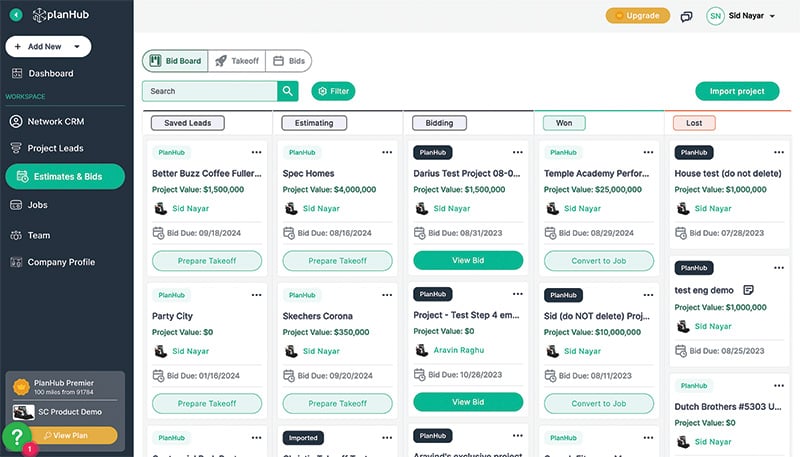
PlanHub helps users answer the three main questions for the preconstruction phase: what is the job, who will do the job and how much will the job cost.
This platform helps connect users with products that contain blueprints, specs, RFIs and more. Contractors can bid on these projects using takeoff, estimation and other tools, and owners and general contractors can then compare and track bids.
PlanHub is also a network that works like LinkedIn, where users can make connections with general contractors or other subcontractors to find and bid on projects. This tool enables contractors to grow their networks and build relationships.
Users can take the work they complete in PlanHub and bring it to their preferred construction management software. Larger contractors can also integrate their customer relationship platforms, such as Salesforce, with PlanHub.
Large and small contractors can use PlanHub’s solutions to grow their businesses, submit bids and get access to more projects. Large contractors tend to use PlanHub’s platform end to end, while smaller ones are focused on the ability to track their bids, jobs and collaboration with general contractors. There are free and premium versions for contractors with all budgets.
Riskcast
Riskcast, New York, is a management and time card software. Users can track crew and equipment hours, and it supports features such as electronic signatures, per diem, tagging and configurable workflows. It can track production quantities, reports, workforce scheduling, equipment management and more. It integrates with platforms including Procore, Autodesk and Viewpoint.
Siteline
Siteline, San Francisco, is an accounts receivable management software designed for subcontractors. It automates payment applications, lien waivers and compliance documents and tracks receivables to improve cash flow. It connects to accounting systems such as Quickbooks, Viewpoint Vista and more. It also integrates with a general contractor’s payment portal so users only need to import the data once.
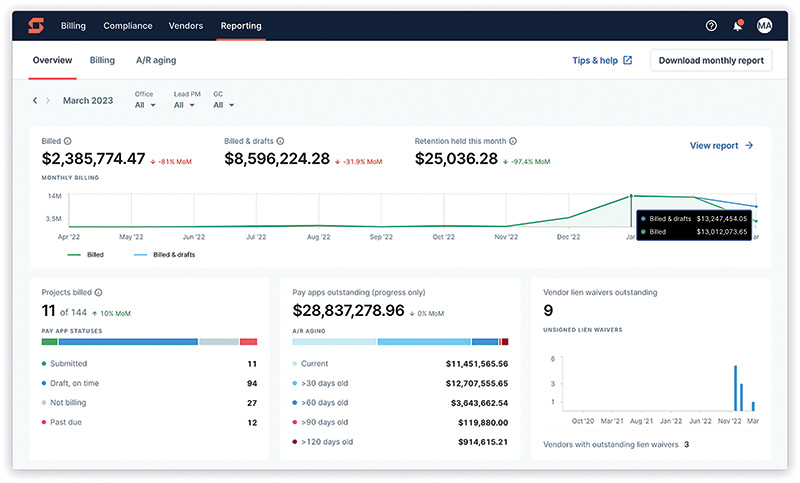
Users can track the status of their unapproved change orders and know which ones are proceeding with work. Accounting and project management teams can collaborate on billing and manage payment apps in Siteline for efficiency and ease of communication.
Trimble
Based in Westminster, Colo., Trimble’s Construction One is a connected suite of software solutions that automates workflows and synchronizes data so contractors can design, build and maintain their projects.
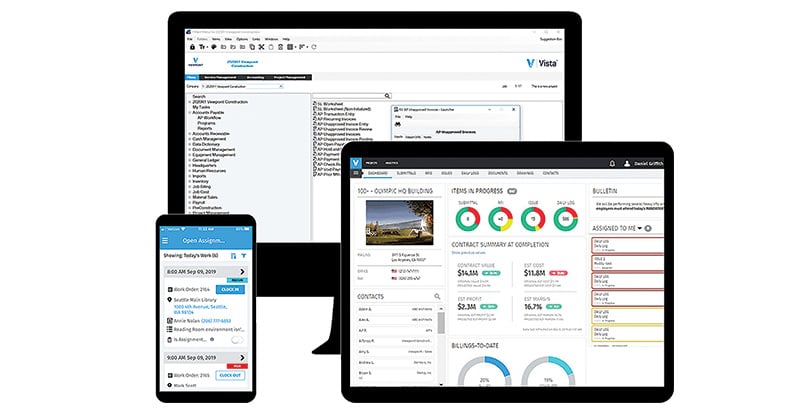
From designing, modeling, estimating and procurement, to project management and fabrication, the platform helps facilitate communication among all key stakeholders across the entire project cycle. Plus, as an open, cloud-based collaboration tool for sharing project information, Trimble Construction One integrates into existing technology stacks to connect the field and office, and it can be scaled depending on each contractor’s size and specific needs.
stock.adobe.com / kras99 / Grispb / amiak
About The Author

Holly Sauer
Senior EditorHolly Sauer has worked for ELECTRICAL CONTRACTOR magazine since 2019 and is the senior editor. She went to Washington & Jefferson College and studied English and art history. At Electrical Contractor magazine, she creates the newsletters and the new and featured products sections. She also edits articles for the three publications and occasionally writes on tools and industry news. She is fueled by the desire to read every book ever written. And coffee. Reach her on LinkedIn or at [email protected].