The western United States is a renewable energy powerhouse, with an enormous capacity of wind, solar and hydro generation already in place, and there are growing opportunities for advanced geothermal production. California sometimes produces more electricity from solar and wind than it can consume during certain times of the year. But without a means for trading that excess power outside state lines (except to help address immediate shortfalls), producers often end up shunting it into the ground instead.
Now, though, with legislation signed by Gov. Gavin Newsom in September, a new regional energy market is set to take shape involving multiple states in the area. Once it’s up and running, utilities will be free to share electricity across state lines in the day-ahead market. This could mean lower prices for utility customers by providing access to more power resources during peak demand periods.
The idea is based on grid-management infrastructure developed by the California Independent System Operator (CAISO) to manage real-time transactions. But importantly, CAISO will be turning over management of the network to a new, independent regional organization (RO). The ability to more easily clear transactions in the critical day-ahead market could be a boon to producers and utility customers throughout the 11 states set to participate in the effort.
Building a case
California has long been a bit like Texas in its desire to maintain tight control over power used within state lines. Unlike Texas, however, it does buy power from its neighbors. Its mandate to run on 100% fossil fuel-free energy by 2045 means CAISO is very selective about those purchases. However, the state also has some of the highest electricity rates in the country, so several years ago, CAISO and regulators from other Western states began conversations regarding broadening energy trading ties with a goal of lowering costs for consumers and businesses and opening markets for producers throughout the region. Under such an arrangement, California could have more customers for its daytime solar production and more power options to meet evening peak demands.
CAISO was already a regional leader in managing power flow through its Western Energy Imbalance Market (WEIM), which operates 5- and 15-minute-ahead trading operations to keep supply and demand in balance across 11 states. In the last few years, plans were developed to expand WEIM’s operations to include the Extended Day-Ahead Market (EDAM) for day-ahead power trading among the same states, with CAISO in control.
However, regulators in several of those jurisdictions weren’t happy with having a single state control their own power operations. At the same time, the Southwest Power Pool, a regional transmission operator managing power flow for many adjacent states, was developing its own day-ahead market, creating potential competition for CAISO’s EDAM. In 2023, regulators from California, Washington, Oregon, Arizona and New Mexico launched the West-Wide Governance Pathways Initiative to address governance concerns. That group’s efforts led to the plan outlined in the legislation Newsom signed, AB 825.
What it means
AB 825 authorizes a new RO that will eventually take over operation of the WEIM and EDAM. Importantly, governance of the new RO will be independent of CAISO, with members nominated by all participating stakeholders. CAISO will still oversee the mechanics of power transactions, but tariffs and other market issues will be handled by the RO.
This independent governance won’t be new to market participants—the WEIM moved to a similar structure in April. The transition of utilities to the new RO will take place over time, starting in May 2026 and expected to be in place by 2028. Synchronizing the operations of multiple utilities, each with its own rate structures, potentially millions of customers and thousands of miles of lines, will be a complicated process.
It’s important to note that, while the new RO will provide many of the services of a regional transmission organization (RTO)—such as PJM in the East or MISO in the Midwest—it’s purposely less strictly structured. For example, the RO’s responsibility will be limited to governing the existing WEIM and the new EDAM.
An RTO also is responsible for capacity and ancillary services markets within its territory. And, most important for western utilities, each state in the RO will maintain control over its own climate, energy procurement and environmental policies. So, California retains control over its renewable portfolio standard without affecting other states that might have less aggressive climate goals in their energy plans.
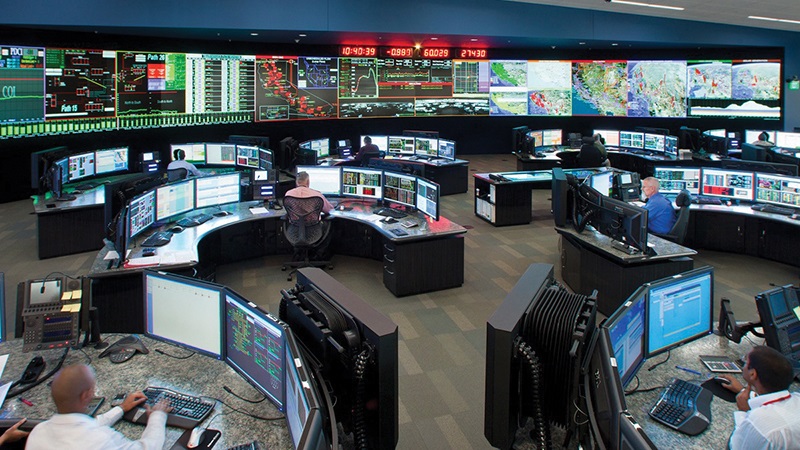
Header image: California Independent System Operator’s control room
California Independent System Operator
About The Author
ROSS has covered building and energy technologies and electric-utility business issues for more than 25 years. Contact him at [email protected].