Jim Dollard has an extensive background in codes and standards. Send questions about the National Electrical Code (NEC) to Jim at [email protected]. Answers are based on the 2023 NEC.
Transformer overcurrent protection
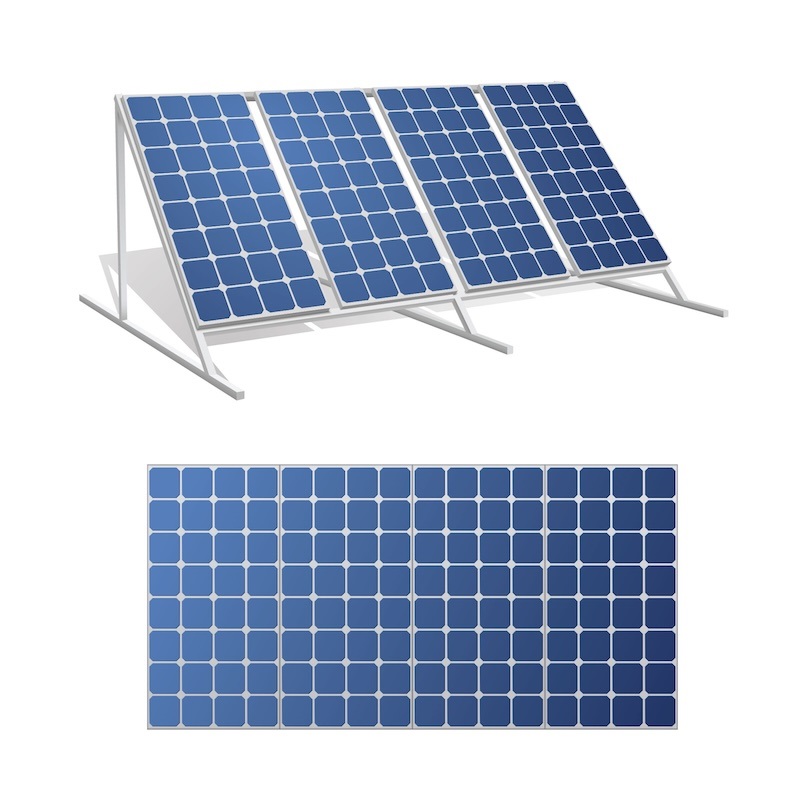
Where a transformer is needed to step down voltage from the inverter output of a solar photovoltaic (PV) system to the service voltage, which side of the transformer is considered as the primary?
Section 690.9 contains requirements for overcurrent protection of solar PV systems. Section 690.9(D) requires power transformers used in PV systems be installed in accordance with 705.30(F). There is an exception for transformers with a current rating on the side connected toward the interactive inverter output (typically the transformer secondary), not less than the rated continuous output current of the inverter.
The requirement in 705.30(F) mandates that transformers with sources on each side (typically service/feeder one side and inverter output one side) consider the transformer primary to be the largest source of available fault current (AFC). Typically, the largest source of AFC will be the service-supplied source. However, large PV systems with multiple transformers may be the larger source of AFC. For clarity, 705.30(F) requires compliance with 240.21(C). It is important to note that these requirements exist in chapters 6 and 7, which are special and exist only to supplement or modify other NEC requirements. This means that the requirements to protect transformers in Article 450 and the protection of transformer secondary conductors in 240.21(C) apply.
XHHW-2
Installing multiple raceways to supply HVAC equipment on a rooftop required me to look into Section 310.15(B)(2). In all cases, raceways must be kept a minimum of ¾ inch above the roof to not apply the temperature adder. Why does XHHW-2 get special preference here?
Several NEC revision cycles ago, there was a task group made up of NEC technical committee members and subject matter experts dealing with heat from solar radiation. This group did a comprehensive review of temperature adders on rooftops. It was determined at that time that if the raceway or cable assembly was not in direct contact with the rooftop, the temperature adders were not necessary. During that revision process, a manufacturer submitted data proving that XHHW-2 had superior properties with respect to heat exposure. Technical committee members in the NEC process rely on science and data to make these types of decisions. If a manufacturer were to submit data proving that another insulation type performed in the same manner, the exception would likely be expanded to include other insulation types.
Reconditioned?
Is it permitted to use reconditioned molded-case circuit breakers (MCCBs) in a switchboard? We have an installation with multiple existing switchboards of the same make and model, and we want to swap some out as one is being eliminated.
MCCBs are not permitted to be reconditioned. See Section 240.2(A) list item (4). These devices are typically riveted closed, cannot be opened and are not designed to be reconditioned.
It is very important to understand that the definition of “reconditioned” clearly states that it applies to equipment that is restored to operating condition. This means the equipment was not functioning properly and some entity had to take physical action to restore it. A used circuit breaker is not reconditioned; it is used. Where equipment is required by the NEC to be listed as reconditioned, Section 110.20 applies requiring listing or field-labeling. Section 240.7 requires branch circuit overcurrent devices (which includes MCCBs) to be listed. This means that if you were permitted to recondition them, a field evaluation must be performed, or they must be listed. It is important to note that low-voltage power circuit breakers are permitted to be reconditioned. For circuit breaker maintenance requirements, see Chapter 15 in NFPA 70B.
Inadequate plan review
We had multiple issues with the township electrical inspector on a recent job. Multiple GFCI and outdoor receptacle requirements were not noted on the drawings they reviewed. Are we responsible for getting that done?
Yes, the installer is required to meet minimum NEC requirements. In most areas, an electrical plan review does not cover each requirement in the Code. GFCI and outdoor receptacle requirements, as noted in your question, are basic requirements. Another example is workspace clearance. The individual performing plan review does not note on each location of equipment the required workspace clearance.
GFCI for receptacles near welders
In a small industrial facility, we were required by the city inspector to protect all the receptacles in the welding areas (welders were hard-wired) with GFCI protection. I have been through 210.8(B) many times and just don’t see that. Can you help?
It is typical for installers to go only to Section 210.8(B) for GFCI protection requirements in areas other than dwellings. There are many other GFCI requirements in the NEC that apply. For example, Section 201.8(D) requires GFCI protection for 12 different types of appliances rated 150V or less to ground and 60A or less, single- or three-phase.
In this situation, Section 630.8 requires 125V, 15A and 20A receptacles for electrical hand tools or portable lighting equipment, supplied by single-phase branch circuits rated 150V or less to ground installed in work areas where welders are operated to have GFCI protection for personnel.
It’s only temporary, right?
Do I need to install ground-fault protection of equipment (GFPE) for a 1,200A, 480/277V temporary service? It will only be there for 5–7 months.
GFPE is required. A means of arc energy reduction is also required. See Section 590.2(A) referencing other articles besides 590 for temporary power in the NEC. This section mandates that, except as specifically modified in Article 590, all other NEC requirements for permanent wiring apply to temporary wiring installations. GFPE in accordance with 230.95 and arc energy reduction in accordance with 240.67 (fuses) or 240.87 (circuit breakers) is required. Additionally, Section 590.8(B) requires current-limiting overcurrent protective devices for solidly grounded wye electrical services of more than 150V to ground but not exceeding 1,000V phase-to-phase, with an available fault current greater than 10,000A.
Disconnect for LED driver
Are disconnects required for LED drivers in the same way as fluorescent lighting fixtures?
Yes, see the general rule in Section 410.71, which applies to fluorescent or LED lighting fixtures (luminaires) that use double-ended lamps and contain ballast(s) or LED driver(s) that can be serviced in place to have a disconnecting means either internal or external to each luminaire.
Hazardous location
In a cannabis grow facility we worked on a few years ago, an addition is being added to extract cannabis oil. The owner has stated that only the equipment performing the process needs specialized wiring methods as it does not release flammable gas. There are flammable products used in the extraction process. Is the entire area classified?
The process of oil extraction typically involves flammable materials. Determining hazardous location areas/zones is typically done in the design stage and is subject to plan review. Article 512 provides installation requirements specifically for cannabis oil equipment and cannabis oil systems using flammable materials. See Section 512.2 and the associated table that sends the user to multiple parts of articles and sections in Articles 500 and 501.
For example, use Section 500.5 to determine the classification of each location, and 500.6(A) for Class I group classifications (butane/propane, which is typically used, would be Group D). Prescriptive requirements exist in Section 512.3(A) for cannabis oil equipment and systems other than booths. Section 512.3(A)(1) applies where flammable gases or vapors are released, and 512.3(A)(2) applies where flammable gases or vapors are not released, except during disconnection or opening.
stock.adobe.com / Vikivector
About The Author

DOLLARD is retired safety coordinator for IBEW Local 98 in Philadelphia. He is a past member of the UL Electrical Council, NEC Correlating Committee, NEC CMP-10, CMP-13, CMP-15, NFPA 90A/B and NFPA 855. Jim continues to serve on NFPA 70E as a Special Expert. Reach him at [email protected].