If you want strong leaders for tomorrow, it pays to draw from all corners of your organization today. Indeed, employers that provide leadership training to high-potential employees at all levels in their organizations are 4.2 times more likely to financially outperform competitors that limit such training to managers, according to research by The Conference Board and Development Dimensions International. Leaders from across the electrical construction industry discuss helpful programs to develop leaders throughout their organizations with targeted initiatives tailored for each career level.
Hooper Corp.
Over the past five years, Hooper Corp., DeForest, Wis., has been formalizing its leadership program, starting by curating a Dale Carnegie skills-based leadership program for its top-tier and second-tier division leaders, said Raj Ravi, director of human resources.
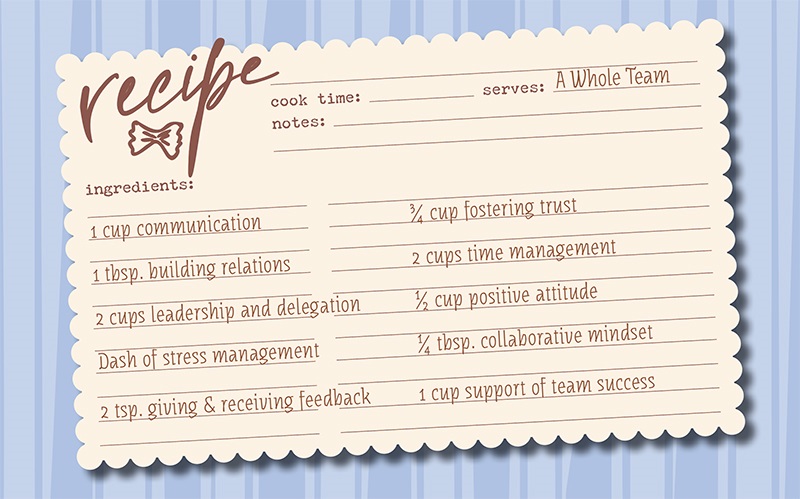
The pilot program, customized by Hooper’s management according to the company’s mission and core values, targeted skills such as communication, building relations, leadership and delegation skills, among others, Ravi said.
“Stress management was also identified as an important trait,” she said. “How do you help your team handle day-to-day challenges? Also, giving and receiving feedback—how can you approach tough situations in a way that is a productive conversation instead of being a stressful conversation?”
Based on learnings from the first offering, Hooper modified the next set of the “Skills for Success” program. The tailored training facilitated by Dale Carnegie for the next level of managers focuses on understanding the self and managing teams.
“Team management is all about setting clear expectations and managing relations,” Ravi said. “What you give to your team members you get back. Treat others the way you want to be treated. How do you open up that avenue for your team members to fearlessly come and talk to you about a mistake they did or if they need help with something? Building trust is key.”
Hooper has offered multiple rounds of that training to middle- management-level employees, including department managers, project managers, labor managers, team leads and superintendents.
“We consider leadership development critical because this group has the biggest influence on our team members, and it is important to provide them with opportunity to continuously enhance their skills,” she said. “These trainings allowed us to bring different minds within the company under one roof, fostering better collaboration.”
The company continues to offer the Skills for Success program annually for anyone who has been promoted to a manager position or has been newly hired, Ravi said.
Apart from the leadership program, Hooper offers in-house sessions and workshops on essential skills such as interviewing and goal setting, facilitated by staff at the University of Wisconsin’s Center of Professional and Executive Development.
The company also offers virtual seminars and workshops on skill building by Fred Pryor Learning, and it is currently building an online learning platform for every employee on the corporate side to enhance their communication and business skills. Modules will include learning how to navigate Microsoft Office tools, business email writing, time management, how to handle difficult conversations and maintaining a positive attitude.
“Through our learning and development initiatives, we’ve put more structure around how that knowledge is shared,” she said. “We now have consistent programs that give employees timely access to education and help close skill gaps. Formal training that builds confidence and clarity in people’s roles is essential to long-term sustainability.”
McDonald Electrical Corp.
At McDonald Electrical Corp., Hingham, Mass., leadership grooming happens formally and informally, said Alyssa Kent, senior director of marketing and communications.
On the formal side, the company intentionally staffs projects to ensure continuity, allowing foremen, project managers and estimators to stay involved from planning through execution and closeout, Kent said. This continuity gives emerging leaders visibility into decision-making around scope, schedule, cost, safety and staffing—not just task execution.
“Employees who demonstrate strong communication skills, sound judgment and a collaborative mindset are gradually given greater responsibility, whether that’s leading crews, participating in planning meetings or supporting preconstruction and estimating efforts,” she said.
Informally, leadership development happens every day in the field and office, Kent said. Senior leaders and experienced foremen mentor younger team members through job site coaching, daily huddles and collaborative problem-solving. The company encourages open dialogue, respectful challenge and accountability—“traits that naturally reveal leadership potential,” she said.
McDonald Electrical does not limit leadership development to one level of the organization, she said. Future leaders can and do emerge from all levels—apprentices, journeymen, foremen, project managers, estimators and administrative leaders.
“What matters most is an individual’s ability to think beyond their immediate role, communicate effectively, support team success and take ownership of outcomes,” Kent said.
Moreover, leadership development is not a single program or title-driven track. It’s an ongoing process rooted in accountability, mentorship and real-world experience.
“We believe strong leaders are developed through exposure, trust and responsibility over time,” she said.
McDonald Electrical has also made a long-term commitment to expanding access to careers in the electrical trade by investing in community partnerships, workforce development and early exposure to careers in the trades. These efforts have directly resulted in dozens of new hires from preapprenticeship and community workforce programs.
“Recruitment through these pathways has proven highly successful because individuals arrive with a clearer understanding of the trade, stronger commitment and early mentorship already in place,” Kent said. “Just as importantly, these pathways are not dead ends.”
Employees who enter McDonald Electrical through community programs have the same opportunity to advance into foreman, project management, estimating, safety or leadership roles as anyone else.
“Advancement is driven by performance, initiative and teamwork,” she said.
Rosendin Electric Inc.
At Rosendin Electric Inc., San Jose, Calif., every new employee—whatever their level—is viewed as a leader, and on their first day they’re given a Gallup CliftonStrengths’ CoreClarity assessment to determine their strengths, said Stephanie Roldan, senior vice president of people.
“We lead individuals into understanding how their talents play into their work, so that they can maximize that and contribute from a place of strength,” Roldan said. “Then, over time as they become team leaders or they join teams, they may continue course work around team dynamics and how to communicate. So we’re always thinking about it from a strengths-based leadership perspective.”
For leaders in the field, Rosendin created a foreman development series that teaches business skills, such as scheduling upcoming work, billing for completed work and achieving business outcomes, she said.
Rosendin has also developed Surge, a project management program that mirrors the company’s foreman development series with its focus on the first levels of business. As project managers progress in their careers at the company, business unit leaders receive advanced training in Rosendin’s Lighthouse Institute.
“Here, we do some mindset work about how we think about leadership and relationships, and then ultimately how to strengthen our listening so that we can reduce conflict in our organization,” Roldan said.
Business unit leaders with the potential to be senior leaders move into the company’s Leadership Academy, where they are provided opportunities to build strategic initiatives outside of the actual day-to-day flow of work.
“When it’s in a smaller, controlled environment in which we know failure is a potentiality, it allows us to provide psychological safety for our employees to try new things that they may have never experienced before,” she said.
A recent company employee engagement survey found that those who have been in one of Rosendin’s leadership programs have higher levels of employee engagement than those who have not.
“That demonstrates to us that when we’re investing in our employees, they’re investing back into our organization,” Roldan said. “Individuals who are engaged make better decisions on our behalf, look at our organization through a different lens and have a different ownership mentality.”
Project management training
The NECA/ELECTRI Project Management Apprenticeship allows contractors to grow their project management skills through a U.S. Department of Labor-registered apprenticeship and certification. The program is supported by Wesco International, a provider of business-to-business distribution, logistics services and supply chain solutions based in Pittsburgh. The 12-month apprenticeship combines real-time coaching, on-the-job learning and modern online instruction to build practical skills without adding extra burden to a contractor’s team.
Contractors are given a structured, customizable development plan aligned to their workflows. Their apprentices receive weekly coaching and instructional support, while building real-world leadership skills.
“This is the second full year of the apprenticeship program, and we’re thrilled to see how it will shape the next generation of business leaders in electrical construction,” said Sean Grasby, Wesco’s senior vice president of construction and energy solutions.
Internally, Wesco has dramatically accelerated its college-hire leadership development program, and it regularly brings in third-party experts in sales, marketing and other functions to help team members grow their skill sets and leadership capabilities, Grasby said.
The company has also formed business resource groups with at least one executive sponsor that are open to everyone, providing opportunities for informal mentoring and professional development.
“Research shows that companies that foster these communities outperform their peers and have higher retention,” he said. “Team members often report greater job satisfaction, find greater purpose in their careers and see exciting paths to grow personally and professionally.”
Leadership development
Leadership development requires an engaged participant. For some, that means attending an event or conference—for others, it’s reading books or participating in a curriculum-based program, said Tim Speno, NECA’s executive director of education outreach.
The most effective leadership training often combines all these approaches, while ensuring the learner can naturally engage in an experience that’s right for them. It's a recipe that can be tweaked for success.
“Leadership training requires an investment in time and energy, beyond the price of admission, so make it meaningful,” Speno said. “When people learn emotionally as well as intellectually, the impact sticks with them long after the training ends.”
stock.adobe.com/MD Eamon Shikder
About The Author

KUEHNER-HEBERT is a freelance writer based in Running Springs, Calif. She has more than three decades of journalism experience. Reach her at [email protected].