Optional Standby Signage
We are updating a single-family dwelling unit service with a transfer switch downstream of the outdoor service equipment. It is a meter combination with a 200A circuit breaker for the firefighter disconnect. The plan review noted a sign requirement. What is that?
Your question infers the installation of an optional standby system. The plan reviewer pointed out the requirements of Section 702.7(A), which mandates that a sign be placed at the disconnecting means required in 230.85 that indicates the location of each permanently installed on-site optional standby power source disconnect or means to shut down the prime mover.
GFPE protection of receptacles
During the renovation of a commercial occupancy, we replaced receptacles that supply deicing cable on the roof. The inspector is requiring ground-fault protection. Is that required? We only replaced the receptacle.
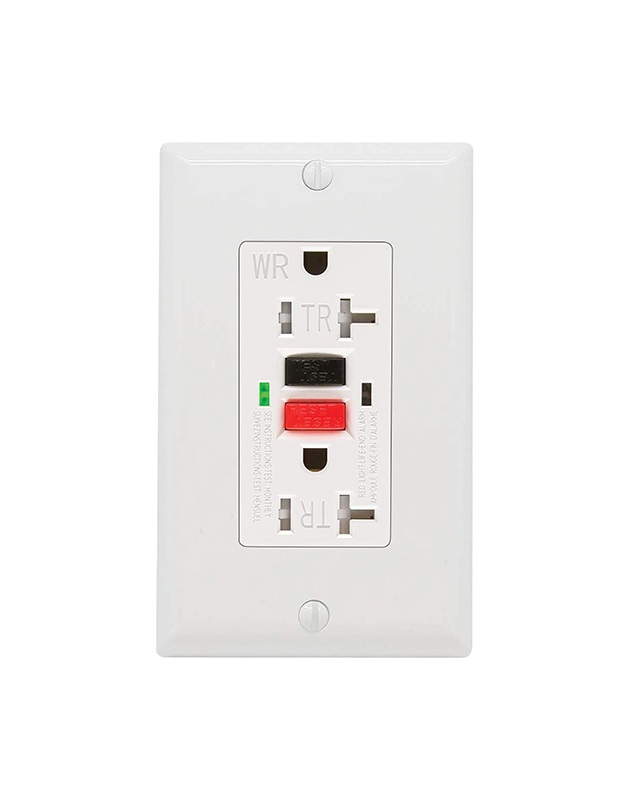
The replacement of receptacles must comply with the requirements of Section 406.4(D). See 406.4(D)(8), which requires ground-fault protection of equipment (GFPE) for replacements made at receptacle outlets that are required to be ground-fault protected elsewhere in the NEC. Section 426.28 requires ground-fault protection for fixed outdoor electric deicing and snow-melting equipment. This requirement mandates that the trip level of ground-fault protection must be as specified by the manufacturer. This could be GFPE at 30 milliamps (mA), or some manufacturers may require GFCI protection. A GFCI will operate at lower levels of fault current. While GFPE may not trip below 30 mA, a GFCI will trip at 6 mA or higher but will not trip at values less than 4 mA.
Parallel feeder connections
In a parallel feeder with two 500-kcmil copper conductors per phase, protected at 800A, we must supply six smaller panelboards with tap conductors. Each of these panelboards will be equally loaded at all times. Is it permitted to use one parallel set to feed three panelboards and the other parallel set to supply the other three?
No, see Section 300.3(B)(1), which requires that all connections, taps or extensions made from paralleled conductors connect to all conductors of the paralleled set, grounded and ungrounded, as applicable. This is easily achieved using insulated multitap connectors. It is important to note that each set of tap conductors supplying panelboards must comply with Section 240.21(B), including, but not limited to, termination in a single circuit breaker or a single set of fuses that limit the load to the ampacity of the tap conductors. Additionally, the size of the equipment grounding conductor (EGC) run with tap conductors to each panelboard must comply with Section 250.122(G). This requires each EGC run to the panelboards be sized not smaller than the required EGC based on the rating of the feeder (800A) on the supply side ahead of the tap. The EGC is not required to be larger than the tap conductors.
Campus-style complex?
In a new multifamily dwelling occupancy (306 apartments), the service voltage is 13.2 kV. The design has the fire pump supplied from the secondary of a large transformer that supplies dwelling units. The engineer is claiming that since there are multiple fire-rated walls and doors, there are multiple buildings, and this is a multibuilding campus installation and a feeder is compliant. There is no standby source, as the engineer states the service is reliable. Is that correct?
No. As described in your question, this venue is not a multibuilding campus-style complex. “Building” is defined in Article 100 as a structure that stands alone or that is separated from adjoining structures by fire walls. The purpose of this definition is to allow a single structure such as a strip store with five separate businesses to have each occupancy recognized as an individual building, as there are fire-rated walls separating them. This permits each occupancy to be supplied by its own service in accordance with 230.2, or outside feeder in accordance with 225.30.
The term multibuilding campus-style complex is not defined in the NEC, nor does it need to be. The scope of Article 100 very clearly states that it contains only definitions essential to the application of the NEC. It does not contain commonly defined general terms or commonly defined technical terms. In this case, the user must look to the general definitions of “campus” and “complex.” A campus is defined as the grounds and buildings of a hospital, university, college or school. A complex is defined as a building or group of buildings housing related units. This is not a multibuilding campus-style complex. See also the requirements in Section 695.3(C). To apply 695.3(C)(1) for feeder sources, two or more feeders would be required and permitted only where the feeders are connected to, or derived from, separate utility services.
stock.adobe.coM/Stacy
About The Author

DOLLARD is retired safety coordinator for IBEW Local 98 in Philadelphia. He is a past member of the UL Electrical Council, NEC Correlating Committee, NEC CMP-10, CMP-13, CMP-15, NFPA 90A/B and NFPA 855. Jim continues to serve on NFPA 70E as a Special Expert. Reach him at [email protected].