The Consumer Product Safety Commission (CPSC) has reported a decrease in the number of electrocutions in the United States since the introduction of ground-fault circuit interrupter (GFCI) devices in the 1971 National Electrical Code. The use of GFCIs and installations requiring these safety devices, specifically in 210.8 and other locations, has increased substantially for residential, commercial and industrial installations since 1971.
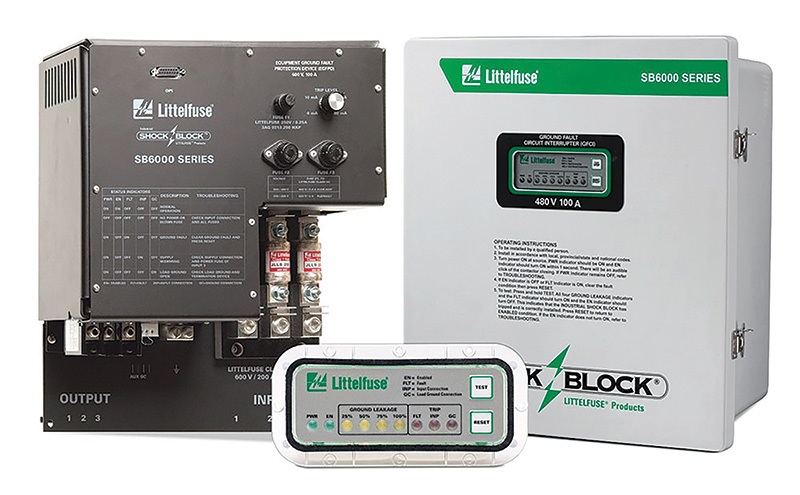
Changes in the past few NEC cycles require GFCI devices in more locations and for larger electrical equipment than in the past. These changes increase electrical safety but may require a different type of GFCI protection than what we are accustomed to seeing and using. Many common GFCI devices are circuit breakers or receptacles; however, the larger loads and higher-voltage GFCI protective devices require a different kind of protection. These are called special-purpose ground-fault circuit interrupter (SPGFCI) devices or equipment.
What’s an SPGFCI?
An SPGFCI device or equipment is defined as a “device intended for the detection of ground-fault currents, used in circuits with voltage to ground greater than 150 volts, that functions to de-energize a circuit or portion of a circuit within an established period of time when a ground-fault current exceeds the values established for Class C, D, or E devices.”
SPGFCIs are usually used in commercial and industrial applications where typical voltage levels are above the normal 120V or 240V (150V line-to-ground systems) provided by Class A GFCI devices, such as one- or two-pole circuit breakers or receptacles. Based on UL-943C, the Outline of Investigation for Special Purpose Ground-Fault Circuit Interrupters, SPGFCI devices have line-to-line voltages at 480V or 600V, with tripping values at 20 milliamps (mA) or greater, not the 4–6 mA or greater of the Class A devices at 150V or less to ground.
SPGCFIs and swimming pools
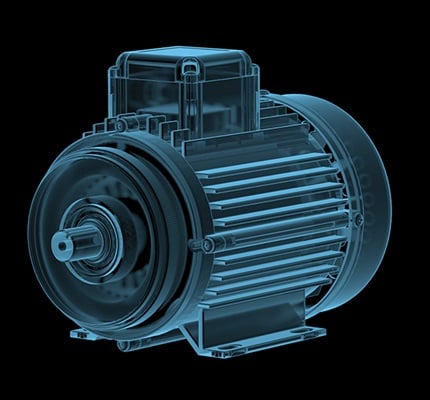
An example of SPGFCI device use is located in 680.5(C) covering commercial swimming pools. I helped design and supervised the construction of an extremely large swimming pool at the student recreational building at Arizona State University in the late 1980s. It was actually three Olympic-size pools in one. There were air inflatable and floatable dividers that could be used to separate each pool area. Once the dividers were in the proper location, they could be deflated and anchored in place. These dividers could also be parked at the side of the pool in an inset, resulting in the three pools becoming one large one. Each pool had a 480-horsepower 460V motor at 52A based on Table 430.250 in the NEC. Since SPGFCI devices were not available, we could not provide, nor did the NEC require, GFCI protection on these motors as would now be required.
Some of these SPGFCI devices actually monitor the continuity of the grounding circuit and prolong the life of the SPGFCI device’s internal contacts by providing undervoltage, brownout and chatter of contact detection. These devices can also be used in marinas and boatyards with trip settings at 10-mA increments starting at 6 mA, 10 mA and up to 100 mA as required in 555.35 for GFCI protection and ground-fault protection of equipment (GFPE) at 30 mA and 100 mA. (GFPE is a device that provides protection of the electrical equipment with a setting too high to provide personnel protection.)
Boatyards and marinas
Anyone interested in additional information on the various protection techniques for boatyards and marinas can access data on electric shock hazards. There is enhanced information on this hazard in NFPA Link in 555.35, as follows: “According to U.S. Coast Guard studies and industry standards, 30 milliamperes represents an acceptable level to prevent a majority of electrical shock drowning incidents while remaining practical enough to minimize unnecessary tripping. For more information, see the report ‘Assessment of Hazardous Voltage/Current in Marinas, Boatyards and Floating Buildings,’ commissioned by the Fire Protection Research Foundation and conducted by the American Boat & Yacht Council Foundation Inc. The report can be found at nfpa.org/news-and-research.”
This important report should be required reading for all electricians and anyone who has a boat or goes anywhere near bodies of water such as pools, ponds, lakes and oceans. GFCI and SPGFCI devices save lives better than any other type of protective device that might be installed.
GFCIs, SPGFCIs and many other safety devices are now common, available and required by previous editions and the current 2023 NEC. While many people feel these devices are too expensive, they are proven safety devices and should never be removed without being replaced with a comparable or better device. We have the safest electrical installations in the world now, and we can thank everyone in our electrical industry who has contributed to making this safety a reality.
littelfuse
About The Author

ODE is a retired lead engineering instructor at Underwriters Laboratories and is owner of Southwest Electrical Training and Consulting. Contact him at 919.949.2576 and [email protected].